Temperature18 – 24 °C
Natural range
- Meghalaya area
- Meghna River Basin
- Bangladesh area
- India area
Labyrinth fish
Dario kajal is the scientific name for this species, which belongs to the Badidae family, or Badis. This fish was first recognized as a distinct species in 2013, and before that, it was known as Dario "Bangladesh."
- Required aquarium volume
- 40 L
- Size in aquarium
- 1.5 – 2 cm
- Temperature
- 18 – 24 °C
- Temperament
- Peaceful (regular)
Parameters
Water pHNeutral (6.5) – Neutral (7.5)
Water dHSoft (5) – Hard (15)
Water salinityno salt (freshwater)
Size in aquarium1.5 – 2 cm
Lifespan3 years
TemperamentPeaceful (regular)
Toward small fishnot a predator
Required aquarium volume40 L
Lightingdimmed
Substratesoft silted
Water flownone or stagnant (no flow)
FeedingMixed diet (meat + plant-based)
CareHarem (1 male and several females)
Description
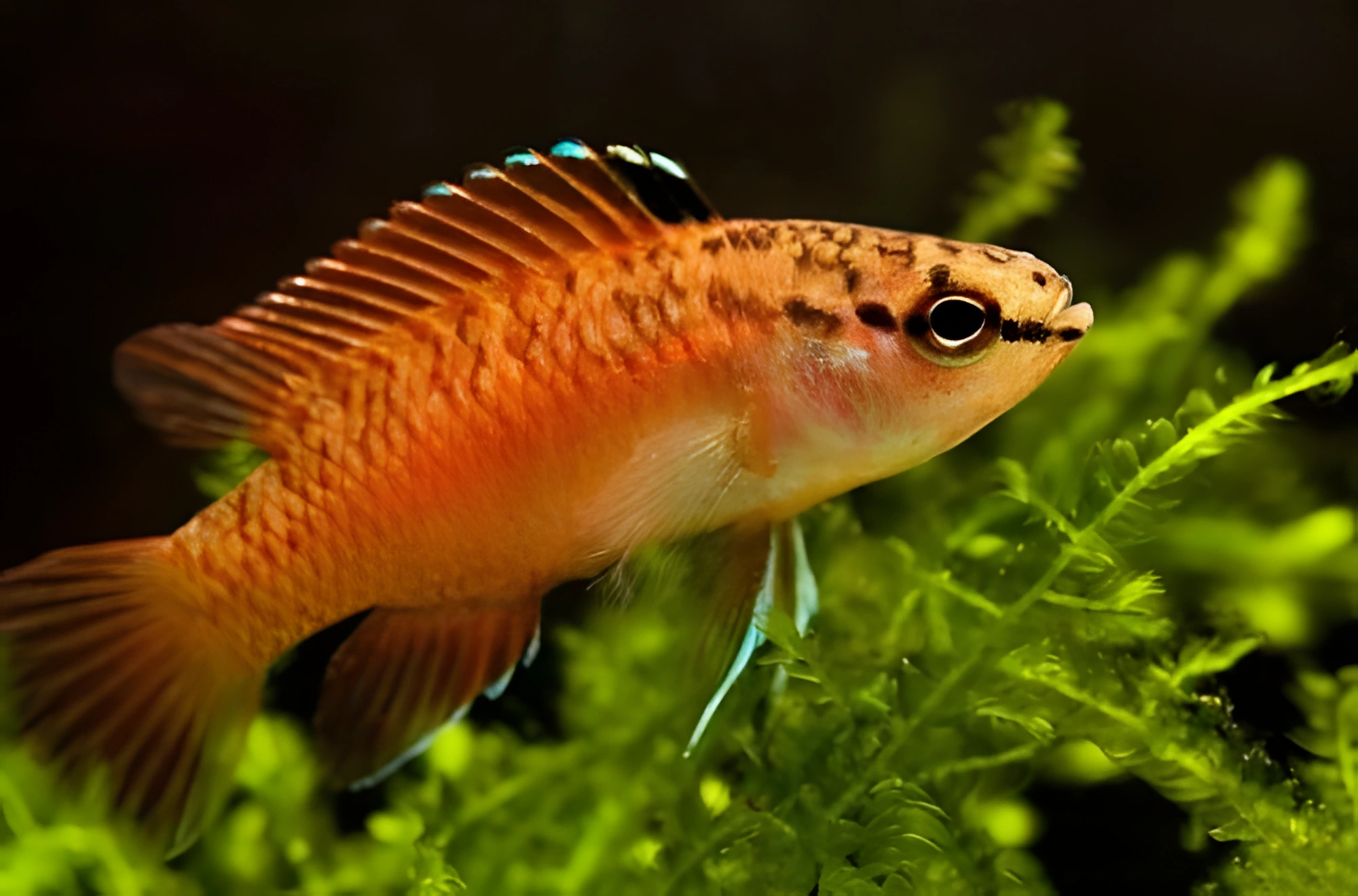
Adults of this species reach a length of approximately 2 cm. The coloration is most often reddish, with a pattern of dark speckles visible on the back. The edges of the dorsal and pectoral fins are adorned with a turquoise border. A distinctive feature of the species is the black streak near the eyes, which is reflected in its name: "Kajal" (kajal) in Hindi means "black eyeliner," traditionally used by Indian dancers. Females are characterized by less vibrant coloration; their hues are gray or silvery, with a barely noticeable red pigment that gives them a pale pink tint.
Habitat
The fish originates from Asia. Its first specimens were collected in the Meghna River basin, one of the three largest rivers in Bangladesh. However, the individuals later given the scientific name were discovered in the Indian state of Meghalaya, located on the northeastern border with Bangladesh. Dario kajal prefers to inhabit small streams and rivers characterized by calm currents, murky water, and a moderate amount of aquatic vegetation. The climatic conditions in these regions are characterized by abundant rainfall, which leads to significant annual fluctuations in water composition and river levels.
Behavior and Compatibility
Males compete with each other for territory and the attention of females. For this reason, it is not recommended to keep more than one male in a small aquarium. These fish are calm and unhurried, which makes them vulnerable in competition for food with more active tankmates. When choosing tankmates, only very small and peaceful species should be considered, such as Rasboras or Guppies.
Care and Maintenance
For a group of 3–4 fish, the optimal aquarium volume starts from 40 L. Soft substrate is used as decor, and shelters are created from natural snags, as well as fallen leaves of certain trees. Plants that can grow on snags, such as Anubias, as well as various aquatic mosses and ferns, are well-suited. For planting on the substrate, Cryptocoryne species can be chosen. Water parameters such as pH and GH can be within a relatively wide range. However, temperature is of great importance: comfortable values are considered to be 16–24°C. Elevated temperatures negatively affect the well-being of the fish, leading to loss of coloration and increased susceptibility to diseases. Thus, Dario kajal can be kept in aquariums without additional heating, but cooling may be required during warm summer months. In their natural habitat, these fish feed on small aquatic crustaceans, worms, insect larvae, and other zooplankton. They usually do not accept dry foods. In a home aquarium, it is necessary to offer live or frozen brine shrimp, daphnia, and similar foods. It has been noted that bloodworms can cause digestive problems and, as a result, lead to the development of diseases.
Diet
In natural conditions, these fish feed on small aquatic crustaceans, as well as worms, insect larvae, and other zooplankton. They usually do not accept dry foods. In a home aquarium, live or frozen brine shrimp, daphnia, and other similar foods should be offered. It has been observed that bloodworms can cause digestive problems, which in turn can lead to the development of various diseases. The breeding strategy for Dario kajal is similar to that of other members of the genus, such as Badis scarlet or Dario red. When the breeding season approaches, the male establishes a territory on the aquarium bottom, using a shelter as a central point, and begins to attract females. In larger tanks containing several males, typically only one male dominates and participates in spawning. After the female accepts the courtship, she lays eggs on the underside of a leaf. Her involvement in spawning ends there. The male remains near the clutch, providing protection. Territory guarding continues throughout the incubation period, which usually lasts 2–3 days. The hatched fry feed on the remnants of their yolk sac for approximately one week. After this, they begin to swim actively in search of food. Suitable food for them includes micro-foods, such as infusoria, then brine shrimp nauplii, or specialized fry products like suspensions and powders. It is more convenient to raise the fry in a separate aquarium.
Breeding and Reproduction
The reproduction of these fish follows a similar pattern to other members of the genus, such as Badis scarlet or Dario red. As the breeding season approaches, the male occupies a specific area on the aquarium bottom, choosing a shelter as the center of his territory, and begins to attract females. Even in large aquariums with several males, usually only one dominates and participates in spawning. After successful courtship, the female lays her eggs on the underside of a leaf, and her role in spawning ends there. The male remains near the clutch, providing protection throughout the incubation period, which lasts 2–3 days. The hatched fry feed on their yolk sac for about a week, and then begin to swim actively in search of food. Micro-foods such as infusoria are suitable for feeding them, followed by brine shrimp nauplii or specialized suspensions and powders for fry. It is more convenient to raise the young in a separate tank. Sources: fishbase.de, researcharchive.calacademy.org
Diseases
Dario kajal have sensitive digestion, so improper nutrition is the main cause of disease development in this species. The use of bloodworms in the diet often leads to serious gastrointestinal disorders. Fish are also extremely susceptible to water quality in elevated temperatures: a violation of the temperature regime (above 24°C) weakens the immune system, provoking loss of coloration and the development of infections.
How to choose
When choosing fish, pay attention to their activity and the condition of their body surface. Healthy individuals should show curiosity and explore the bottom, rather than constantly hiding in the corners of the aquarium. Avoid purchasing fish with signs of emaciation, damaged fins, or a film on their body. It is important to note that Dario kajal may be very frightened in the store, so their pale coloration in a stressful situation is normal, but the fish should appear well-fed and active.
Frequently asked questions
The essentials: size, tank volume, water parameters and care
How big does Dario kajal get?
An adult reaches 1.5–2 cm in length. Plan the tank around the maximum size: the fish quickly outgrows a cramped setup.
What size aquarium does Dario kajal need?
The minimum recommended volume is 40 L. A smaller tank speeds up nitrate build-up and raises stress levels.
What water parameters does Dario kajal need?
Temperature 18–24 °C, pH 6.5–7.5, hardness 5–15 dGH. Stability matters more than exact values: sudden swings are harder on the fish than a small deviation from the ideal.
How long does Dario kajal live?
Around 3 years when kept properly. Lifespan depends directly on tank volume, water quality and a varied diet.
Is Dario kajal aggressive?
Temperament: peaceful (regular). Keep this in mind when choosing tank mates.
How many Dario kajal should be kept together?
Recommended setup: harem (1 male and several females). Ignoring this is a common cause of stress and disease.
What does Dario kajal eat?
Diet type: mixed diet (meat + plant-based). Feed small portions that are finished within a couple of minutes — overfeeding does more harm than underfeeding.
What is the scientific name of Dario kajal?
The scientific name of the species is Dario kajal, family Badidae.