Temperature18 – 24 °C
Other scientific names: Barilius rerio, Brachydanio frankei, Brachydanio rerio, Cyprinus chapalio, Cyprinus rerio, Danio frankei
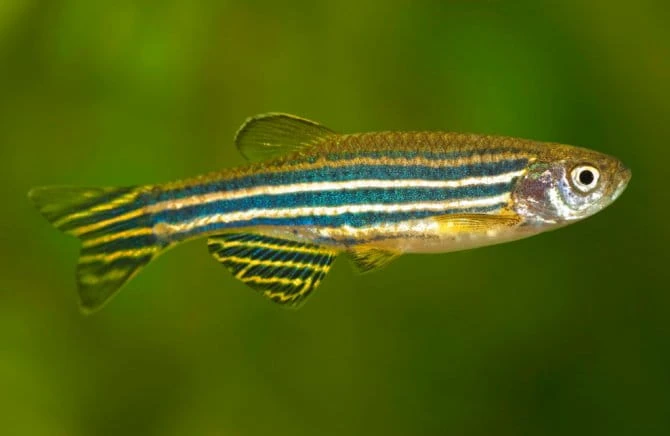
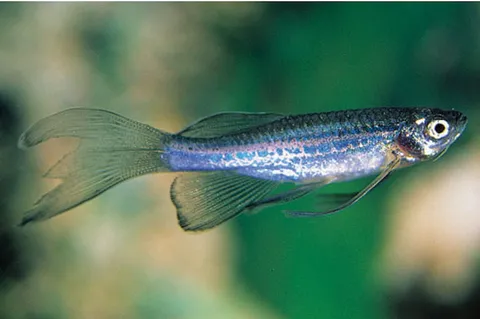
The Zebra Danio (scientific name Danio rerio) belongs to the carp family (Cyprinidae). This species was one of the first tropical fish to be actively bred as aquarium pets. Currently, this fish is very popular due to its distinctive striped coloration, peaceful nature, and ease of care.
This fish is characterized by a slender and graceful body structure. The classic coloration is a pale yellow or silvery background with a characteristic pattern of dark blue horizontal stripes. These stripes also adorn the caudal and anal fins. As mentioned, today there are many selective variations with the most diverse palette, including blue, yellow, red, orange, and other shades. In some cases, the selection process has led to the loss of the characteristic striped pattern.
The scientific description of Danio rerio was made in 1822 during studies of flora and fauna in the colonial possessions of the British Empire, now part of India and Pakistan. These fish are found in the river systems of South Asia — above all in the Ganges and Brahmaputra basins of north-eastern India and Bangladesh; they are also known from Pakistan, Nepal and Bhutan. Earlier records from Myanmar date from before 1930 and, on current evidence, refer to similar species of the genus described later. In their natural habitat, they are found in riverine lowlands, channels, canals, as well as in ditches near settlements and ponds. Their habitat can vary significantly depending on the season. During the rainy season, when water levels rise, the fish move to flooded areas in river basins. There, in calm backwaters with abundant vegetation, they spawn. After spawning, the fish return to the main river channels. A few days later, the newly hatched fry follow the adult fish into the rivers.
This active and peaceful fish is characterized by a friendly disposition, showing no aggression towards other species. Coexistence is possible with other Danio species, as well as with other peaceful fish of comparable size. An important condition is to keep the fish in a school of at least 8–10 individuals. When kept alone or in pairs, the fish become timid and sluggish. The absence of social interaction with conspecifics negatively affects their overall well-being.
Since these fish have existed in artificial conditions for many generations, they have adapted well to various keeping conditions. This makes Danio rerio an undemanding fish to care for. For their successful long-term existence, it is sufficient to provide the aquarium with quality filtration and aeration. These processes also create the necessary water movement, which favorably affects the well-being of Danios. It is recommended to replace a portion of the water with fresh water weekly, while simultaneously cleaning the substrate with a siphon to remove accumulated organic waste. Fish that inhabit the upper layers of the water and lead an active lifestyle may jump out of the aquarium during their games, so a protective lid should be considered in advance. The aquarium decor is chosen by the aquarist at their discretion. Nevertheless, it is considered optimal to have a large open swimming space and aquatic plants placed along the side walls of the tank. Excessive overgrowth of the aquarium is undesirable. It has been noted that dark substrate and moderate lighting can favorably highlight the fish's coloration.
In the wild, the fish's diet consists of small zooplankton. In a home aquarium, Danio rerio readily consumes most common foods of suitable size intended for aquarium fish. These can be dry, fresh, frozen, or live foods, such as bloodworms, brine shrimp, or daphnia. It is important to note that these fish primarily inhabit the surface and mid-water, so the food should not sink rapidly to the bottom but remain floating for some time. In such cases, live or dry foods will be a good choice.
Sexual differences in these fish are not pronounced: females are only slightly larger than males, while the body coloration is identical in both sexes. Danio rerio often form pairs that last a lifetime, but their "romanticism" ends there. Their parental instincts are weakly expressed; fish can easily eat their own eggs and do not participate in caring for their offspring. A separate aquarium is required for spawning. The spawning tank can be small, for example, 20–25 liters in volume. The bottom is recommended to be covered with marbles about 1 cm in diameter or similarly sized gravel. Plants should be arranged in dense groups. The water composition in the spawning aquarium should be the same as in the main tank. When it becomes noticeable that two fish are constantly together, and one of them has a swollen belly, this indicates the imminent start of egg-laying. First, the female is moved to a separate tank. The male joins her the next day. A rapid drop in water temperature by a couple of degrees, simulating the beginning of the rainy season, serves as a stimulus for spawning. It is during this period that fish begin to reproduce in the wild. More about Danio breeding During the breeding process, the female releases eggs into the water, and the male fertilizes them. As they sink to the bottom, the eggs roll into the gaps between the substrate particles, becoming inaccessible to the parents. After spawning is complete, the pair is returned to the main aquarium, and the fry appear after 7 days. How to care for Danio eggs and fry.
These fish are highly resilient; diseases typically arise only from significant deterioration of living conditions or contact with an infected individual. For example, health problems can occur from prolonged exposure to hard water or elevated pollution. A lack of social interaction, such as when a Danio lives alone, can also be a cause.
When choosing zebra Danios, pay attention to the overall activity of the fish in the aquarium: healthy individuals should be active, constantly moving, and actively responding to external stimuli. Avoid specimens with visible fin damage, white spots or film on the body, as well as fish that stay separate from the school or appear emaciated. Given the mass breeding of the species, it is worth carefully inspecting the fish for spinal deformities or signs of chronic emaciation, as poor genetic material can lead to rapid death after purchase.
The essentials: size, tank volume, water parameters and care
An adult reaches 4–5 cm in length. Plan the tank around the maximum size: the fish quickly outgrows a cramped setup.
The recommended volume is 80 L. A smaller tank speeds up nitrate build-up and raises stress levels.
Temperature 18–24 °C, pH 6–8, hardness 5–19 dGH. Stability matters more than exact values: sudden swings are harder on the fish than a small deviation from the ideal.
Around 4 years when kept properly. Lifespan depends directly on tank volume, water quality and a varied diet.
Temperament: peaceful, active/mobile. Keep this in mind when choosing tank mates.
Recommended setup: schooling (usually from 5–6 individuals and more). Ignoring this is a common cause of stress and disease.
Diet type: any (universal). Feed small portions that are finished within a couple of minutes — overfeeding does more harm than underfeeding.
The scientific name of the species is Danio rerio, family Cyprinids (Cyprinidae). It also appears in the literature as: Barilius rerio, Brachydanio frankei, Brachydanio rerio.
Matched by family, categories and overlapping keeping conditions
Danio rerio
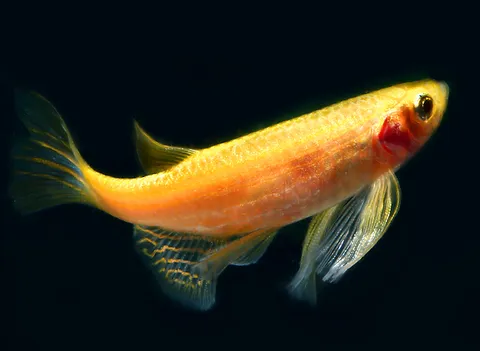
A representative of the Cyprinidae family, known as the Gold Danio, bearing the scientific name Danio rerio, is similar in appearance and behavior to its brethren, with the exception of one important feature – its…
Danio rerio
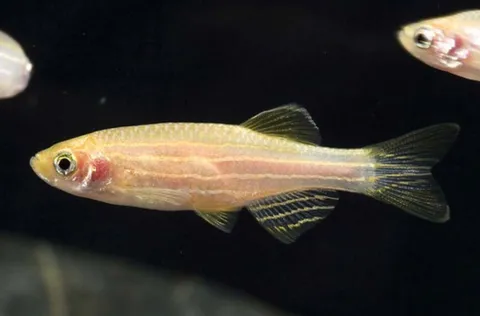
The Albino Zebra Danio, scientifically known as Danio rerio, is a member of the Cyprinidae family. This fish is a natural morphological form of the Zebra Danio and is found in the wild. Its key difference from its…
Danio rerio
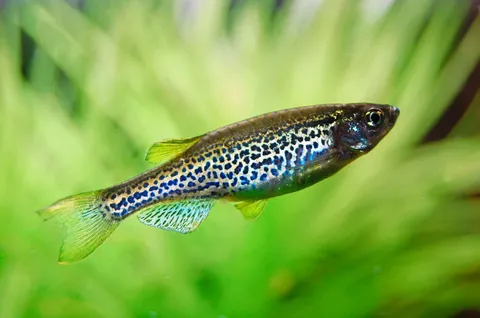
The Leopard Danio, known scientifically as Danio rerio, belongs to the family Cyprinidae. This easily recognizable and vibrant fish is considered one of the most popular varieties of Danio rerio. It is not found in the…
Danio rerio
The Blue Danio, known by its scientific name Danio rerio, belongs to the carp family (Cyprinidae). This variation of the classic Danio rerio stands out for its silvery-blue coloration, consisting of numerous small…