Temperature22 – 27 °C
Natural range
- Rakhine State
- Myanmar area
CyprinidsConservation status: Near threatened NT
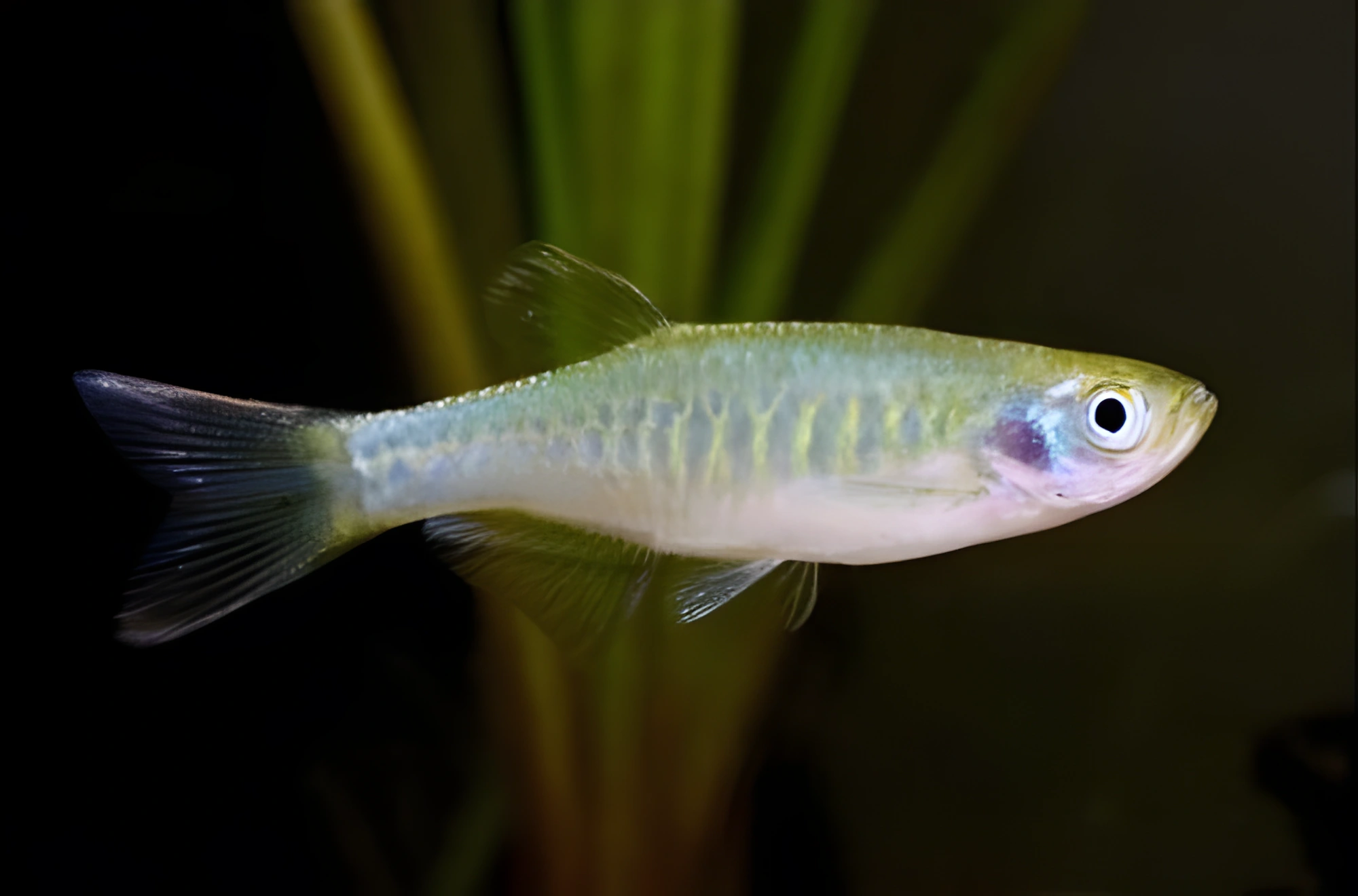
The Panther Danio, scientifically known as Danio aesculapii, belongs to the family Cyprinidae. Despite the fact that in various sources the fish is often associated with a panther, the reasons for such an analogy remain unclear. The Latin name of the species, however, has an interesting origin: it refers to the ancient Greek god of medicine, Asclepius (Ἀσκληπιός). According to legend, this god was depicted as an old man with two staffs entwined with snakes. Zoologists, when naming this species of danio, found that the pattern on the skin of these snakes strikingly resembles the coloration of the described fish.
- Required aquarium volume
- 60 L
- Size in aquarium
- 2.5 – 10 cm
- Temperature
- 22 – 27 °C
- Temperament
- Peaceful, active/mobile
Parameters
Water pHNeutral (6.5) – Neutral (7)
Water dHVery soft (1) – Medium hardness (8)
Water salinityno salt (freshwater)
Size in aquarium2.5 – 10 cm
Lifespan5 years
TemperamentPeaceful, active/mobile
Toward small fishnot a predator
Required aquarium volume60 L
Lightingany
Substraterocky (rock formations, boulders, etc.)
Water flowweak or moderate
FeedingMixed diet (meat + plant-based)
CareGroup (8–10 individuals)
Description
Adults reach up to 3 cm in length. Their coloration consists of gray-blue hues, with a silvery belly. The pattern on the body is formed by 6–8 short golden vertical stripes. Sexual dimorphism in these fish is not pronounced, and it is quite difficult to distinguish males from females. Nevertheless, females are usually slightly larger and become more rounded during the period preceding spawning.
Habitat
Its natural habitat is Southeast Asia, specifically Rakhine State in Myanmar, which is a coastal strip in the west, bordered by the Bay of Bengal on one side and the Arakan Mountains on the other. These fish have taken a liking to small mountain rivers, mainly in lowland areas, where the current is less intense and the rivers form backwaters. Natural habitat conditions vary depending on the time of year. During the monsoon season, there is a significant increase in water levels, which leads to changes in its hydrochemical composition and causes turbidity.
Behavior and Compatibility
This peaceful and active fish is a schooling species, preferring to be in groups of 8–10 individuals. It coexists well with other aquarium fish of similar size and temperament.
Care and Maintenance
For long-term and comfortable keeping of a school of Panther Danios, an aquarium of 50–60 liters will be optimal. Rocky substrate, various snags, and dense plant thickets are suitable as decorative elements. In their natural environment, these fish live in heavily overgrown bodies of water, so the more vegetation in the aquarium, the better. It is recommended to choose unpretentious plant species, such as Anubias, as well as aquatic mosses and ferns. The success of keeping largely depends on the stability of water parameters (pH and dGH) and regular aquarium maintenance. Among standard procedures, it is important to clean the substrate and decorations from organic waste (food residues, excrement, plaque), and also to weekly replace 20–30% of the water volume with fresh water. Equipment maintenance, such as checking, replacing, or rinsing the filter material in the filtration system, is also an integral part of care. It is important to note that these fish need a high content of dissolved oxygen in the water and react negatively to strong internal currents.
Diet
Regarding nutrition, these fish are quite unpretentious. In a home aquarium, they readily accept most common foods: dry flakes, granules, as well as freeze-dried, frozen, or live foods, such as bloodworms, daphnia, and artemia. To stimulate bright coloration and maintain good tone, it is recommended to use a varied diet, combining several types of food.
Breeding and Reproduction
Breeding this species, although not extremely difficult, still requires some experience. In natural conditions, the breeding season begins with monsoon rains, when rivers are enriched with nutrients washed from the soil. In an aquarium environment, a stimulus for spawning can be a decrease in water temperature by adding cool water and maintaining it at this level for several days. Protein food becomes an important part of the diet during this period: live or frozen artemia, bloodworms, and other similar foods. Under favorable conditions, females can prepare for spawning, their bodies will noticeably round with roe. Females scatter eggs in the water column or among dense plants, and males fertilize them. Parental instincts are absent in these fish; adults can gladly eat their offspring, which minimizes the survival rate of fry in a community tank. To preserve the young, spawning is recommended to be carried out in a separate tank with identical water conditions, where a female and the most active male are placed. After the eggs are laid, the fish are returned. An alternative method is to use a fine-mesh net or a special spawning substrate (artificial imitation of plants) at the bottom of the main aquarium. Eggs that fall under the net or into the substrate are relatively safe. They can be carefully collected (in the case of a net) or the spawning substrate can be transferred to a pre-prepared tank. The incubation period lasts about 36 hours. For the first 3–4 days, the fry feed on the remnants of the yolk sac, and then begin to actively swim in search of food. They are fed micro-food, such as artemia nauplii or specialized powdered foods for aquarium fish fry.
Diseases
In a balanced aquarium ecosystem that meets the needs of this species, diseases are rare. Most often, ailments are provoked by deteriorating environmental conditions, contact with already sick fish, or mechanical damage. If the fish shows clear signs of illness, medicinal treatment should be applied. More detailed information on symptoms and therapy methods can be found in the “Aquarium Fish Diseases” section.
How to choose
When choosing Panther Danios in a store, pay attention to the activity of the fish: healthy individuals should be active, constantly moving, and showing interest in their surroundings. Avoid specimens with damaged fins, whitish growths on the body, or signs of emaciation, as these symptoms often indicate stress or the presence of infections.
Since the species is schooling, purchase at least 8–10 individuals at a time to reduce stress during adaptation in a new aquarium. Consider the following recommendations:
- carefully inspect the aquarium in the store for dead fish, which may indicate poor water quality;
- choose fish with clear, non-cloudy eyes and dense scales without visible ulcers;
- remember that during transportation, fish may temporarily fade, but their natural coloration should appear some time after acclimatization.
Frequently asked questions
The essentials: size, tank volume, water parameters and care
How big does Panther Danio get?
An adult reaches 2.5–10 cm in length. Plan the tank around the maximum size: the fish quickly outgrows a cramped setup.
What size aquarium does Panther Danio need?
The minimum recommended volume is 60 L. A smaller tank speeds up nitrate build-up and raises stress levels.
What water parameters does Panther Danio need?
Temperature 22–27 °C, pH 6.5–7, hardness 1–8 dGH. Stability matters more than exact values: sudden swings are harder on the fish than a small deviation from the ideal.
How long does Panther Danio live?
Around 5 years when kept properly. Lifespan depends directly on tank volume, water quality and a varied diet.
Is Panther Danio aggressive?
Temperament: peaceful, active/mobile. Keep this in mind when choosing tank mates.
How many Panther Danio should be kept together?
Recommended setup: group (8–10 individuals). Ignoring this is a common cause of stress and disease.
What does Panther Danio eat?
Diet type: mixed diet (meat + plant-based). Feed small portions that are finished within a couple of minutes — overfeeding does more harm than underfeeding.
What is the scientific name of Panther Danio?
The scientific name of the species is Danio aesculapii, family Cyprinids (Cyprinidae).