Temperature20 – 26 °C
Natural range
- Southern Thailand area
- Peninsular Malaysia area
CyprinidsConservation status: Least concern LC
Other scientific names: Danio regina
The Regal Danio, scientifically known as Devario regina, is a member of the Cyprinidae family. The presence of the word "regal" in its name does not indicate any unique characteristics of this aquatic inhabitant, as it is outwardly quite similar to its relatives. This name dates back to the Latin word "regina," meaning "queen," and was given in honor of Her Majesty Rambai Barni (1904-1984), who held the title of Queen of Siam from 1925 to 1935.
- Required aquarium volume
- 250 L
- Size in aquarium
- 7 – 8 cm
- Temperature
- 20 – 26 °C
- Temperament
- Peaceful, active/mobile
Parameters
Water pHSlightly acidic (5.5) – Neutral (7)
Water dHVery soft (2) – Hard (12)
Water salinityno salt (freshwater)
Size in aquarium7 – 8 cm
Lifespan4 years
TemperamentPeaceful, active/mobile
Toward small fishnot a predator
Required aquarium volume250 L
Lightingany
Substraterocky (rock formations, boulders, etc.)
Water flowweak or moderate
FeedingMixed diet (meat + plant-based)
CareSchooling (usually from 5–6 individuals and more)
Description
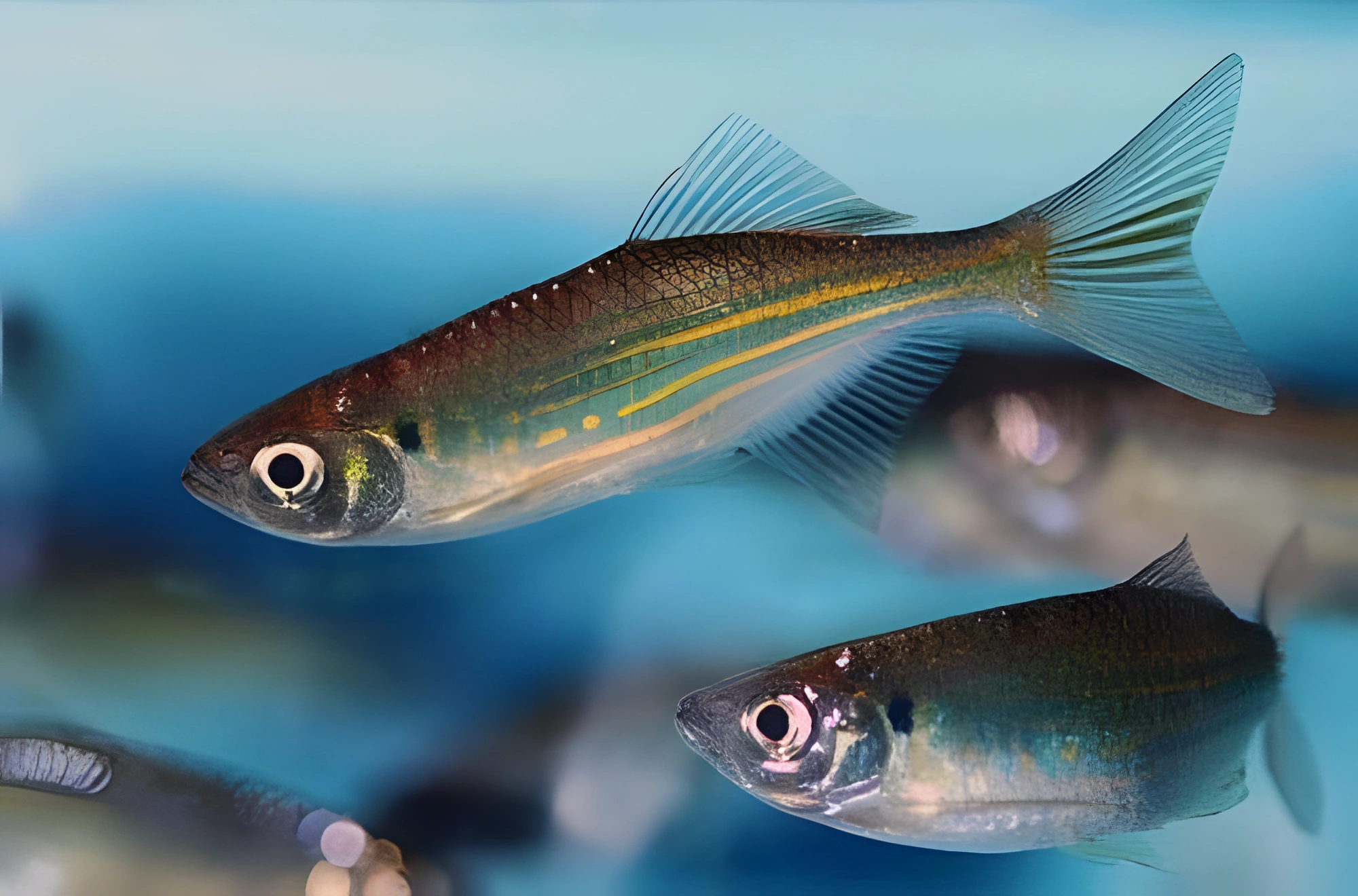
These fish grow up to 7–8 cm in length. Their body is adorned with a blue and yellow pattern, the back is usually gray, and the belly is silvery. This coloration often leads to confusion with the Giant and Malabar Danios. A distinguishing feature of the Regal Danio can be its large tail, but since this difference is not always obvious, determining the exact species can sometimes only be possible when compared to related species. Sexual dimorphism is weakly expressed in them, and males are similar to females, but the latter often appear slightly larger, especially during the period preceding spawning.
Habitat
The natural habitat of this species is located in Southeast Asia, in southern Thailand and in the northern regions of peninsular Malaysia. Although some sources mention its presence in India, Myanmar, and Laos, this data likely refers to other Danio species. It prefers to live in streams and rivers that flow through hilly areas under the dense canopy of tropical forests. Here, it is surrounded by clean flowing water, the bottom is covered with gravel and stones of various sizes, and the riparian zone has only a small amount of aquatic vegetation.
Behavior and Compatibility
These fish are active and peaceful, coexisting perfectly with other non-aggressive species of similar size. Their well-being directly depends on the presence of a school of at least 8–10 individuals. With fewer numbers, they can become timid and sluggish, which significantly shortens their lifespan, sometimes not even reaching one year.
Care and Maintenance
For comfortable keeping of a school of 8–10 individuals, an aquarium of at least 250 liters is recommended. When decorating, it is preferable to imitate the natural environment, using a rocky substrate, several snags, and a moderate amount of live or artificial aquatic plants. A key condition for successful keeping is maintaining optimal water parameters and minimizing organic waste. For this, a powerful filtration system with an aerator is installed, which performs several functions: cleans the water, creates an internal current resembling a river, and saturates the water with oxygen. In addition, regular maintenance procedures are necessary: weekly water changes of 30–40% of the volume with fresh water, constant monitoring of pH and dGH stability, as well as cleaning the substrate and decor elements. An important point: Danios are prone to jumping out of the aquarium, so a lid is essential.
Diet
In terms of care, this species is undemanding regarding food, successfully accepting most common aquarium fish foods. These can include dry flakes, granules, freeze-dried, frozen, as well as live foods such as bloodworms, daphnia, and brine shrimp.
Breeding and Reproduction
Breeding Danios usually does not cause difficulties. Given suitable conditions and quality, balanced nutrition, spawning can occur regularly. The fish scatter their eggs directly on the bottom. They lack parental instincts and do not care for their offspring. Moreover, Danios will not miss an opportunity to feast on their own eggs, which leads to very low fry survival in a community tank. Besides the threat of being eaten, the fry also have difficulty finding suitable food. To preserve the offspring, fertilized eggs should be transferred to a separate tank. This tank is filled with water from the main aquarium and equipped with a simple air-lift filter and heater. Although it is unlikely to collect all the eggs, their large number increases the chances of successfully raising several dozen fry. The incubation period lasts about 24 hours, and two days after that, the fry begin to swim freely. From this point, they can be fed specialized powdered food or Artemia nauplii, if available.
Diseases
In a balanced aquarium ecosystem that meets the needs of this species, diseases are rare. Most often, ailments are provoked by deteriorating environmental conditions, contact with already sick fish, or mechanical damage. If the fish shows clear signs of illness, medicinal treatment should be applied. More detailed information on symptoms and therapy methods can be found in the “Aquarium Fish Diseases” section.
How to choose
When choosing a Regal Danio, preference should be given to active, mobile individuals that demonstrate a pronounced schooling behavior. It is important to carefully inspect the fish for intact fins, absence of spots, ulcers, or unnatural film on the body, as the species is sensitive to water quality and the accumulation of organic pollutants. Avoid purchasing fish that appear emaciated, apathetic, or show signs of spinal deformity.
- purchase only healthy individuals from reputable stores, as the species can be rare in retail
- observe their behavior in the aquarium: the fish should be constantly moving and show interest in food
- keep in mind that in store conditions, fish often look paler due to stress, but should display a clear stripe pattern
Frequently asked questions
The essentials: size, tank volume, water parameters and care
How big does Regal Danio get?
An adult reaches 7–8 cm in length. Plan the tank around the maximum size: the fish quickly outgrows a cramped setup.
What size aquarium does Regal Danio need?
The minimum recommended volume is 250 L. A smaller tank speeds up nitrate build-up and raises stress levels.
What water parameters does Regal Danio need?
Temperature 20–26 °C, pH 5.5–7, hardness 2–12 dGH. Stability matters more than exact values: sudden swings are harder on the fish than a small deviation from the ideal.
How long does Regal Danio live?
Around 4 years when kept properly. Lifespan depends directly on tank volume, water quality and a varied diet.
Is Regal Danio aggressive?
Temperament: peaceful, active/mobile. Keep this in mind when choosing tank mates.
How many Regal Danio should be kept together?
Recommended setup: schooling (usually from 5–6 individuals and more). Ignoring this is a common cause of stress and disease.
What does Regal Danio eat?
Diet type: mixed diet (meat + plant-based). Feed small portions that are finished within a couple of minutes — overfeeding does more harm than underfeeding.
What is the scientific name of Regal Danio?
The scientific name of the species is Devario regina, family Cyprinids (Cyprinidae). It also appears in the literature as: Danio regina.