Temperature18 – 26 °C
Natural range
- Malay Peninsula area
- Phuket area
CyprinidsConservation status: Least concern LC
Other scientific names: Brachydanio kerri
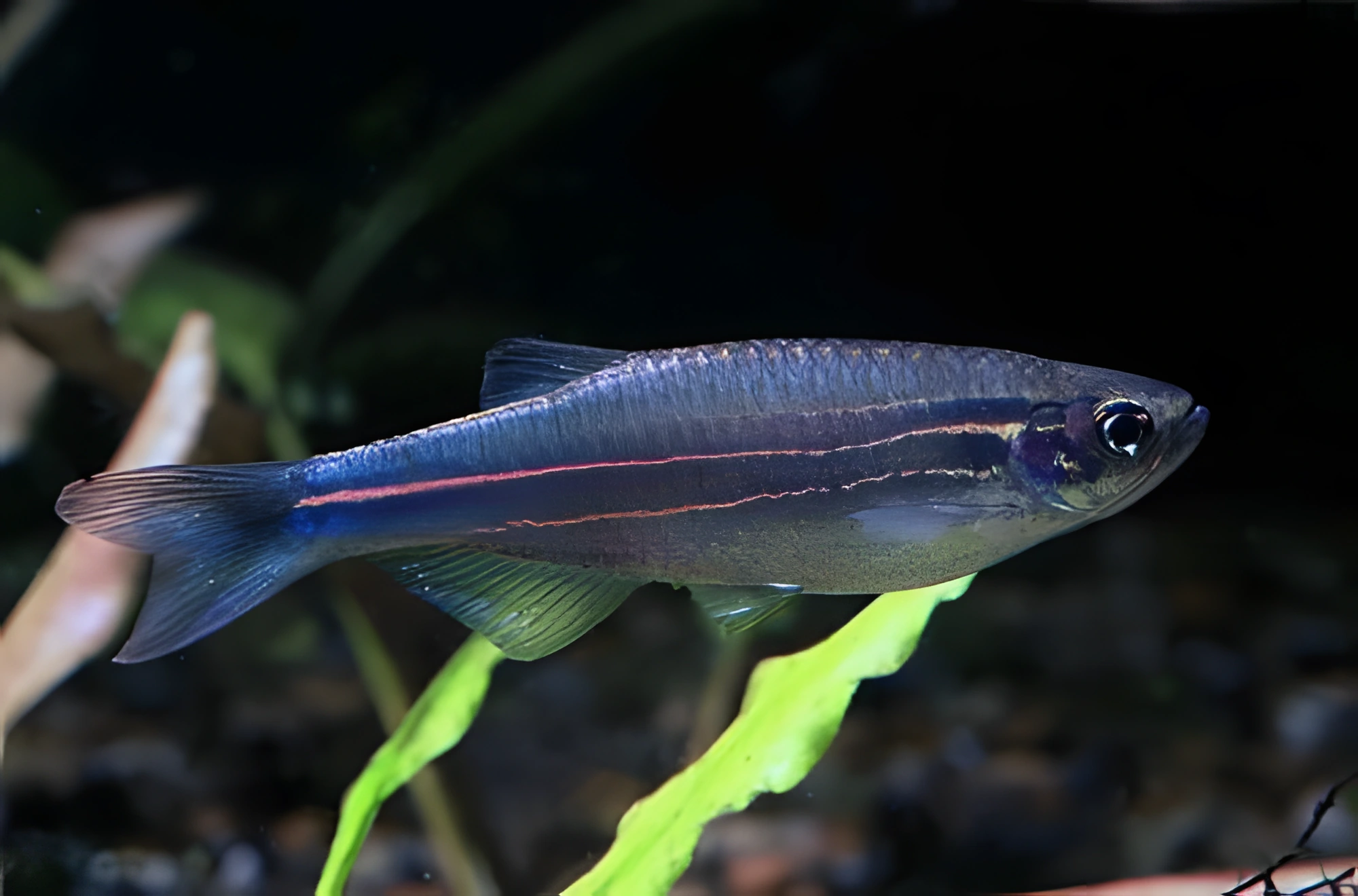
Danio kerri, known as the Kerri Danio, belongs to the Cyprinidae family. This attractive, miniature schooling fish is undemanding to keep and easy to breed. It coexists well with many other popular aquarium inhabitants.
- Required aquarium volume
- 80 L
- Size in aquarium
- 5 cm
- Temperature
- 18 – 26 °C
- Temperament
- Peaceful, active/mobile
Parameters
Water pHNeutral (6.5) – Neutral (7.5)
Water dHVery soft (2) – Hard (12)
Water salinityno salt (freshwater)
Size in aquarium5 cm
Lifespan5 years
TemperamentPeaceful, active/mobile
Toward small fishnot a predator
Required aquarium volume80 L
Lightingmoderate (regular)
Substraterocky (rock formations, boulders, etc.)
Water flowmoderate
FeedingAny (universal)
CareGroup (8–10 individuals)
Description
These fish are characterized by their elegant build and small size: adults grow to only 4 cm in length, with females typically being larger than males. One of their key external features is two parallel horizontal stripes running along their entire body. The coloration of Kerri Danios can vary from a rich blue to a delicate yellowish hue, depending on their region of origin.
Habitat
In the wild, these fish are found in forest streams and small rivers in the southern part of the Malay Peninsula, as well as on nearby islands such as Phuket, Ko Lanta, and Langkawi. Their habitats are characterized by crystal-clear water and rocky bottoms.
Behavior and Compatibility
This peaceful fish prefers to live in a school of at least 8–10 individuals. If there are fewer fish, they become timid and lose the intensity of their coloration. Competition among males for the attention of females stimulates them to display brighter colors, which keeps them in good condition. Kerri Danios are compatible with many popular aquarium species of similar size and temperament, such as cyprinids, characins, and livebearers.
Care and Maintenance
For a small school of fish, an aquarium of at least 80 liters will be needed, decorated to resemble a section of a mountain stream. Dark gravel with large boulders is desirable as a substrate. Various snags, branches, or tree roots can be secured in the substrate to create natural shelters. It is recommended to plant hardy aquatic plants that can successfully grow in conditions of moderate current. Kerri Danios, like other inhabitants of flowing waters, are very sensitive to water purity, so installing an efficient filtration system is paramount. In addition to purification, the filter creates an internal current, which has a beneficial effect on the overall tone of the fish. Other recommended equipment includes a heater, aerator, and lighting fixtures. To prevent fish from accidentally jumping out, the aquarium must be equipped with a lid. Aquarium care includes weekly water changes of 15–20% of the volume with fresh water, as well as periodic cleaning of the substrate from accumulated waste.
Diet
Regarding feeding, these fish are quite undemanding and readily consume all types of food offered: dry, frozen, and live. To achieve the best coloration, it is recommended to combine various types of food. Feeding should be done 2–3 times a day, providing an amount of food that the fish can eat within 5 minutes. It is important to promptly remove any uneaten food to prevent water pollution.
Breeding and Reproduction
Kerri Danios are egg-scattering species: females scatter their eggs in the water column, after which males fertilize them. Further development of the eggs occurs independently. In a community tank, the survival rate of fry is generally low, as adult fish tend to eat their own offspring. Using a separate breeding tank significantly increases the chances of successful breeding. Raising fry usually does not cause particular difficulties and is accessible even to a beginner aquarist. More detailed information on Danio reproduction can be found in specialized sources.
Diseases
Balanced nutrition and properly selected keeping conditions are the best prevention of diseases in freshwater fish. If the first signs of illness appear, such as changes in coloration or behavior, the first step should be to check the water parameters and quality. If necessary, all values should be brought back to normal, and only then should treatment begin. More detailed information on symptoms and treatment methods can be found in the "Diseases of Aquarium Fish" section.
How to choose
When selecting Kerri Danios, preference should be given to active and mobile individuals that stay in a school. Healthy fish have clean fins without signs of damage, film, or ulcers, and their scales have a characteristic sheen without spots. Avoid specimens with an unnaturally bloated abdomen, sunken sides, or signs of popeye. In the store, the fish should show curiosity and react quickly to external stimuli. Since the species is schooling, it is recommended to purchase at least 6–8 individuals at a time to minimize stress during adaptation to new conditions.
Frequently asked questions
The essentials: size, tank volume, water parameters and care
How big does Danio Kerri get?
An adult reaches 5 cm in length. Plan the tank around the maximum size: the fish quickly outgrows a cramped setup.
What size aquarium does Danio Kerri need?
The minimum recommended volume is 80 L. A smaller tank speeds up nitrate build-up and raises stress levels.
What water parameters does Danio Kerri need?
Temperature 18–26 °C, pH 6.5–7.5, hardness 2–12 dGH. Stability matters more than exact values: sudden swings are harder on the fish than a small deviation from the ideal.
How long does Danio Kerri live?
Around 5 years when kept properly. Lifespan depends directly on tank volume, water quality and a varied diet.
Is Danio Kerri aggressive?
Temperament: peaceful, active/mobile. Keep this in mind when choosing tank mates.
How many Danio Kerri should be kept together?
Recommended setup: group (8–10 individuals). Ignoring this is a common cause of stress and disease.
What does Danio Kerri eat?
Diet type: any (universal). Feed small portions that are finished within a couple of minutes — overfeeding does more harm than underfeeding.
What is the scientific name of Danio Kerri?
The scientific name of the species is Danio kerri, family Cyprinids (Cyprinidae). It also appears in the literature as: Brachydanio kerri.