Temperature20 – 26 °C
Natural range
- Shan State
- Myanmar area
CyprinidsConservation status: Data deficient DD
Other scientific names: Brachydanio sondhii, Danio sondhii
The fish, known scientifically as Devario sondhii, belongs to the Cyprinidae family and is commonly called Devario sondhii. These aquarium inhabitants became available to hobbyists in the early 2000s. Initially, there was some confusion with Microdevario kubotai (formerly Microrasbora rubescens), as their coloration and body pattern bore significant resemblance, and both species were often supplied under the same name. This species is considered very easy to keep and breeds successfully in aquarium conditions. It coexists well with other peaceful freshwater species if their living conditions are compatible.
- Required aquarium volume
- 60 L
- Size in aquarium
- 4 – 6.5 cm
- Temperature
- 20 – 26 °C
- Temperament
- Peaceful (regular)
Parameters
Water pHSlightly acidic (6) – Neutral (7)
Water dHVery soft (1) – Soft (5)
Water salinityno salt (freshwater)
Size in aquarium4 – 6.5 cm
Lifespan6 years
TemperamentPeaceful (regular)
Toward small fishnot a predator
Required aquarium volume60 L
Lightingdimmed
Substrateany (no restrictions)
Water flowweak or moderate
FeedingSmall / appropriate size / pieces
CareGroup (8–10 individuals)
Description
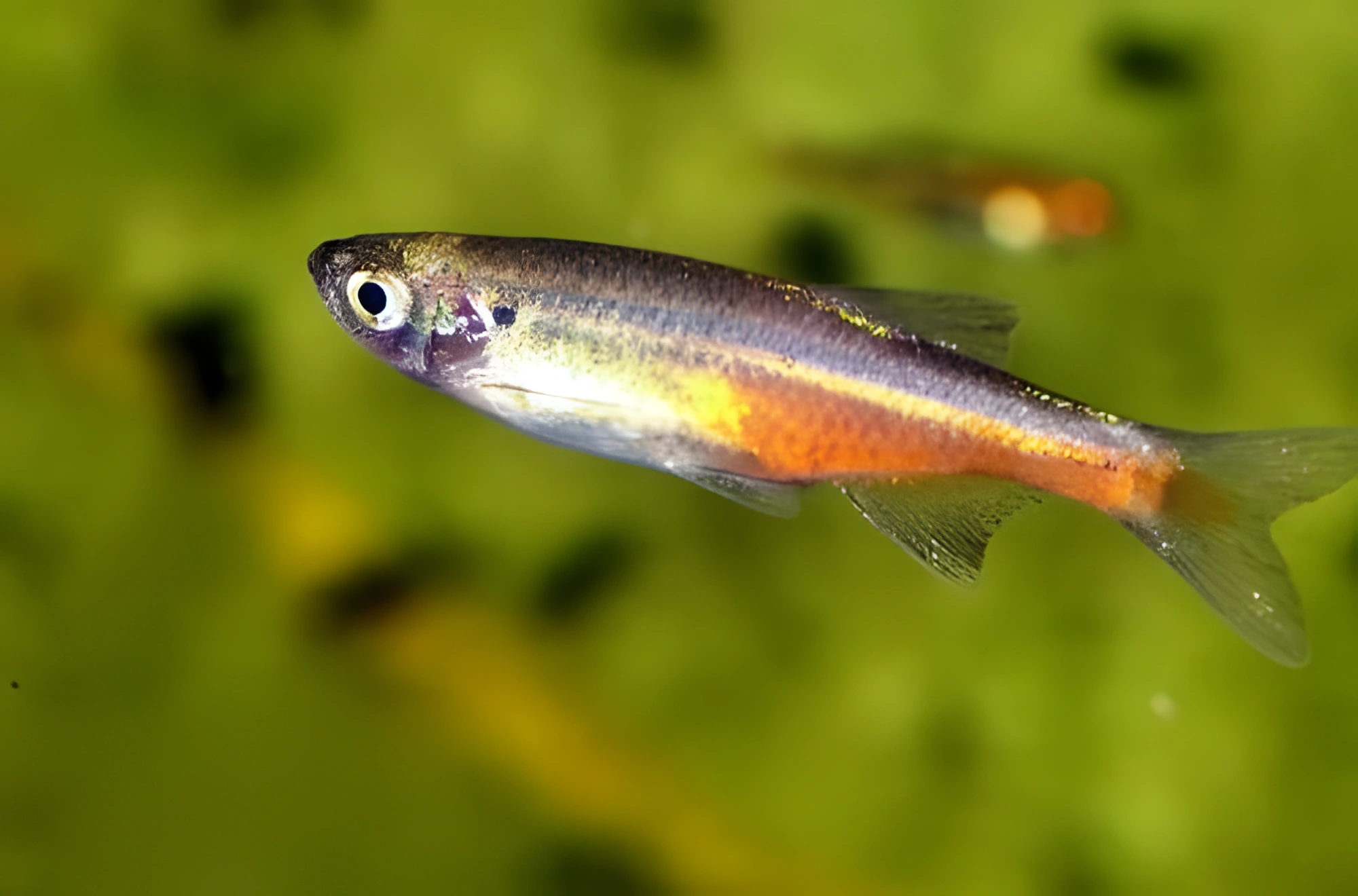
Adult individuals reach a body length of approximately 4 cm. Their coloration is a combination of silvery and orange hues, and their fins are translucent. Two barely discernible stripes—a blue one and a golden one—run along the body. Sexual dimorphism in these fish is weakly expressed, and males are almost impossible to distinguish from females by external characteristics.
Habitat
The natural habitat of these fish is in Southeast Asia, in the territory of the modern Shan State in Myanmar, in the eastern part of the country. They can be found in the Salween River basin, also known as Thanlwin. These areas are characterized by shallow streams and rivers flowing through hilly terrain. Here, the water is clean and clear, with an abundance of aquatic plants. The fish also inhabit more turbid bodies of water, such as rice paddies.
Behavior and Compatibility
This is a peaceful and active fish that coexists excellently with other Cyprinids and species of comparable size and temperament. These fish prefer to stay in a school consisting of at least 8–10 individuals. If their number is smaller, the fish's behavior may change: they become "sluggish" and timid.
Care and Maintenance
For a small school of 8–10 individuals, an aquarium with a volume of 60–70 liters will be optimal. In terms of decor, there are no strict rules, but it is important to have both dense plant thickets, including floating plants, and open areas for the fish to swim freely. Dim lighting is recommended. Keeping Devario sondhii will not cause serious difficulties. The main thing is to create suitable conditions for them in terms of temperature and hydrochemical parameters, and then maintain them at the proper level. An effective filtration system and regular aquarium maintenance procedures play a key role. Such procedures include weekly water changes of 30–50% of the volume with fresh water, removal of organic waste (excrement, food remnants) from the substrate and decor elements, and equipment maintenance. This list is not exhaustive, but it can be considered the foundation for successful keeping. An important point: the aquarium must be equipped with a lid to prevent the fish from accidentally jumping out.
Diet
Regarding feeding, these fish are not particularly demanding. In a home aquarium, they readily accept most common foods. These can be dry flakes and granules, as well as live or frozen food, such as bloodworms, Daphnia, or Artemia.
Breeding and Reproduction
If conditions are favorable, spawning in these fish can occur year-round. During the breeding period, they scatter many eggs among the vegetation and thereafter show no further interest in their offspring. The incubation period lasts from 24 to 36 hours, and within a couple of days, the fry begin to swim freely. It is important to note that in a community tank, the survival rate of the young will be extremely low. The fry will find it difficult to find suitable food, and many of them will become prey for other aquarium inhabitants. Only a few will survive to adulthood. If you plan to breed them, you must prepare a separate tank in advance—a breeding aquarium, which should always be ready for use. This is usually a small volume of about 20 liters, filled with water from the main aquarium to ensure identical water parameters. The equipment set for such an aquarium includes a simple air-driven filter and a heater. An additional light source is usually not required. The hatched fry are fed specialized powdered foods, and if possible, Artemia nauplii.
Diseases
In a balanced aquarium ecosystem that meets the needs of this species, diseases are rare. Most often, ailments are provoked by deteriorating environmental conditions, contact with already sick fish, or mechanical damage. If the fish shows clear signs of illness, medicinal treatment should be applied. More detailed information on symptoms and therapy methods can be found in the “Aquarium Fish Diseases” section.
How to choose
When choosing individuals, pay attention to their activity and behavior: healthy fish should stay in a school and show curiosity, avoiding timidity or apathy. It is important to assess the condition of the skin and fins for the absence of spots, ulcers, damage, or film, which indicate diseases. Since the species is schooling, it is recommended to purchase a group of 8–10 individuals, which reduces stress during adaptation in a new aquarium. Avoid buying fish that look emaciated or have an unnaturally bloated abdomen, as this may indicate problems with internal organs or parasitic infestations.
Frequently asked questions
The essentials: size, tank volume, water parameters and care
How big does Devario sondhii get?
An adult reaches 4–6.5 cm in length. Plan the tank around the maximum size: the fish quickly outgrows a cramped setup.
What size aquarium does Devario sondhii need?
The minimum recommended volume is 60 L. A smaller tank speeds up nitrate build-up and raises stress levels.
What water parameters does Devario sondhii need?
Temperature 20–26 °C, pH 6–7, hardness 1–5 dGH. Stability matters more than exact values: sudden swings are harder on the fish than a small deviation from the ideal.
How long does Devario sondhii live?
Around 6 years when kept properly. Lifespan depends directly on tank volume, water quality and a varied diet.
Is Devario sondhii aggressive?
Temperament: peaceful (regular). Keep this in mind when choosing tank mates.
How many Devario sondhii should be kept together?
Recommended setup: group (8–10 individuals). Ignoring this is a common cause of stress and disease.
What does Devario sondhii eat?
Diet type: small / appropriate size / pieces. Feed small portions that are finished within a couple of minutes — overfeeding does more harm than underfeeding.
What is the scientific name of Devario sondhii?
The scientific name of the species is Devario sondhii, family Cyprinids (Cyprinidae). It also appears in the literature as: Brachydanio sondhii, Danio sondhii.