Temperature23 – 27 °C
Natural range
- Northern Myanmar area
- Kachin State
CyprinidsConservation status: Least concern LC
Other scientific names: Brachydanio choprai, Danio choprai
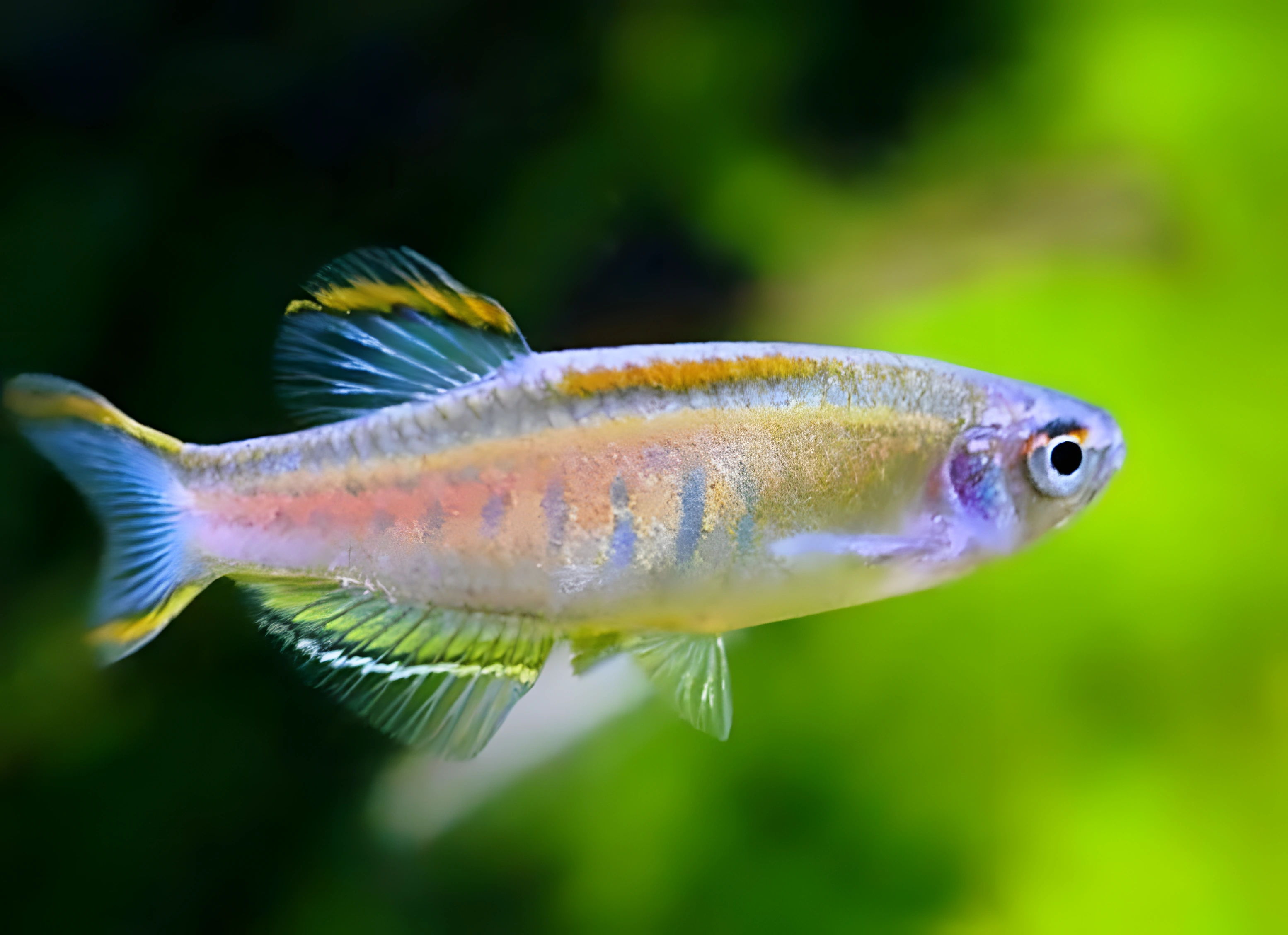
Danio choprae, also known as the Glowlight Danio, belongs to the carp family (Cyprinidae). This fish, with its strikingly rich palette of colors, can become a true adornment of the underwater world, bringing vibrant hues to the aquarium. Distinguished by its enviable hardiness, similar to other members of the Danio genus, it is an excellent choice for aquarists of all levels.
- Required aquarium volume
- 40 L
- Size in aquarium
- 3 cm
- Temperature
- 23 – 27 °C
- Temperament
- Peaceful, active/mobile
Parameters
Water pHSlightly acidic (6) – Neutral (7)
Water dHVery soft (2) – Hard (15)
Water salinityno salt (freshwater)
Size in aquarium3 cm
Lifespan5 years
TemperamentPeaceful, active/mobile
Toward small fishnot a predator
Required aquarium volume40 L
Lightingdimmed or moderate
Substrateany, but dark
Water flowmoderate
FeedingAny (universal)
CareSchooling (usually from 5–6 individuals and more)
Description
This slender and incredibly colorful fish is considered the smallest among all Danios, its length usually not exceeding 3 cm. Its body coloration is striking in its diversity, combining several bright tones: red and turquoise, yellow and orange, as well as green, blue, and light blue. It can rightfully be called a living rainbow fish.
Habitat
The history of Danio choprae began in 1928, when it was first described and named after Dr. Chopra, who collected the first specimens of this species. In their natural habitat, these fish can be found exclusively in the waters of the Irrawaddy River, located in northern Myanmar (Burma), which is part of Southeast Asia. They prefer small rocky streams where the bottom is covered with gravel, and the water is clear and has a high oxygen concentration.
Behavior and Compatibility
This peaceful fish species exhibits schooling behavior and prefers the company of its own kind. It is recommended to keep them in a group of at least 10 individuals. They are very active, often "chasing" each other, which is part of their playful behavior and not a sign of aggression. If the school size is insufficient, Danios may become lethargic, lose their appetite, and be more susceptible to diseases. The fish are quite timid, so even peaceful but large tank mates can cause them to seek shelter and possibly provoke attempts to jump out of the aquarium. Coexistence is only permitted with other small and peaceful species.
Care and Maintenance
No specific conditions are required for keeping Hopra Danios. It is sufficient to provide them with clean, clear water and to replace 25-30% of the total volume weekly. A powerful filtration system not only maintains cleanliness but also creates water movement, mimicking a river current. The water can be enriched with oxygen using several diffusers that produce fine bubbles. Lighting should be subdued, resembling the fish's natural habitat, as bright light can cause their coloration to fade. When decorating the aquarium, preference should be given to broad-leaved plants that reach the water surface, as well as floating species that provide additional shading. Using dark substrate helps emphasize the fish's bright colors, making them more expressive against a contrasting background.
Diet
Danios are omnivorous aquarium inhabitants and readily accept high-quality dry food. Since these fish are highly active and require a sufficient amount of nutrients, it is recommended to choose foods enriched with trace elements and organic matter.
Breeding and Reproduction
When kept together, males acquire a more saturated coloration, but no other significant sexual differences are observed. For successful breeding, it is recommended to use a separate tank, as this will allow for the creation of special conditions and protect the eggs from being eaten. A 10 L spawning aquarium will be quite sufficient. Its decoration should include a dark substrate (preferably coarse gravel), low-growing fine-leaved plants, snags, and grottoes made of stones. Lighting should be dim; ambient room light will be enough. The water composition should be identical to the water in the main aquarium. Once they sink to the bottom, the eggs get lost among the plants and gravel, which increases their chances of avoiding being eaten by the parents, who are not averse to feasting on their offspring. Under favorable conditions and good nutrition, adult individuals form pairs and begin their mating dances. Two fish, one of which has a large, swollen belly (a female with eggs), circle each other. This pair should be carefully caught and moved to the prepared spawning tank, where the female will lay about 50 eggs. The male will then fertilize them. Fry appear after 3–4 days and should be fed micro-food. After approximately six months, they reach a size that allows them to be transferred to the community tank. More detailed information on Danio breeding can be found in relevant sources.
Diseases
Danios demonstrate resistance to diseases provided they receive proper care and have no contact with infected fish. More detailed information on disease symptoms and treatment methods is presented in the "Aquarium Fish Diseases" section. There are no special characteristics for this species.
How to choose
When purchasing, choose active individuals that stay in a group and show interest in their surroundings. Avoid fish with signs of lethargy, fin damage, white film, or an unnaturally bloated abdomen. Healthy specimens should have rich and vibrant coloration and energetic behavior. In the store, fish may appear timid due to stress, but they should not constantly hide in corners or lie on the bottom. Given the species' tendency to jump, always use tightly sealed containers for transportation.
Frequently asked questions
The essentials: size, tank volume, water parameters and care
How big does Danio choprae get?
An adult reaches 3 cm in length. Plan the tank around the maximum size: the fish quickly outgrows a cramped setup.
What size aquarium does Danio choprae need?
The minimum recommended volume is 40 L. A smaller tank speeds up nitrate build-up and raises stress levels.
What water parameters does Danio choprae need?
Temperature 23–27 °C, pH 6–7, hardness 2–15 dGH. Stability matters more than exact values: sudden swings are harder on the fish than a small deviation from the ideal.
How long does Danio choprae live?
Around 5 years when kept properly. Lifespan depends directly on tank volume, water quality and a varied diet.
Is Danio choprae aggressive?
Temperament: peaceful, active/mobile. Keep this in mind when choosing tank mates.
How many Danio choprae should be kept together?
Recommended setup: schooling (usually from 5–6 individuals and more). Ignoring this is a common cause of stress and disease.
What does Danio choprae eat?
Diet type: any (universal). Feed small portions that are finished within a couple of minutes — overfeeding does more harm than underfeeding.
What is the scientific name of Danio choprae?
The scientific name of the species is Danio choprae, family Cyprinids (Cyprinidae). It also appears in the literature as: Brachydanio choprai, Danio choprai.