Temperature22 – 28 °C
Natural range
- Lake Turkana area
- Lake Albert area
CharacinsConservation status: Least concern LC
Other scientific names: Citharinus citharius, Citharinus geoffroyi, Distichodus marnoi, Serrasalmus citharus
Citharinus citharus, or Citharinus, belongs to the family Citharinidae. It is widely found in the river systems of tropical and equatorial Africa. This fish is more often of interest for commercial fishing than for aquarium keeping, so it is quite rare to find it for sale.
- Required aquarium volume
- 500 L
- Size in aquarium
- 60 cm
- Temperature
- 22 – 28 °C
- Temperament
- Peaceful (regular)
Parameters
Water pHNeutral (6.5) – Neutral (7.5)
Water dHSoft (5) – Very hard (20)
Water salinityno salt (freshwater)
Size in aquarium60 cm
Lifespan8 years
TemperamentPeaceful (regular)
Toward small fishnot a predator
Required aquarium volume500 L
Lightingdimmed or moderate
Substrateany (no restrictions)
Water flowweak
FeedingPlant-based (algae, vegetables)
CareBoth solitary and in group (flexible)
Description
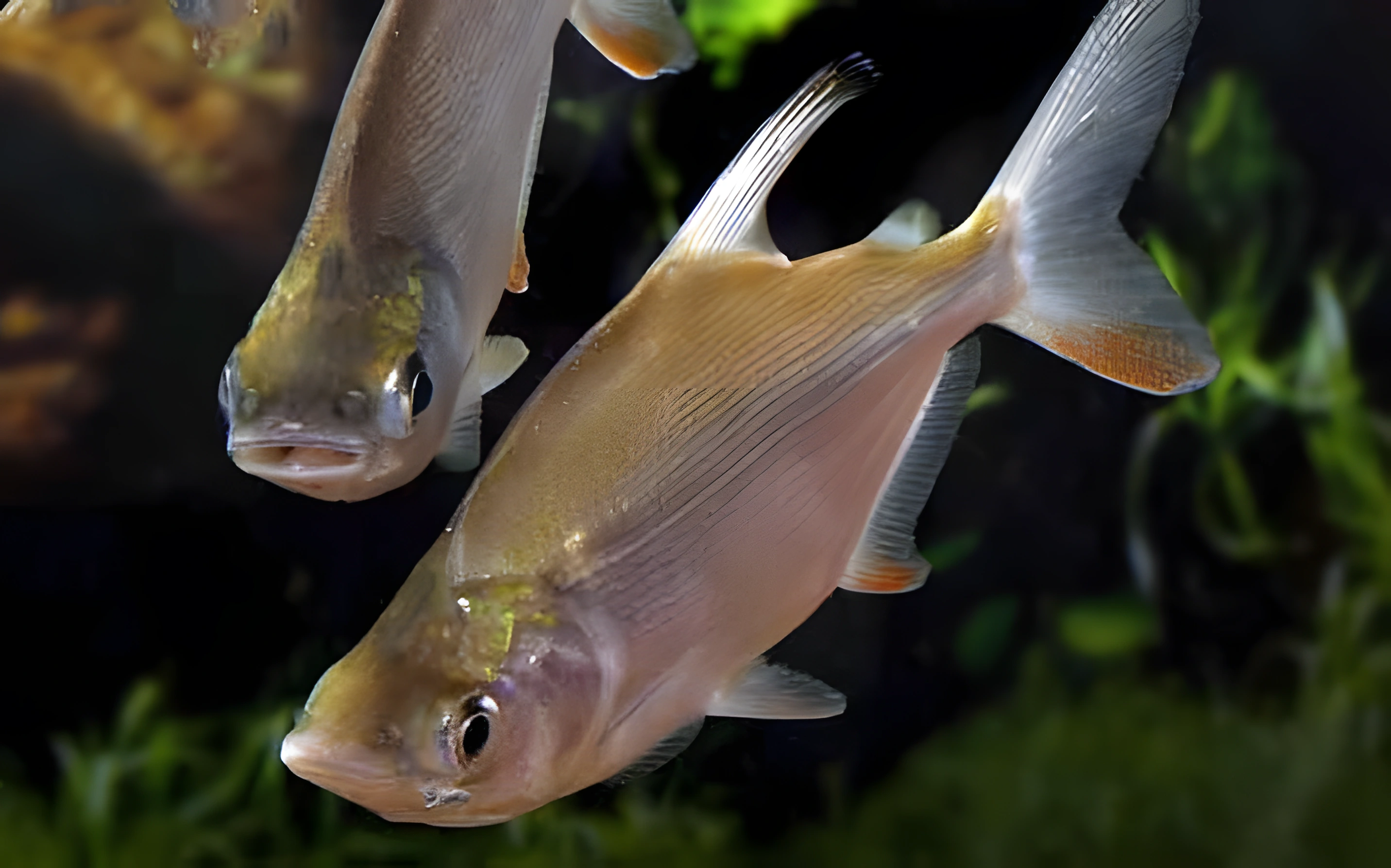
Adults reach impressive sizes: their length can range from 50 to 60 cm, and their weight up to 7 kg. The fish's body is deep and noticeably compressed laterally, and the head is large. The main coloration is typically a uniform silvery hue. The edges of the caudal, pelvic, and anal fins have a reddish tint. Young individuals may display dark stripes on their bodies, which serve as camouflage, helping them hide from predators in dense aquatic vegetation.
Habitat
The common citharinus inhabits large and medium-sized rivers of tropical Africa, including the basins of the Senegal, Gambia, Niger, Volta, Ouémé, Chad, and Nile rivers. It is also found in Lakes Turkana and Albert. It is a demersal species, preferring areas with soft substrate, where it feeds on detritus and phytoplankton.
Behavior and Compatibility
These fish are distinguished by their peaceful and calm disposition. They easily coexist with both their own kind and other large species, showing no aggression. However, caution is advised, as small fish may accidentally become their prey.
Care and Maintenance
For comfortable existence, Citharinus require very spacious aquariums, with a volume of at least 500 liters per individual. The aquarium's decor does not play a decisive role. The most suitable conditions for these fish are subdued lighting and the presence of shelters created from large snags or other natural, as well as artificial, decorative elements. It is important that the aquarium equipment matches its size. Special attention should be paid to the filtration system: it must be high-performance, but without creating an excessively strong current. In their natural habitat, Citharinus feed on periphyton—a community of hydrobionts consisting of microorganisms and plants that grow on the surfaces of stones and snags. In home conditions, providing such food is quite difficult, so their diet can consist of any available sinking foods. Specialized feeds used on fish farms for raising carp and trout will be a good solution.
Diet
In natural conditions, their diet consists of periphyton—a community of hydrobionts, including microorganisms and vegetation, that attach to the surface of stones and snags. Replicating such food in a home aquarium is quite problematic. Therefore, Citharinus can be fed any popular sinking foods, as well as products intended for raising carp or trout on fish farms.
Breeding and Reproduction
In nature, this species is an anadromous fish, migrating for spawning. Reproduction occurs through mass egg-laying, with the fish showing no parental care. Reliable information on successful breeding of this species in aquarium conditions is absent, which is due to the significant size of adult individuals and specific requirements for the spawning environment, mimicking seasonal changes in conditions in large African rivers.
Diseases
Based on available sources, a separate block cannot be compiled: the data is insufficient or contradictory. The entry can be updated later when verified information becomes available.
How to choose
When choosing a fish, its significant potential size, reaching 58 cm, must be considered, as this requires very large aquariums. A healthy specimen should swim actively, have no visible scale damage, ulcers, or signs of emaciation. Due to their natural feeding habits, it is important to ask the seller if the fish is adapted to commercially available foods, as this species is a specialized consumer of detritus and plankton.
Frequently asked questions
The essentials: size, tank volume, water parameters and care
How big does Citharinus get?
An adult reaches 60 cm in length. Plan the tank around the maximum size: the fish quickly outgrows a cramped setup.
What size aquarium does Citharinus need?
The minimum recommended volume is 500 L. A smaller tank speeds up nitrate build-up and raises stress levels.
What water parameters does Citharinus need?
Temperature 22–28 °C, pH 6.5–7.5, hardness 5–20 dGH. Stability matters more than exact values: sudden swings are harder on the fish than a small deviation from the ideal.
How long does Citharinus live?
Around 8 years when kept properly. Lifespan depends directly on tank volume, water quality and a varied diet.
Is Citharinus aggressive?
Temperament: peaceful (regular). Keep this in mind when choosing tank mates.
How many Citharinus should be kept together?
Recommended setup: both solitary and in group (flexible). Ignoring this is a common cause of stress and disease.
What does Citharinus eat?
Diet type: plant-based (algae, vegetables). Feed small portions that are finished within a couple of minutes — overfeeding does more harm than underfeeding.
What is the scientific name of Citharinus?
The scientific name of the species is Citharinus citharus, family Citharinidae. It also appears in the literature as: Citharinus citharius, Citharinus geoffroyi, Distichodus marnoi.