Temperature24 – 27 °C
Natural range
- Lake Tanganyika area
- Tanzania area
- Democratic Republic of the Congo area
- Burundi area
CichlidsConservation status: Least concern LC
Other scientific names: Limnochromis leptosoma, Paratilapia leptosoma
Cyprichromis leptosoma is the scientific name for this fish from the Cichlidae family. This peaceful and colorful fish coexists well with many other inhabitants if their keeping conditions are similar. Its ease of care and breeding makes it a suitable choice for beginner aquarists.
- Required aquarium volume
- 110 L
- Size in aquarium
- 12 cm
- Temperature
- 24 – 27 °C
- Temperament
- Peaceful (regular)
Parameters
Water pHSlightly alkaline (7.8) – Alkaline (9)
Water dHMedium hardness (10) – Very hard (25)
Water salinityno salt (freshwater)
Size in aquarium12 cm
Lifespan8 years
TemperamentPeaceful (regular)
Toward small fishnot a predator
Required aquarium volume110 L
Lightingmoderate (regular)
Substrateany (no restrictions)
Water flowweak or moderate
FeedingMixed diet (meat + plant-based)
CareGroup (8–10 individuals)
Description
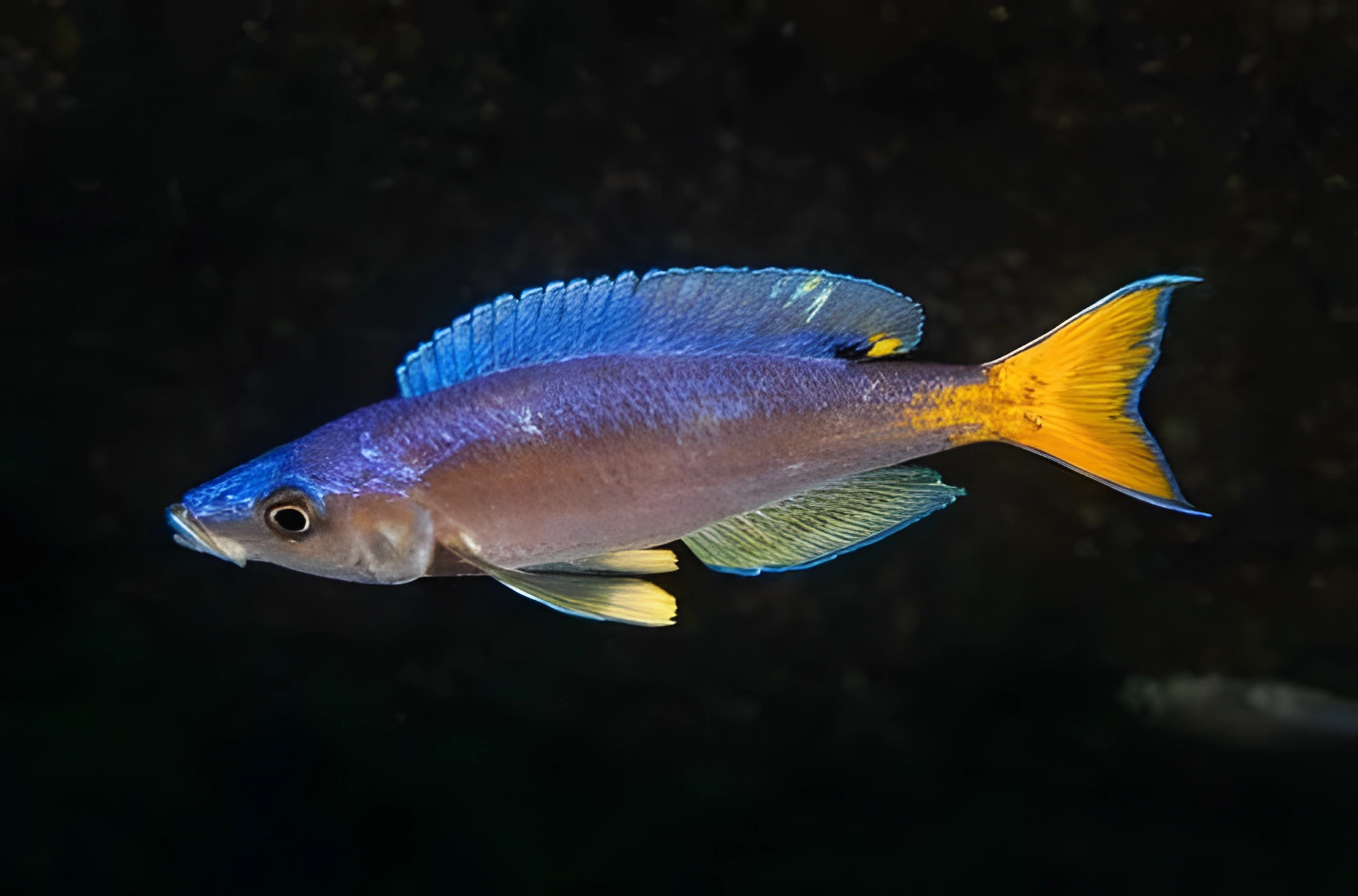
The market often offers several subspecies under the common name “Leptosoma.” Although the external differences between them are minimal, they can vary in size. Therefore, the maximum length of an adult is usually stated as 12 cm, although many representatives of this group are significantly smaller. Sexual dimorphism is weakly expressed, and distinguishing males from females externally is quite difficult. The coloration of all subspecies is uniform: the body and head have a blue tint, gradually transitioning to yellow closer to the tail.
Habitat
This fish is endemic to Lake Tanganyika, one of the largest bodies of water on the African continent. The lake is located in four countries, with Tanzania and the Democratic Republic of Congo having the longest coastlines. This species is found throughout the entire water body but prefers open water spaces.
Behavior and Compatibility
These peaceful fish prefer to live in schools, so it is recommended to acquire a group of approximately 10 individuals. They occupy the upper layers of the aquarium, which allows them to be successfully kept with other non-aggressive species from Lake Tanganyika. At the same time, it is important to exclude representatives of the Mbuna group from their tank mates.
Care and Maintenance
For a group of 8 or more fish, the optimal aquarium volume starts from 110 L. Since Cyprichromis leptosoma predominantly inhabit the upper water layers, the tank's decor is not critical and should be chosen considering the needs of other species if they live in the same aquarium. A reliable lid will prevent accidental jumping out of the fish, which become especially active during the breeding season. A key aspect of keeping is maintaining high water quality with optimal hydrochemical parameters of pH and dGH. This is achieved through an effective filtration system, regular cleaning of organic waste, and weekly replacement of 15–20% of the water volume with fresh water.
Diet
In their natural habitat, the diet of these fish consists of zooplankton, free-floating in the water column. In aquarium conditions, dry, non-sinking foods of appropriate size (the fish has a relatively small mouth) can be used. It is desirable to diversify the diet by adding small bloodworms, artemia, and daphnia, both live and frozen.
Breeding and Reproduction
Breeding Cyprichromis leptosoma usually does not cause difficulties, but to preserve the offspring, it is recommended to conduct spawning in a separate species-specific aquarium. At the beginning of the breeding season, males occupy certain areas in the water column, actively driving away competitors encroaching on their territory. Females, on the other hand, can move freely throughout the entire volume. When the female is ready, she accepts the courtship of one of the males, releases a few eggs (from 5 to 20 pieces), and immediately collects them in her mouth. Fertilization occurs directly in the oral cavity: the male releases milt, which the female inhales. The incubation period lasts about 4 weeks. This method of egg incubation is characteristic of many species from Lake Tanganyika and serves as a reliable mechanism for protecting future offspring.
Diseases
Inappropriate keeping conditions and poor-quality food are the main causes of most diseases in Lake Tanganyika cichlids, often leading to ailments such as African bloat. Upon detecting the first symptoms, it is extremely important to check water parameters and ensure the absence of high concentrations of ammonia, nitrites, nitrates, and other dangerous substances. If necessary, all parameters should be normalized, and only then should treatment begin. More detailed information on symptoms and treatment methods is presented in the section “Diseases of Aquarium Fish.”
How to choose
When choosing individuals, attention should be paid to their activity in the water column. Healthy fish stay in a school, show curiosity, and have no visible damage to scales or fins. Avoid specimens with signs of emaciation, sunken bellies, or unnatural behavior, such as constantly staying at the bottom or in the corners of the aquarium. Given the territorial nature of males, it is advisable to acquire a group of 8–10 individuals to reduce the level of intraspecific aggression. When purchasing, clarify the keeping conditions in the store, as stress from transportation and changes in water parameters can negatively affect the fish's condition.
Frequently asked questions
The essentials: size, tank volume, water parameters and care
How big does Cyprichromis leptosoma get?
An adult reaches 12 cm in length. Plan the tank around the maximum size: the fish quickly outgrows a cramped setup.
What size aquarium does Cyprichromis leptosoma need?
The minimum recommended volume is 110 L. A smaller tank speeds up nitrate build-up and raises stress levels.
What water parameters does Cyprichromis leptosoma need?
Temperature 24–27 °C, pH 7.8–9, hardness 10–25 dGH. Stability matters more than exact values: sudden swings are harder on the fish than a small deviation from the ideal.
How long does Cyprichromis leptosoma live?
Around 8 years when kept properly. Lifespan depends directly on tank volume, water quality and a varied diet.
Is Cyprichromis leptosoma aggressive?
Temperament: peaceful (regular). Keep this in mind when choosing tank mates.
How many Cyprichromis leptosoma should be kept together?
Recommended setup: group (8–10 individuals). Ignoring this is a common cause of stress and disease.
What does Cyprichromis leptosoma eat?
Diet type: mixed diet (meat + plant-based). Feed small portions that are finished within a couple of minutes — overfeeding does more harm than underfeeding.
What is the scientific name of Cyprichromis leptosoma?
The scientific name of the species is Cyprichromis leptosoma, family Cichlids (Cichlidae). It also appears in the literature as: Limnochromis leptosoma, Paratilapia leptosoma.