Temperature20 – 26 °C
Natural range
- Paraná River Basin
- Paraguay River Basin
- Pantanal area
- Northern Argentina area
CichlidsConservation status: Least concern LC
Other scientific names: Apistogramma aequipinnis, Apistogramma reitzigi, Heterogramma borellii, Heterogramma ritense, Heterogramma rondoni
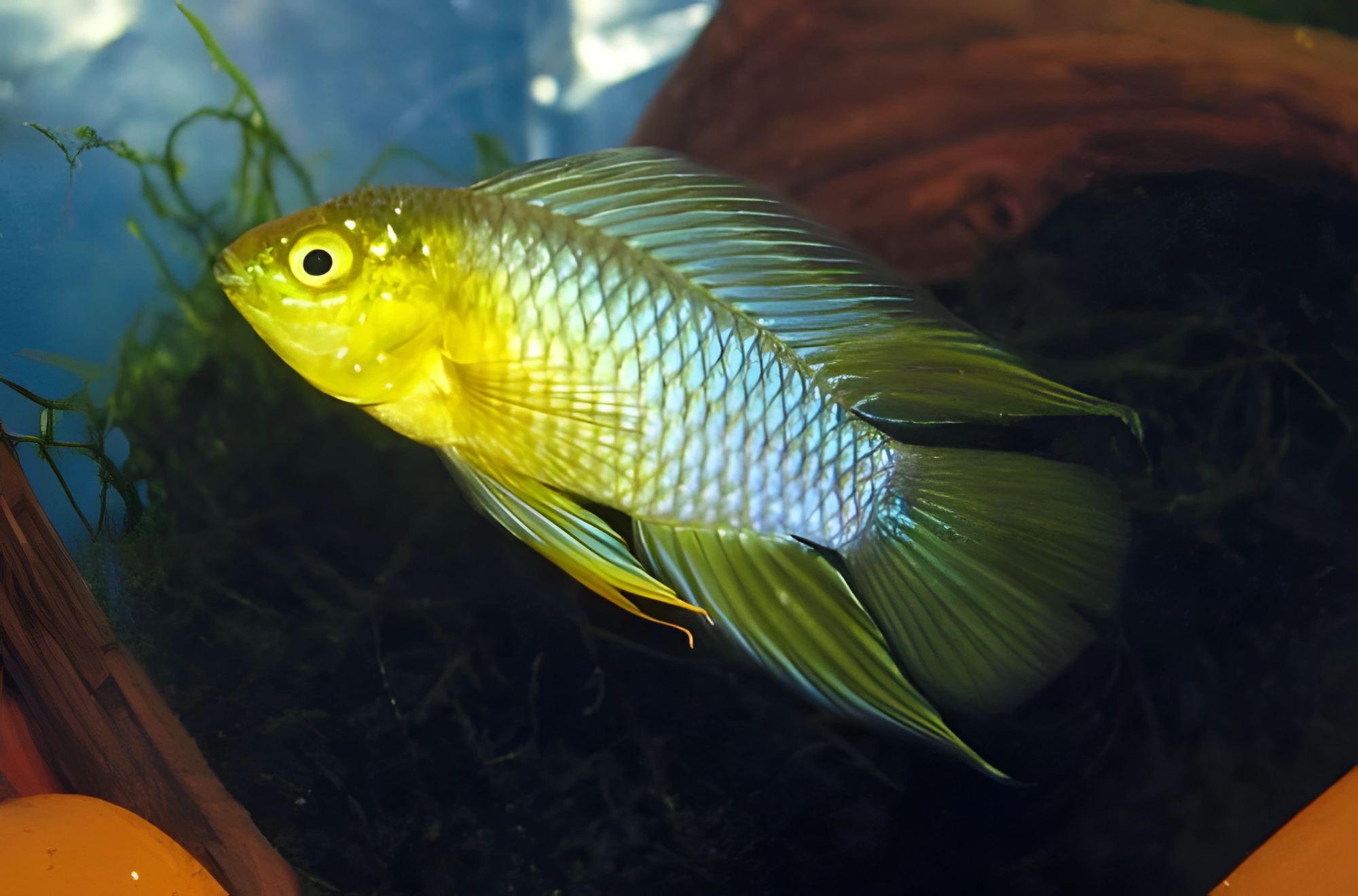
Borell's Apistogramma, scientifically known as Apistogramma borellii, belongs to the Cichlidae family and is often referred to as the Umbrella Cichlid. This miniature and attractive fish is undemanding and easy to care for, making it an excellent choice for beginner aquarists and allowing it to successfully coexist with many other species.
- Required aquarium volume
- 40 L
- Size in aquarium
- 5 cm
- Temperature
- 20 – 26 °C
- Temperament
- Peaceful (regular)
Parameters
Water pHSlightly acidic (5) – Slightly alkaline (8)
Water dHVery soft (1) – Hard (15)
Water salinityno salt (freshwater)
Size in aquarium5 cm
Lifespan4 years
TemperamentPeaceful (regular)
Toward small fishnot a predator
Required aquarium volume40 L
Lightingdimmed
Substratesandy (regular, light)
Water flowweak
FeedingHigh protein (predominantly meat)
CareSchooling (usually from 5–6 individuals and more)
Description
Adults reach a length of 5–6 cm and exhibit pronounced sexual dimorphism. Males are typically more brightly colored and have elongated dorsal and anal fins. Females, though similar, appear more modest. Coloration shades can vary depending on the place of origin and the characteristics of selective breeding forms. The most common variations include blue and yellow-blue tones.
Habitat
The natural habitat of this species covers the Paraná and Paraguay River basins in South America, including territories in northern Argentina, Paraguay, and the southern regions of Brazil. Interestingly, these fish are most often found not in the main channels of the rivers and their tributaries, but in extensive flooded areas. The Pantanal, the world's largest wetland system, is a typical environment for Apistogramma borellii.
Behavior and Compatibility
This fish is distinguished by its peaceful and calm disposition, coexisting well with both its own kind and other species of similar size and temperament. The best results are usually achieved when kept with South American characins. It is important to note that during spawning, the female may show aggression, protecting her offspring, so it is advisable to provide a separate tank for breeding.
Care and Maintenance
The Umbrella Cichlid has been successfully bred commercially in artificial aquarium conditions for a long time. This has led to modern generations of fish being well adapted to various conditions where wild populations might struggle. Thus, Apistogramma borellii can be successfully kept in any aquarium (preferably with a volume of at least 40 liters) with arbitrary decor and maintenance of acceptable hydrochemical water parameters. This species is characterized by wide permissible ranges: pH from 5.0 to 8.0 with soft to medium hardness (dGH). If the aquarist aims to create conditions as close to natural as possible, a sandy substrate is recommended. It is also beneficial to add numerous shelters in the form of snags (roots, tree branches, etc.), overgrown with mosses, ferns, and other aquatic vegetation, and to provide subdued lighting. The Pantanal wetlands, the natural habitat of Borell's Apistogramma, are rich in tannins, which give the water a characteristic brown tint. In an aquarium, a similar effect is achieved using special essences or Indian almond leaves and bark. Although this tree grows on another continent, its leaves are readily available for purchase, and the tannins they contain are identical.
Diet
This species is carnivorous, and in its natural environment, its diet consists of small invertebrates, crustaceans, and larvae, which the fish finds near the bottom. In a home aquarium, live or frozen foods such as bloodworms, daphnia, and brine shrimp can be offered. Some types of dry foods are also suitable, particularly granules and flakes with high protein content.
Breeding and Reproduction
Under favorable conditions and with sexually mature male and female, spawning will occur regularly. The fish lay their eggs in shelters, preferring crevices or cavities among decor elements. For several weeks, the female actively protects her clutch, and then the hatched fry, and during this period, other aquarium inhabitants should keep their distance from her.
Diseases
The main cause of most diseases in Leaf Fish is unsuitable keeping conditions and poor-quality nutrition. If initial symptoms are observed, it is first necessary to check water parameters and the concentration of dangerous substances such as ammonia, nitrites, and nitrates. If the indicators deviate from the norm, they should be brought back into order, and only then should treatment begin. More detailed information on symptoms and treatment methods can be found in the "Aquarium Fish Diseases" section.
How to choose
When choosing Borell's Apistogramma at a store, pay attention to the fish's activity and appearance. Healthy individuals should show curiosity, swim freely in the water column, and not constantly hide in the corners of the aquarium. Avoid specimens with signs of emaciation, sunken bellies, damaged fins, or visible spots on the body.
- Check for the absence of plaque, ulcers, or unnatural growths on scales and fins.
- Make sure the fish's breathing is calm, without rapid gill cover movements.
- Choose individuals that actively respond to food, as this is the best indicator of overall health and adaptation to living conditions.
Frequently asked questions
The essentials: size, tank volume, water parameters and care
How big does Umbrella Cichlid get?
An adult reaches 5 cm in length. Plan the tank around the maximum size: the fish quickly outgrows a cramped setup.
What size aquarium does Umbrella Cichlid need?
The minimum recommended volume is 40 L. A smaller tank speeds up nitrate build-up and raises stress levels.
What water parameters does Umbrella Cichlid need?
Temperature 20–26 °C, pH 5–8, hardness 1–15 dGH. Stability matters more than exact values: sudden swings are harder on the fish than a small deviation from the ideal.
How long does Umbrella Cichlid live?
Around 4 years when kept properly. Lifespan depends directly on tank volume, water quality and a varied diet.
Is Umbrella Cichlid aggressive?
Temperament: peaceful (regular). Keep this in mind when choosing tank mates.
How many Umbrella Cichlid should be kept together?
Recommended setup: schooling (usually from 5–6 individuals and more). Ignoring this is a common cause of stress and disease.
What does Umbrella Cichlid eat?
Diet type: high protein (predominantly meat). Feed small portions that are finished within a couple of minutes — overfeeding does more harm than underfeeding.
What is the scientific name of Umbrella Cichlid?
The scientific name of the species is Apistogramma borellii, family Cichlids (Cichlidae). It also appears in the literature as: Apistogramma aequipinnis, Apistogramma reitzigi, Heterogramma borellii.