Temperature23 – 28 °C
Natural range
- Lake Malawi area
- East Africa area
- Malawi area
- Mozambique area
CichlidsConservation status: Least concern LC
Other scientific names: Hemichromis afer, Paratilapia afra
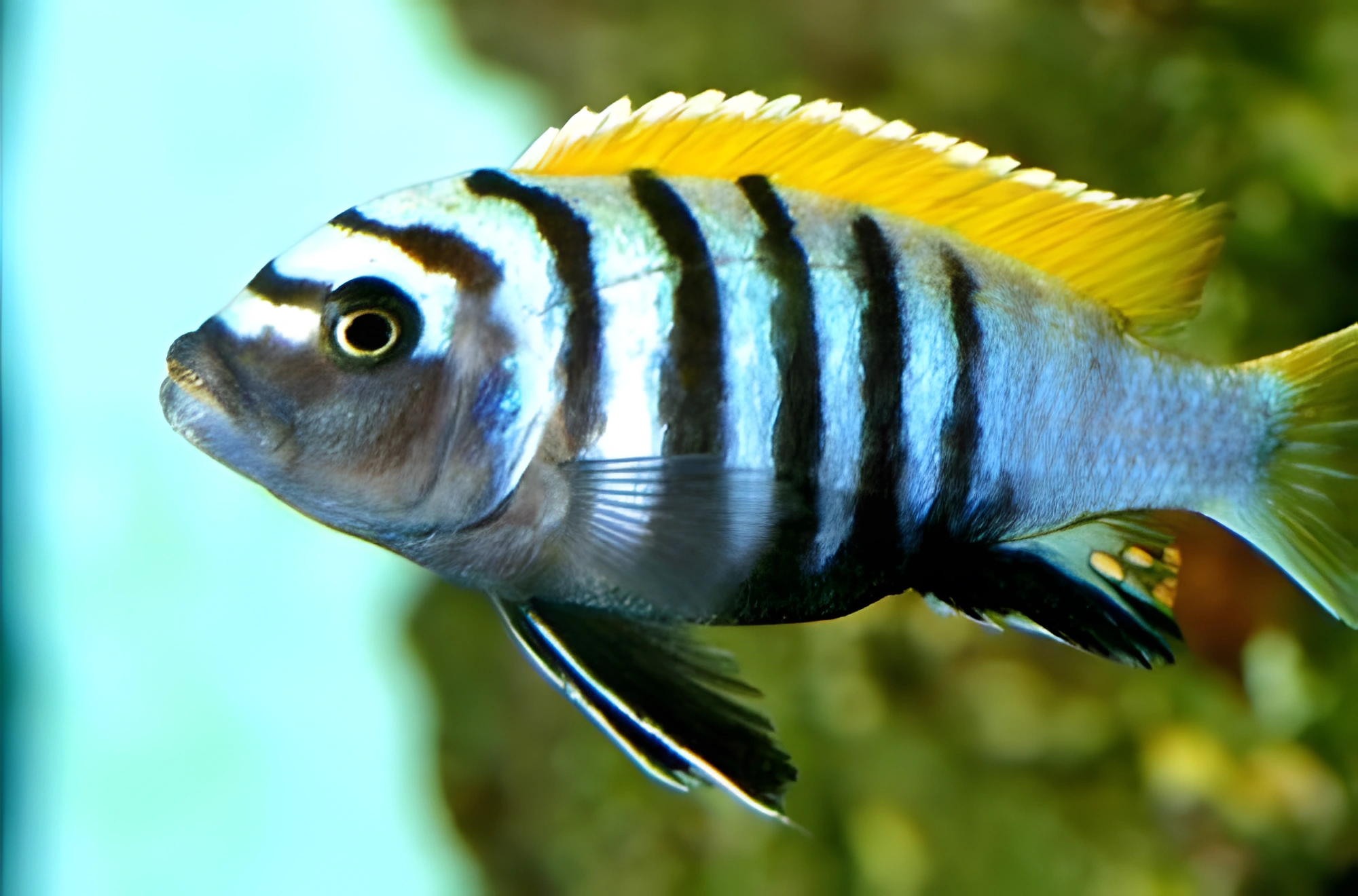
Cynotilapia afra, known among aquarists as the Dog Cichlid or Afra Cichlid, belongs to the family Cichlidae. Thanks to its original and diverse coloration, as well as its unpretentiousness in keeping, it has gained popularity among aquarium enthusiasts worldwide.
- Required aquarium volume
- 100 L
- Size in aquarium
- 10 cm
- Temperature
- 23 – 28 °C
- Temperament
- Territorial (often aggressive)
Parameters
Water pHNeutral (7.2) – Alkaline (8.8)
Water dHMedium hardness (10) – Very hard (18)
Water salinityvery low (up to ~3 g/L)
Size in aquarium10 cm
Lifespan10 years
TemperamentTerritorial (often aggressive)
Toward small fishnot a predator
Required aquarium volume100 L
Lightingmoderate (regular)
Substratefine sand
Water flowmoderate or strong
FeedingMixed diet (meat + plant-based)
CareHarem (1 male and several females)
Description
This is a small fish with a rather powerful and slightly elongated body. Its mouth is equipped with many sharp teeth. The dorsal fin, which serves as passive protection against predators, is long and extends from the head to the tail, consisting of numerous spiny rays. The coloration of this fish is very diverse, including blue, light blue, yellow, and other shades from this palette. There are several vertical dark stripes on the body, resembling a zebra pattern. These stripes can be either pronounced or less noticeable, especially in females.
Males are distinguished by bright, rich coloration, while females are usually duller and often lack clearly defined stripes on their bodies.
Habitat
These fish are endemic to Lake Malawi, located in Africa, and are not found outside of it. They belong to a large group of species known as Mbuna, which translates from the local dialect as “rock dwellers.” Cynotilapia inhabit the coastal rocky areas of the northern and northeastern parts of the lake, preferring shallow waters and upper water layers, although they are also found at depths of up to 20 meters. Females usually stay in groups in open waters, where their main food is plankton. Males, on the other hand, lead a solitary lifestyle, defending their territories, and feed on tough fibrous algae that grow on rocks; insect larvae and small crustaceans, also part of their diet, often live in these algae.
Behavior and Compatibility
The Dog Cichlid is not a schooling fish; however, they successfully exist in small polygamous groups where each male accounts for at least three females. It is forbidden to keep more than one male in an aquarium. In a sufficiently large aquarium, with a volume of 350–400 liters or more, cohabitation with other species of Lake Malawi cichlids is permissible, provided they are not aggressive, slightly larger, and differ in color or body pattern.
Care and Maintenance
Lake Malawi is known for its stable hydrochemical water composition, characterized by a high mineral content and a high pH level. To prepare water for the aquarium, it should be left to stand for 24 hours, and then the initial parameters should be determined using special test kits, such as litmus paper. After this, if necessary, the parameters are adjusted using reagents. It is important to purchase all test kits and reagents only from reliable pet stores and strictly follow the manufacturer's instructions. High water quality is maintained by regular weekly water changes of 10–20% of the volume and the presence of a powerful filtration system, which also creates the necessary internal current. The minimum necessary equipment also includes a heater, lighting, and aeration systems. In aquarium decoration, preference is given to rocks, large boulders, and piles of stones, forming many shelters and grottoes. Fine gravel is used as a substrate; coral gravel or aragonite can be useful for maintaining water hardness. The aquarium composition should be divided into two zones: an open swimming area and an area with shelters. Plants with a strong root system and tough leaves are suitable.
Diet
The diet of Dog Cichlids should be combined, including both meaty and plant components. Live or frozen bloodworms, mosquito larvae, pieces of earthworms, as well as shrimp and algae flakes are suitable for them. The ideal solution would be to use specialized foods developed for Lake Malawi cichlids, as they contain all the necessary vitamins and elements for full development. Additionally, bloodworms and other products can be offered.
Breeding and Reproduction
Breeding these fish successfully occurs in a species-specific aquarium; in mixed communities, conflicts are possible if females feel their offspring are threatened. Fish reach sexual maturity at 6–8 months, and when they are ready to spawn, the male acquires a brighter coloration than usual, which serves as a sure sign of the beginning of the breeding period. The female lays 10 to 20 eggs, immediately placing them in her mouth. After this, the pair unites, and the male displays his caudal fin with yellow spots that mimic eggs. The female, mistaking these spots for real eggs, tries to swallow them, thereby stimulating the male to release milt. When the milt is released, the female “inhales” it, and fertilization occurs. Fry appear after 2–3 weeks; all this time the eggs are in the female's mouth, which ensures maximum safety. It will be several more days before the female leaves the offspring; until then, she protects the fry, and in case of danger, the young hide back in her mouth. Fry should be fed specialized micro-food and Artemia. Grown fish that the female no longer cares for should be moved to a separate breeding aquarium.
Diseases
The main problem for these fish is the occurrence of diseases related to incorrect nutrition. An imbalance between meaty and plant foods leads to digestive system disorders, which makes the fish more vulnerable to various diseases. Similar difficulties can arise if water quality deteriorates or if its parameters do not meet the norm. More detailed information on symptoms and treatment methods can be found in the “Aquarium Fish Diseases” section.
How to choose
When selecting individuals, preference should be given to active fish with clean fins, without damage, plaque, or spots on the body. It is important to avoid buying individuals that look emaciated, have sunken bellies, or show signs of apathy, hiding in the corners of the aquarium. Given the pronounced territoriality of the species, it is recommended to acquire a group of young fish so that a hierarchy can form later, or to select individuals taking into account their future size, as adult males can show strong aggression towards newcomers in an established group.
Frequently asked questions
The essentials: size, tank volume, water parameters and care
How big does Dog Cichlid get?
An adult reaches 10 cm in length. Plan the tank around the maximum size: the fish quickly outgrows a cramped setup.
What size aquarium does Dog Cichlid need?
The minimum recommended volume is 100 L. A smaller tank speeds up nitrate build-up and raises stress levels.
What water parameters does Dog Cichlid need?
Temperature 23–28 °C, pH 7.2–8.8, hardness 10–18 dGH. Stability matters more than exact values: sudden swings are harder on the fish than a small deviation from the ideal.
How long does Dog Cichlid live?
Around 10 years when kept properly. Lifespan depends directly on tank volume, water quality and a varied diet.
Is Dog Cichlid aggressive?
Temperament: territorial (often aggressive). Keep this in mind when choosing tank mates.
How many Dog Cichlid should be kept together?
Recommended setup: harem (1 male and several females). Ignoring this is a common cause of stress and disease.
What does Dog Cichlid eat?
Diet type: mixed diet (meat + plant-based). Feed small portions that are finished within a couple of minutes — overfeeding does more harm than underfeeding.
What is the scientific name of Dog Cichlid?
The scientific name of the species is Cynotilapia afra, family Cichlids (Cichlidae). It also appears in the literature as: Hemichromis afer, Paratilapia afra.