Temperature20 – 30 °C
Natural range
- South America area
CichlidsConservation status: Least concern LC
Other scientific names: Geophagus cupido
The Cupid Cichlid, or Biotodoma cupido (its Latin name is Biotodoma cupido), belongs to the Cichlidae family. This beautiful and peaceful fish can become an adornment for almost any freshwater aquarium. It is considered relatively easy to keep and breed, which simplifies care for an experienced aquarist. However, beginners may encounter some difficulties along the way.
- Required aquarium volume
- 300 L
- Size in aquarium
- 14 – 17 cm
- Temperature
- 20 – 30 °C
- Temperament
- Peaceful (regular)
Parameters
Water pHSlightly acidic (5) – Neutral (7)
Water dHVery soft (1) – Soft (5)
Water salinityno salt (freshwater)
Size in aquarium14 – 17 cm
Lifespan8 years
TemperamentPeaceful (regular)
Toward small fishnot a predator
Required aquarium volume300 L
Lightingdimmed
Substratesandy (regular, light)
Water flowweak
FeedingAny (universal)
CareMedium group (6–8 individuals)
Description
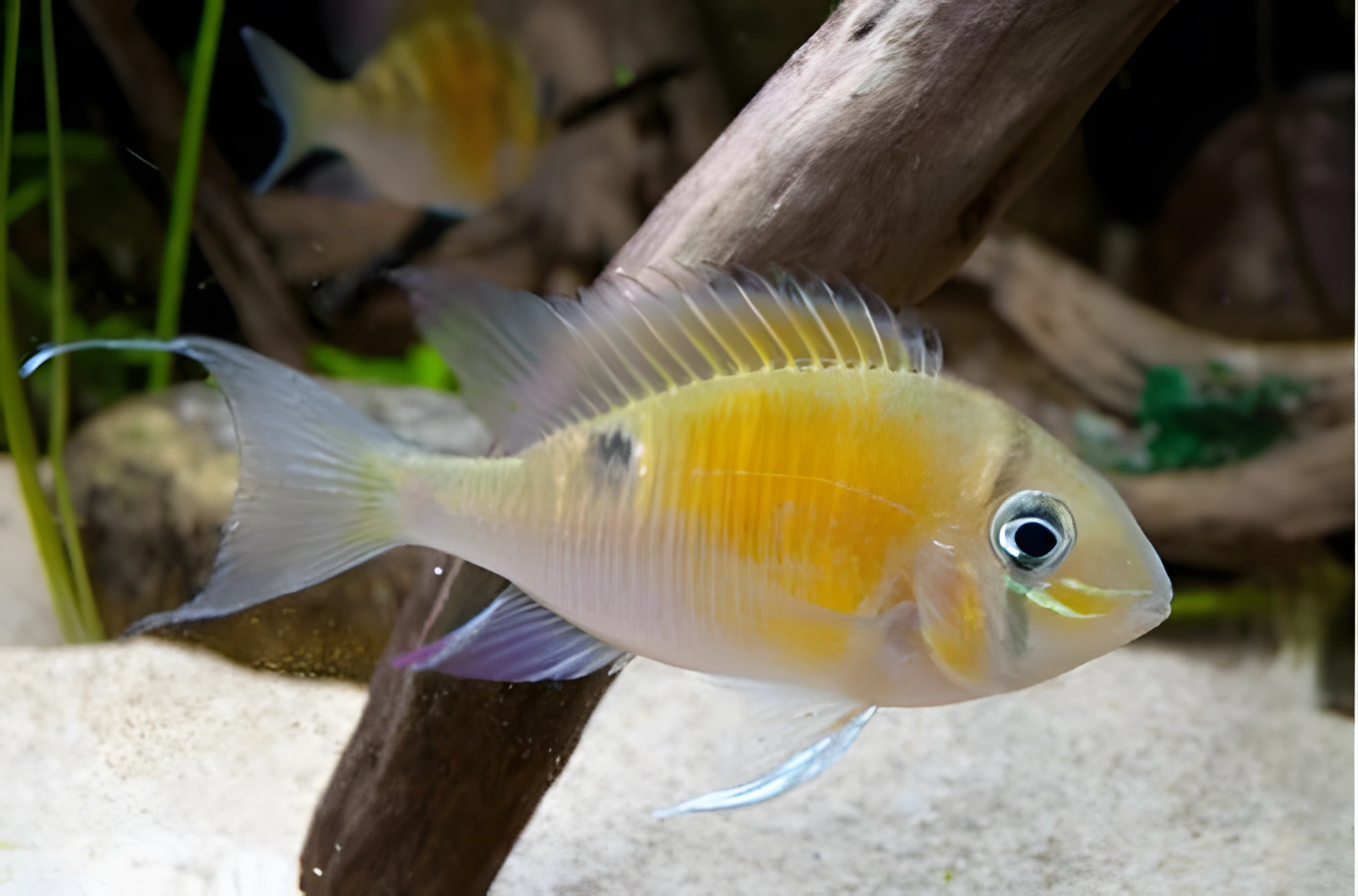
Adults of this fish can reach a length of up to 10 cm. Sexual dimorphism is weakly expressed: males and females do not have noticeable external differences. Typically, the front part of the body is orange, while the back, rear, and fins have a bluish tint. Turquoise markings are located under the eyes, on the head. A large dark spot is noticeable on the body, closer to the end of the dorsal fin. It is important to note that the coloration may vary slightly depending on the specific region of origin. Due to the vast natural habitat, there is a hypothesis that several closely related varieties are hidden under the species name. Nevertheless, at the time of writing this article, no official division of this cichlid species into new subspecies has yet occurred.
Habitat
The natural range of these fish covers the vast Amazon River basin in South America, where they inhabit various biotopes. Many of these areas are subject to pronounced seasonal changes, which manifest as fluctuations in water level, turbidity, and chemical composition.
Behavior and Compatibility
This fish is characterized by a peaceful and calm disposition, except during spawning periods. At this time, Cupid Cichlids can become less friendly, showing a desire to protect their offspring. They get along well with many other peaceful fish of comparable size. Intraspecific relationships are characterized by a clear hierarchy, where alpha males occupy a dominant position. It is recommended to keep a group of at least 5–8 individuals. In the case of a smaller number, stronger relatives may aggressively attack weaker ones.
Care and Maintenance
For a group consisting of 5–8 fish, an aquarium of at least 300 liters is considered optimal. It is appropriate to use materials found in their natural habitats for its decoration: sandy substrate, numerous snags, and a few shade-loving aquatic plants (the presence of which, however, is not mandatory). Lighting should be subdued. The Cupid Cichlid requires slightly acidic water with low carbonate hardness and is highly sensitive to any sudden fluctuations in hydrochemical parameters and temperature. An effective filtration system and regular aquarium maintenance are necessary to maintain stable water conditions. The latter includes weekly partial water changes, removal of organic waste, equipment prophylaxis, and monitoring of nitrogen cycle product concentrations.
Diet
This species is omnivorous. It readily accepts most common aquarium foods. The quality of food directly affects the physical condition of the fish and the brightness of its coloration, so it is preferable to choose products from reliable manufacturers. The daily diet of the Cupid Cichlid should include both protein and plant components. It is recommended to feed them 3–4 times a day in small portions.
Breeding and Reproduction
Breeding this species in a home aquarium is possible, but it requires some experience. Fish reach sexual maturity by 18–24 months of age. In the natural environment, spawning occurs during the rainy season. Therefore, to stimulate reproduction, the temperature should be gradually lowered and the water softened over several days, and then these conditions maintained for some time. When the cichlids are ready, they form a temporary pair and begin to build a nest — a deep pit in the substrate. An important nuance: the substrate should contain several large stones, as the fish dig the pit precisely next to them. The female lays several dozen eggs, attaching them with thin threads to the surface of the stone. The incubation period lasts 3–4 days, and 5 days after that, the hatched fry begin their free life. Throughout this time, the female remains in close proximity to the clutch, and the male “patrols” the territory within a radius of 60–90 cm, chasing away other fish. Both parents continue to protect the fry for about 6 weeks, after which they lose interest in them.
Diseases
The main cause of diseases often lies in the keeping conditions: if they go beyond acceptable limits, immunity decreases, making the fish vulnerable to various infections inevitably present in the environment. At the first suspicion of illness, it is important first of all to check the water parameters and ensure there are no dangerous concentrations of nitrogen cycle products. Often, restoring normal, suitable conditions promotes recovery. However, in some cases, medication may be required. Detailed information on symptoms and treatment methods is presented in the "Aquarium Fish Diseases" section.
How to choose
When choosing individuals, attention should be paid to the overall activity of the fish and the condition of its skin. Healthy specimens should show curiosity, swim in the water column, and have no visible damage such as ulcers, white growths, or damaged fins. Avoid buying fish with sunken bellies, which may indicate emaciation or the presence of internal parasites, as well as individuals that constantly stay near the surface or appear apathetic.
- Assess the water clarity in the aquarium where the fish are kept, as poor conditions in the store often provoke the development of infections.
- Observe the group's behavior: the fish should demonstrate a natural hierarchy, not show signs of extreme stress or constant flight from neighbors.
- Ask the seller what the fish are fed, as being accustomed to a varied diet is an important indicator of the specimen's health and adaptability.
Frequently asked questions
The essentials: size, tank volume, water parameters and care
How big does Cupid Cichlid get?
An adult reaches 14–17 cm in length. Plan the tank around the maximum size: the fish quickly outgrows a cramped setup.
What size aquarium does Cupid Cichlid need?
The minimum recommended volume is 300 L. A smaller tank speeds up nitrate build-up and raises stress levels.
What water parameters does Cupid Cichlid need?
Temperature 20–30 °C, pH 5–7, hardness 1–5 dGH. Stability matters more than exact values: sudden swings are harder on the fish than a small deviation from the ideal.
How long does Cupid Cichlid live?
Around 8 years when kept properly. Lifespan depends directly on tank volume, water quality and a varied diet.
Is Cupid Cichlid aggressive?
Temperament: peaceful (regular). Keep this in mind when choosing tank mates.
How many Cupid Cichlid should be kept together?
Recommended setup: medium group (6–8 individuals). Ignoring this is a common cause of stress and disease.
What does Cupid Cichlid eat?
Diet type: any (universal). Feed small portions that are finished within a couple of minutes — overfeeding does more harm than underfeeding.
What is the scientific name of Cupid Cichlid?
The scientific name of the species is Biotodoma cupido, family Cichlids (Cichlidae). It also appears in the literature as: Geophagus cupido.