Temperature23 – 28 °C
Natural range
- Lake Malawi area
- Northern Lake Malawi area
- Tanzania area
- Mozambique area
CichlidsConservation status: Least concern LC
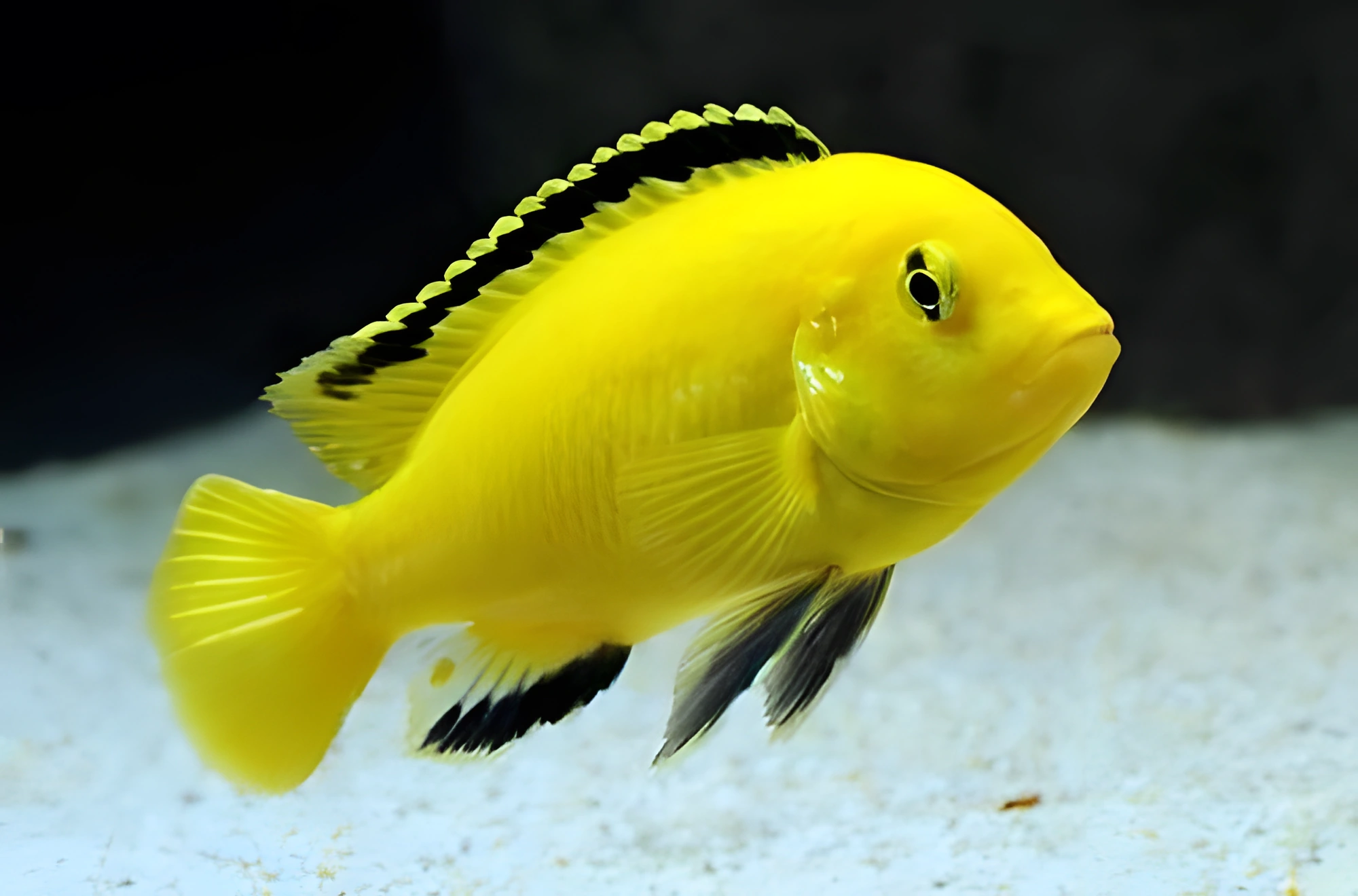
The Yellow Lab Cichlid, also known as the Electric Yellow Cichlid or Hummingbird Cichlid (scientific name Labidochromis caeruleus), belongs to the family Cichlidae. This cichlid, thanks to its bright coloration and remarkably non-aggressive nature, is rightly considered one of the most popular inhabitants of Lake Malawi, also called Lake Nyasa. It is a representative of the Mbuna group, which encompasses 13 genera of fish that prefer rocky areas of the lake. The name "Mbuna" means "rock dwellers" in the local dialect, which perfectly matches their lifestyle.
- Required aquarium volume
- 120 L
- Size in aquarium
- 10 cm
- Temperature
- 23 – 28 °C
- Temperament
- Semi-peaceful (including aggression during spawning / intraspecific conflicts)
Parameters
Water pHNeutral (7) – Slightly alkaline (8)
Water dHMedium hardness (10) – Very hard (18)
Water salinityvery low (up to ~3 g/L)
Size in aquarium10 cm
Lifespan10 years
TemperamentSemi-peaceful (including aggression during spawning / intraspecific conflicts)
Toward small fishnot a predator
Required aquarium volume120 L
Lightingmoderate (regular)
Substratesand or gravel + stones/boulders
Water flowmoderate or strong
FeedingMixed diet (meat + plant-based)
CareSmall group (5–6 individuals)
Description
The cichlid is a stocky fish with a somewhat elongated body, reaching about 8 cm in length. However, in aquarium conditions, it can often grow up to 10 cm. A distinctive feature is the long dorsal fin, pointed towards the tip. The coloration of these fish is quite diverse: white, blue, and combined color forms are found, depending on the region of origin. The bright yellow variety has gained the most popularity. A black stripe runs along the dorsal fin, and the pectoral fins are partially colored in the same shade.
Habitat
This fish is endemic to the northern part of African Lake Malawi. The range of the yellow color form is more limited and includes the border waters of Tanzania and Mozambique, whose borders run through the lake. The natural habitat is rocky coastal areas at depths of 10 to 30 meters, as well as areas where small streams and rivers flow in. Here, aquatic plants, primarily Vallisneria, grow abundantly.
Behavior and Compatibility
Among the representatives of the Mbuna group, this species is considered the most peaceful, does not show territorial aggression, and adapts well to keeping with other cichlids of similar size and temperament. Aggression may only manifest towards fish with similar coloration. Yellow Lab Cichlids can live both individually and in pairs.
Care and Maintenance
Clean water with stable hydrochemical parameters is absolutely essential for the Yellow Lab Cichlid. Methods for controlling and changing pH and dGH parameters are described in the relevant section "Hydrochemical composition of water". Maintaining high water quality is ensured by weekly renewal of 10–20% of its volume, as well as the installation of a highly efficient filtration system. When choosing a filter, opt for the most powerful model available at a reasonable price, as it not only cleans the water but also creates internal current, which is very beneficial for these fish. Other minimally necessary equipment includes an aerator, heater, and lighting system. The aquarium decor should accurately recreate the fish's natural habitat. For a group of three individuals, a tank of at least 120 liters will be required. Coarse sand is recommended as substrate, with coral sand being an ideal choice: in addition to its decorative qualities, it helps maintain a slightly alkaline pH level. An important element of the decor is an accumulation of rocks and stones, forming numerous gorges and grottoes, which serve as excellent shelters. It is also permissible to place several groups of Vallisneria plants.
Diet
In natural conditions, the cichlids' diet consists of algae and small invertebrates living within them. In a home aquarium, these fish readily accept various types of food: live, frozen, and dry. Their diet should be balanced, including high-protein products combined with vegetable supplements in a 50/50 ratio. For example, the daily menu may consist of bloodworms, daphnia, artemia mixed with dried spirulina (blue-green algae, available in flake form).
Breeding and Reproduction
For successful breeding of Yellow Lab Cichlids, it is recommended to keep one male with a group of at least three females. Flat stones must be present in the aquarium, which will serve as ideal spawning sites. During the breeding period, the male shows increased activity, actively pursuing females to encourage them to mate and inviting them to a pre-cleaned spawning stone. At this time, his coloration significantly intensifies and becomes more saturated. During spawning, the fish should be fed heavily with meaty foods. Once the female is ready, she accepts the courtship and lays 10 to 30 eggs, immediately taking them into her mouth. This is an evolutionary protective mechanism characteristic of cichlids from African lakes. A unique fertilization mechanism is provided: the males' anal fin has a characteristic pattern resembling eggs. The female mistakenly tries to take these "eggs" into her mouth, and at that moment, the male releases milt. The eggs remain in the female's mouth throughout the incubation period, which lasts 3–4 weeks. During this time, the female completely refuses food, surviving on accumulated reserves. If her nutrition before spawning was insufficient, she may eject the eggs prematurely or even eat them. After the fry hatch, the female continues to care for the offspring for about another week, allowing them to hide in her mouth in case of danger. The young should be fed finely crushed dry foods and Artemia nauplii.
Diseases
This species is quite hardy and less susceptible than others to "Malawi bloat," which poses a potential threat to most Lake Malawi cichlids. However, like many aquarium fish, they are sensitive to common diseases caused by unsuitable keeping conditions. Proper care and a correct diet will help prevent health problems for your pets. You can learn more about symptoms and treatment methods in the section "Diseases of aquarium fish".
How to choose
When selecting individuals, attention should be paid to overall activity and clean skin. Healthy fish should be curious, actively swimming, and show no visible damage, ulcers, white film, or signs of emaciation. Avoid specimens that stay near the surface, breathe heavily, or show signs of timidity, hiding in the corners of the aquarium.
It is important to consider the individual coloration of a specific morph, as the black edging on the fins may be weakly expressed in young fish. It is recommended to acquire individuals from the same batch to avoid conflicts during adaptation, and to clarify the keeping conditions with the seller, as an abrupt change in water parameters can negatively affect the health of cichlids.
Frequently asked questions
The essentials: size, tank volume, water parameters and care
How big does Hummingbird Cichlid get?
An adult reaches 10 cm in length. Plan the tank around the maximum size: the fish quickly outgrows a cramped setup.
What size aquarium does Hummingbird Cichlid need?
The minimum recommended volume is 120 L. A smaller tank speeds up nitrate build-up and raises stress levels.
What water parameters does Hummingbird Cichlid need?
Temperature 23–28 °C, pH 7–8, hardness 10–18 dGH. Stability matters more than exact values: sudden swings are harder on the fish than a small deviation from the ideal.
How long does Hummingbird Cichlid live?
Around 10 years when kept properly. Lifespan depends directly on tank volume, water quality and a varied diet.
Is Hummingbird Cichlid aggressive?
Temperament: semi-peaceful (including aggression during spawning / intraspecific conflicts). Keep this in mind when choosing tank mates.
How many Hummingbird Cichlid should be kept together?
Recommended setup: small group (5–6 individuals). Ignoring this is a common cause of stress and disease.
What does Hummingbird Cichlid eat?
Diet type: mixed diet (meat + plant-based). Feed small portions that are finished within a couple of minutes — overfeeding does more harm than underfeeding.
What is the scientific name of Hummingbird Cichlid?
The scientific name of the species is Labidochromis caeruleus, family Cichlids (Cichlidae).