Temperature25 – 30 °C
Natural range
- Rio Negro area
- Amazonas State
CichlidsConservation status: Least concern LC
Other scientific names: Saraca opercularis
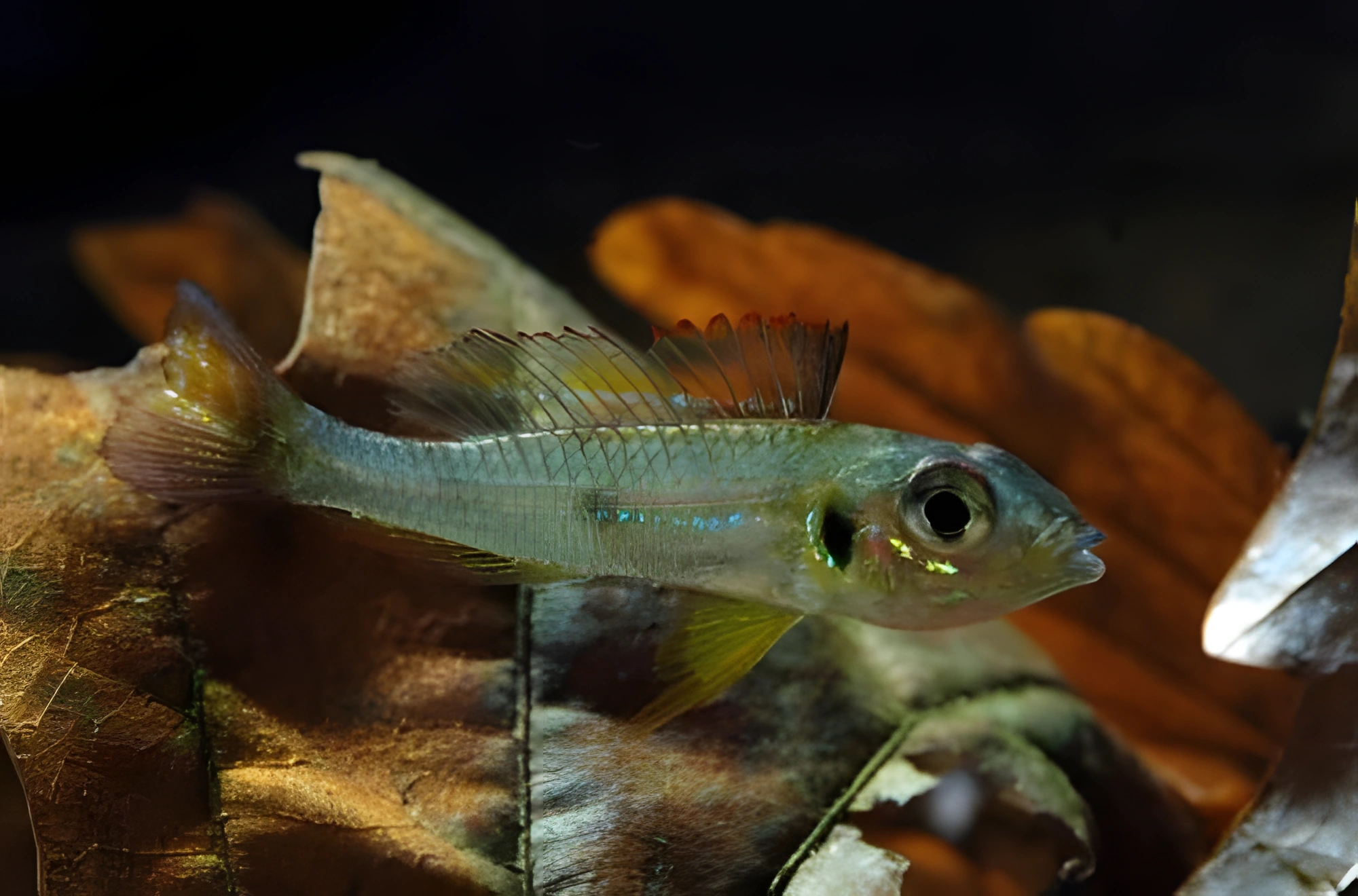
Biotoecus opercularis, known as the Biotoecus cichlid, belongs to the family Cichlidae and originates from South America. Its natural habitat extends across almost the entire Amazon River basin. For keeping in home aquariums, these fish are mainly exported from the Rio Negro region, located in the Brazilian states of Amazonas and Roraima.
- Required aquarium volume
- 40 L
- Size in aquarium
- 4 – 5 cm
- Temperature
- 25 – 30 °C
- Temperament
- Peaceful (regular)
Parameters
Water pHAcidic (4) – Neutral (6.5)
Water dHVery soft (2) – Medium hardness (8)
Water salinityno salt (freshwater)
Size in aquarium4 – 5 cm
Lifespan3 years
TemperamentPeaceful (regular)
Toward small fishnot a predator
Required aquarium volume40 L
Lightingdimmed
Substratesandy (regular, light)
Water flownone or stagnant (no flow)
FeedingAny (universal)
CareHarem (1 male and several females)
Description
Adult specimens of this fish can reach 10 cm in length, however, in aquarium conditions, their size typically does not exceed 4–5 cm. Their body is elongated and slender, with a prominent head and large eyes for their size. The primary coloration varies from gray to silvery. Due to its extensive habitat range, Biotoecus opercularis has several geographical forms that differ slightly in body pattern. Some display a uniform coloration, while others have large dark spots or stripes. Males can be distinguished by their elongated pelvic and anal fins with pointed tips, whereas females have a different fin shape.
Habitat
The species inhabits the Amazon basin, including the lower reaches of the Madeira, Tapajós, and Trombetas rivers, as well as the middle and lower reaches of the Rio Negro. In nature, it prefers shallow areas with slow currents, sandy substrate, and an abundance of fallen leaves and snags. The water in these biotopes is characterized by high acidity, extremely low hardness, and the presence of tannins, which stain it dark [aquaportail.com].
Behavior and Compatibility
Males of these fish exhibit territorial behavior, occupying a specific area on the aquarium bottom, usually near a potential spawning site. In small aquariums (40–50 liters), it is recommended to keep either a single pair (male and female) or a group with a predominance of females. Suitable tank mates for these cichlids include peaceful, small species such as Nannostomus, Rasboras, Neon Tetras, as well as small livebearers like Platies and Guppies.
Care and Maintenance
For a single pair of Biotoecus opercularis, the optimal aquarium volume starts from 40 liters. The aquascape can be relatively simple: it is important to provide a soft sandy substrate, as these fish enjoy digging in it, and to arrange a sufficient number of shelters. Such refuges can be created using piles of stones and natural driftwood, forming caves, grottoes, and crevices. Natural additions to the decor include bark, cones, and leaves from certain trees. As they decompose, they will enrich the water with tannins, mimicking the natural environment. Leaves should be replaced regularly. Aquatic plants are not common in the natural habitat of Biotoecus cichlids, but their presence in the aquarium is perfectly acceptable. Fish of this species are very sensitive to water parameters; for their successful and long-term keeping, it is necessary to maintain low pH and GH values. In small aquariums, an air-driven filter can be considered, as it provides effective biological filtration without creating strong currents, which is important for Biotoecus opercularis. This species is omnivorous and readily accepts most popular foods. Live, fresh, or frozen foods such as bloodworms, Artemia, and Daphnia will be an excellent choice. Sources: fishbase.de, aquariumglaser.de
Diet
The Biotoecus cichlid is an omnivorous species that readily accepts most popular foods. The diet can include live, fresh, or frozen foods, such as bloodworms, Artemia, and Daphnia, which are excellent choices for maintaining the health of the fish.
Breeding and Reproduction
Spawning occurs in caves or shelters, where the female lays 100 to 200 eggs. The breeding process requires very soft and acidic water at a temperature of about 28 °C. The female takes primary care of the eggs and offspring, while the male guards the territory. Fry begin to swim freely a few days after hatching and can feed on Artemia nauplii [aquainfo.org].
Diseases
The species is sensitive to water quality and requires strict adherence to parameters characteristic of Amazonian "black waters." If optimal conditions are not met (high nitrate content, unstable pH, or hardness), the fish are susceptible to bacterial infections and the development of parasitic diseases, such as Ichthyophthiriosis.
- Regular water changes are necessary to prevent the accumulation of organic waste, as the fish react extremely negatively to environmental pollution.
- As a preventive measure, it is recommended to use conditioners containing humic acids and tannins, which mimic the natural habitat and reduce stress.
- When kept in unsuitable conditions, signs of general immune weakening are often observed, making the fish vulnerable to secondary infections.
How to choose
When purchasing, choose active fish with clean fins and no visible body damage. It is important to note that these cichlids are sensitive to water quality and may experience stress during transport or sudden changes in conditions. It is recommended to acquire specimens already adapted to aquarium foods, as wild-caught individuals may show selectivity in feeding during the first days after import [aquaportail.com].
Frequently asked questions
The essentials: size, tank volume, water parameters and care
How big does Biotoecus Cichlid get?
An adult reaches 4–5 cm in length. Plan the tank around the maximum size: the fish quickly outgrows a cramped setup.
What size aquarium does Biotoecus Cichlid need?
The minimum recommended volume is 40 L. A smaller tank speeds up nitrate build-up and raises stress levels.
What water parameters does Biotoecus Cichlid need?
Temperature 25–30 °C, pH 4–6.5, hardness 2–8 dGH. Stability matters more than exact values: sudden swings are harder on the fish than a small deviation from the ideal.
How long does Biotoecus Cichlid live?
Around 3 years when kept properly. Lifespan depends directly on tank volume, water quality and a varied diet.
Is Biotoecus Cichlid aggressive?
Temperament: peaceful (regular). Keep this in mind when choosing tank mates.
How many Biotoecus Cichlid should be kept together?
Recommended setup: harem (1 male and several females). Ignoring this is a common cause of stress and disease.
What does Biotoecus Cichlid eat?
Diet type: any (universal). Feed small portions that are finished within a couple of minutes — overfeeding does more harm than underfeeding.
What is the scientific name of Biotoecus Cichlid?
The scientific name of the species is Biotoecus opercularis, family Cichlids (Cichlidae). It also appears in the literature as: Saraca opercularis.