Temperature23 – 26 °C
Natural range
- Bocas del Toro Province area
- Panama area
CichlidsConservation status: Data deficient DD
Other scientific names: Archocentrus nanoluteus, Cichlasoma nanoluteum, Cryptoheros nanoluteus
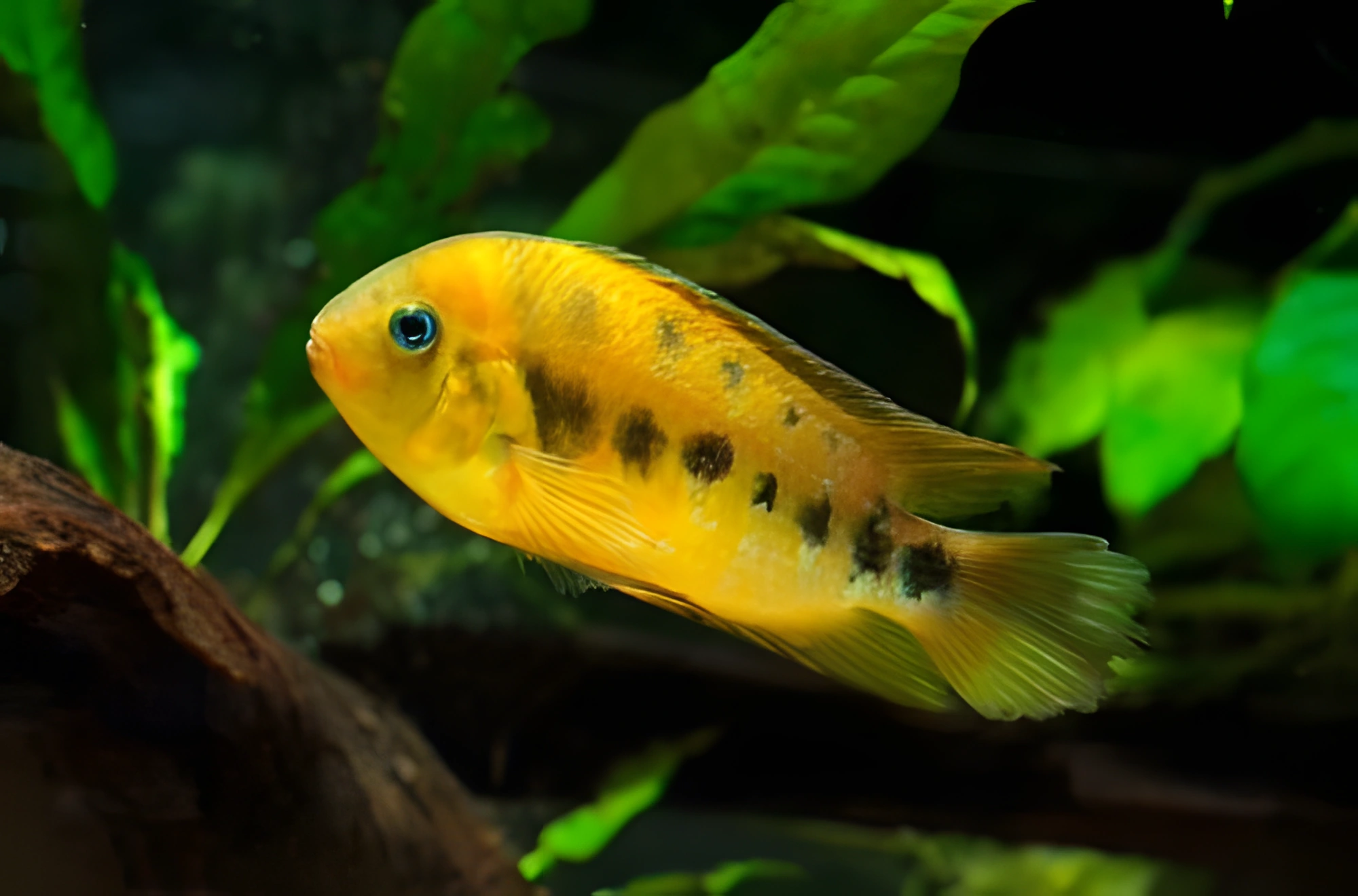
Amatitlania nanolutea, also known as the Yellow Cryptoheros or Yellow Cichlid, belongs to the family Cichlidae. Previously, the species was classified as Cryptoheros nanoluteus. This fish is distinguished by its vibrant beauty, is considered relatively easy to keep and breed, and coexists well with many other aquarium inhabitants. The only nuance in behavior may be the activity of males during the spawning period.
- Required aquarium volume
- 80 L
- Size in aquarium
- 6 cm
- Temperature
- 23 – 26 °C
- Temperament
- Aggressive / incompatible / unfriendly
Parameters
Water pHSlightly acidic (5) – Neutral (7.5)
Water dHMedium hardness (10) – Very hard (26)
Water salinityno salt (freshwater)
Size in aquarium6 cm
Lifespan5 years
TemperamentAggressive / incompatible / unfriendly
Toward small fishnot a predator
Required aquarium volume80 L
Lightingdimmed
Substraterocky (rock formations, boulders, etc.)
Water flowweak or moderate
FeedingAny (universal)
CareMixed (solitary / pair / group)
Description
Adults reach a length of approximately 6 cm. Males are generally somewhat larger than females and have pointed dorsal and anal fin tips. Their coloration is represented by bright yellow tones with characteristic black strokes running along the midline of the body. Often, these fish have attractive blue eyes.
Habitat
The natural habitat of this species is Central America, specifically the Guarúmo River basin in Panama's Bocas del Toro province. The fish inhabits a variety of biotopes throughout the entire course of the river. It can be found in areas with fast currents and rocky bottoms, as well as in calmer backwaters downstream, where the bottom is silty and vegetation is abundant.
Behavior and Compatibility
During the spawning period, these fish may exhibit some aggression, which is explained by their desire to protect their offspring. At other times, it is a peaceful and calm species. They coexist perfectly with both their conspecifics and representatives of other fish species.
Care and Maintenance
For one or two individuals, an aquarium of at least 80 L will be required. The fish is not particularly demanding regarding decor and can comfortably adapt to various conditions. If breeding is planned, it is important to provide various shelters: caves, grottoes, or crevices. Thanks to its extensive natural habitat, Cryptoheros can be kept in both soft, slightly acidic water and conditions of increased carbonate hardness. The main condition is clean, clear water. Avoid sudden temperature fluctuations, rapid changes in hydrochemical parameters, and the accumulation of dangerous concentrations of nitrogen cycle products. For this, the aquarium must be equipped appropriately and regularly maintained, including weekly partial water changes with fresh water, as well as timely removal of organic residues such as uneaten food and excrement.
Diet
This species is not demanding about food. In a home aquarium, the fish readily accept most standard foods intended for aquarium inhabitants. A typical daily diet can consist of dry flakes and granules, supplemented with live or frozen Artemia, Daphnia, and small bloodworms.
Breeding and Reproduction
During the breeding season, the male and female form a temporary pair, choosing an area on the aquarium bottom around some shelter, such as a cave. It is important to remember: if the group of Yellow Cichlids is large enough, several pairs may form, and each will require its own territory. Insufficient space will inevitably lead to skirmishes between males. The approach of spawning can be noticed by a change in coloration: during courtship, the fish acquire a particularly bright yellow color. The female lays about 200 eggs. The incubation period lasts 3–4 days, and after another week, the hatched fry begin to swim freely. Throughout this time, the female stays near the clutch, while the male actively "patrols" the territory, guarding his offspring.
Diseases
The main cause of diseases often lies in the keeping conditions: if they go beyond acceptable limits, immunity decreases, making the fish vulnerable to various infections inevitably present in the environment. At the first suspicion of illness, it is important first of all to check the water parameters and ensure there are no dangerous concentrations of nitrogen cycle products. Often, restoring normal, suitable conditions promotes recovery. However, in some cases, medication may be required. Detailed information on symptoms and treatment methods is presented in the "Aquarium Fish Diseases" section.
How to choose
When selecting individuals, attention should be paid to the fish's overall activity and the cleanliness of its skin. Healthy specimens should show curiosity, have even coloration without white spots, ulcers, or fin damage. Avoid fish with sunken bellies or signs of apathy, as this may indicate hidden diseases or stress from improper transportation conditions.
Since the species can be territorial, it is recommended to assess the fish's behavior in the store's community tank beforehand. Purchasing young individuals is preferable for forming a pair at home, but it is important to ensure there are no obvious signs of aggression among conspecifics in the grow-out tank if a group purchase is planned.
Frequently asked questions
The essentials: size, tank volume, water parameters and care
How big does Yellow Cichlid get?
An adult reaches 6 cm in length. Plan the tank around the maximum size: the fish quickly outgrows a cramped setup.
What size aquarium does Yellow Cichlid need?
The minimum recommended volume is 80 L. A smaller tank speeds up nitrate build-up and raises stress levels.
What water parameters does Yellow Cichlid need?
Temperature 23–26 °C, pH 5–7.5, hardness 10–26 dGH. Stability matters more than exact values: sudden swings are harder on the fish than a small deviation from the ideal.
How long does Yellow Cichlid live?
Around 5 years when kept properly. Lifespan depends directly on tank volume, water quality and a varied diet.
Is Yellow Cichlid aggressive?
Temperament: aggressive / incompatible / unfriendly. Keep this in mind when choosing tank mates.
How many Yellow Cichlid should be kept together?
Recommended setup: mixed (solitary / pair / group). Ignoring this is a common cause of stress and disease.
What does Yellow Cichlid eat?
Diet type: any (universal). Feed small portions that are finished within a couple of minutes — overfeeding does more harm than underfeeding.
What is the scientific name of Yellow Cichlid?
The scientific name of the species is Amatitlania nanolutea, family Cichlids (Cichlidae). It also appears in the literature as: Archocentrus nanoluteus, Cichlasoma nanoluteum, Cryptoheros nanoluteus.