Temperature25 – 29 °C
Natural range
- Ecuador area
- Northern Peru area
Cichlids
Other scientific names: Cichlasoma festae, Herichthys festae, Heros festae, Nandopsis festae
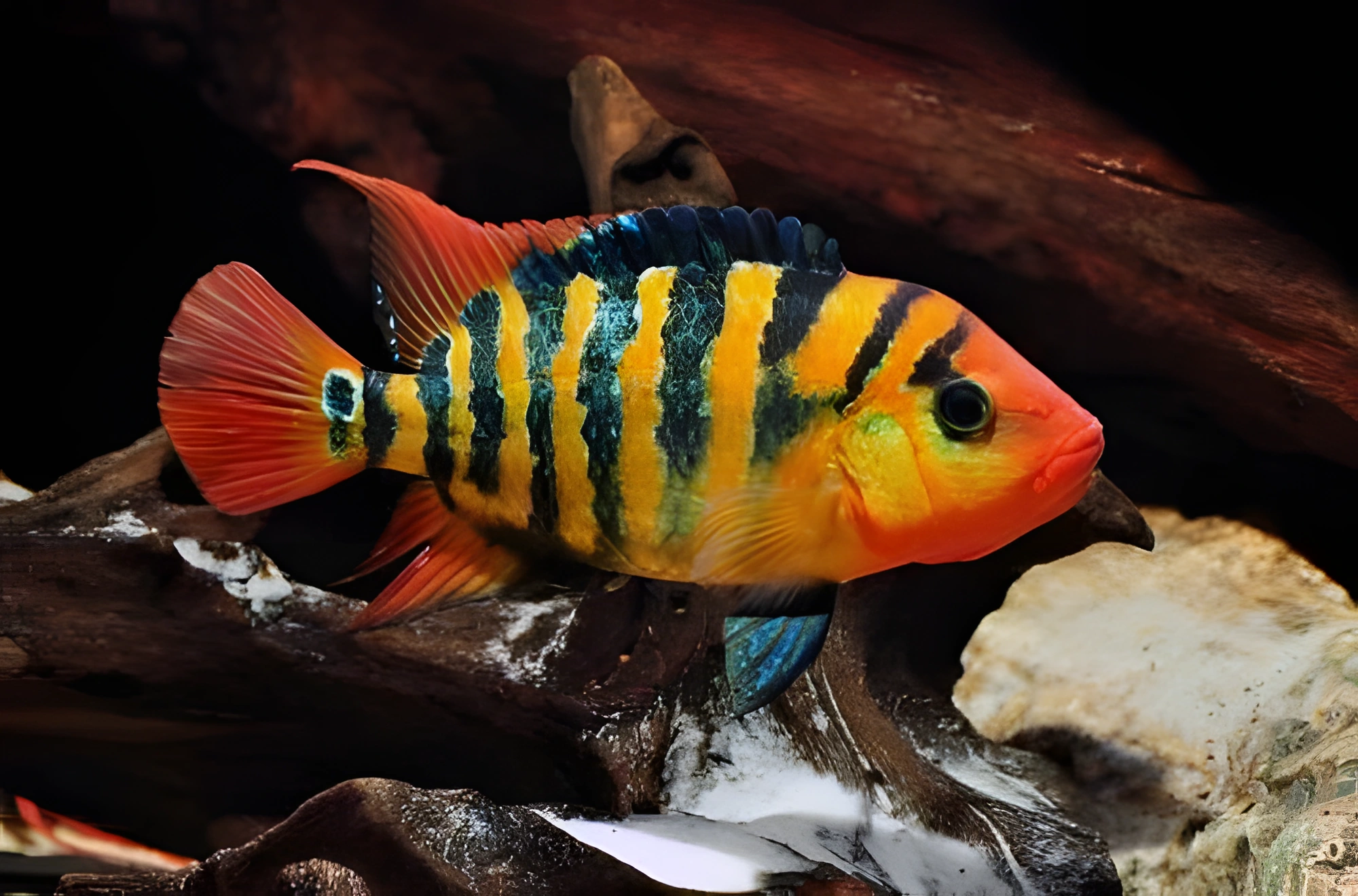
Cichlidae is the family to which the Festae cichlid belongs, also known as the orange cichlid or "Red Terror" cichlid. Its scientific name is Mesoheros festae. In the past, it was classified differently, under the name Cichlasoma festae. This fish is distinguished by its vibrant beauty, but its temperament is very aggressive, which fully explains one of its common names. Due to its nature, it is often kept alone in a species-specific tank. Its care can be considered moderately difficult, as high water quality and a predominantly protein diet are important for the fish, which requires certain financial outlays.
- Required aquarium volume
- 300 L
- Size in aquarium
- 12 – 20 cm
- Temperature
- 25 – 29 °C
- Temperament
- Aggressive / incompatible / unfriendly
Parameters
Water pHSlightly acidic (6) – Slightly alkaline (8)
Water dHSoft (5) – Very hard (18)
Water salinityno salt (freshwater)
Size in aquarium12 – 20 cm
Lifespan12 years
TemperamentAggressive / incompatible / unfriendly
Toward small fishnot a predator
Required aquarium volume300 L
Lightingdimmed
Substratesandy (regular, light)
Water flowweak or moderate
FeedingMeat with plant additives (omnivores)
CarePair (male/female)
Description
Adult males can reach 20 cm in length, while females are noticeably smaller—only about 12 cm. Their coloration consists of alternating bright orange and black vertical stripes with indistinct edges. The dorsal and anal fins are dark, transitioning to red. White speckles can also be seen on the body. Depending on the region of origin, a greenish hue may dominate the coloration instead of orange.
Habitat
Its homeland is South America, specifically the territories of modern Ecuador and northern Peru. Although it is found in various natural conditions, it most often inhabits rivers and their tributaries flowing into the Pacific Ocean. This species has also been introduced to Southeast Asia, where it has successfully established itself, creating serious competition for local inhabitants.
Behavior and Compatibility
The cichlid exhibits territoriality and aggression, fully living up to its nickname "Red Terror." It can only be kept with robust fish of similar or larger size. Smaller inhabitants will be constantly harassed or become food. Towards its own kind, the Festae cichlid is also very aggressive, so it is recommended to keep either one adult specimen or an already established male/female pair. It is important to note that pair formation occurs as the fish mature if they are kept in a large group; future partners choose each other based on their own criteria and maintain the relationship for a long time. Simply attempting to place a male and female together will yield little result, and such an action can lead to the death of one of the fish due to constant attacks from the other.
Care and Maintenance
Due to its unfriendly nature, the aquarium size should be selected based on the number of fish planned for keeping. For a single orange cichlid, a tank volume of 250–300 liters will suffice. If cohabitation with other inhabitants is intended, the minimum volume should be increased to 600 liters. The decor should combine open swimming areas and hiding places created from driftwood or other decorative elements. The fish tends to damage plants by digging in the substrate, so rooted live vegetation is unlikely to thrive. However, floating plants, as well as mosses and ferns attached to driftwood, or artificial plants can be used. These fish, originating from flowing waters, are sensitive to the accumulation of organic waste, which they themselves produce in large quantities due to their carnivorous diet. To maintain high water quality, a powerful filter with effective biological filtration will be required, along with weekly water changes of 20–30% of the volume and regular substrate cleaning.
Diet
In its natural habitat, the fish feeds on benthic crustaceans, worms, as well as small fish and their fry. Its diet also includes plant elements such as fallen fruits and seeds. In aquarium conditions, the main food should be meaty products: bloodworms, earthworms, and others, presented in freeze-dried, live, or frozen form. Preference should be given to specialized foods for predatory cichlids, which are produced by many manufacturers.
Breeding and Reproduction
The biggest difficulty in breeding Festae cichlids is finding a suitable pair; if one has not yet formed, attempts to create one with adult fish have very low chances of success. Another problem arises when keeping fish in a community tank. During spawning, cichlids become extremely ferocious, and even large tankmates will not escape aggression, so a separate breeding tank will be needed. Otherwise, the breeding process is quite simple and does not require special conditions, such as a specific hydrochemical water composition or a change in diet. These cichlids lay eggs in secure hiding places, such as artificial caves or grottoes. The incubation period lasts 3–4 days, after which the hatched fry are moved to a spawning pit dug at the bottom. Over the following weeks, the parents will tirelessly guard and protect their offspring.
Diseases
The main cause of most diseases in Leaf Fish is unsuitable keeping conditions and poor-quality nutrition. If initial symptoms are observed, it is first necessary to check water parameters and the concentration of dangerous substances such as ammonia, nitrites, and nitrates. If the indicators deviate from the norm, they should be brought back into order, and only then should treatment begin. More detailed information on symptoms and treatment methods can be found in the "Aquarium Fish Diseases" section.
How to choose
When selecting individuals, preference should be given to young fish, as established pairs form at an early age and it is extremely difficult to introduce them to each other as adults. Healthy fish should be active, have clean skin without spots, sores, or growths, and possess clear eyes and even breathing without rapid gill movements. Avoid purchasing individuals with signs of emaciation, sunken bellies, or unnatural behavior, such as a constant desire to hide in the corner of the aquarium in the store. It is recommended to acquire a group of juveniles for self-pairing, as attempts to forcibly pair adult fish often result in aggression and injuries.
Frequently asked questions
The essentials: size, tank volume, water parameters and care
How big does Festae Cichlid get?
An adult reaches 12–20 cm in length. Plan the tank around the maximum size: the fish quickly outgrows a cramped setup.
What size aquarium does Festae Cichlid need?
The minimum recommended volume is 300 L. A smaller tank speeds up nitrate build-up and raises stress levels.
What water parameters does Festae Cichlid need?
Temperature 25–29 °C, pH 6–8, hardness 5–18 dGH. Stability matters more than exact values: sudden swings are harder on the fish than a small deviation from the ideal.
How long does Festae Cichlid live?
Around 12 years when kept properly. Lifespan depends directly on tank volume, water quality and a varied diet.
Is Festae Cichlid aggressive?
Temperament: aggressive / incompatible / unfriendly. Keep this in mind when choosing tank mates.
How many Festae Cichlid should be kept together?
Recommended setup: pair (male/female). Ignoring this is a common cause of stress and disease.
What does Festae Cichlid eat?
Diet type: meat with plant additives (omnivores). Feed small portions that are finished within a couple of minutes — overfeeding does more harm than underfeeding.
What is the scientific name of Festae Cichlid?
The scientific name of the species is Mesoheros festae, family Cichlids (Cichlidae). It also appears in the literature as: Cichlasoma festae, Herichthys festae, Heros festae.