Temperature20 – 33 °C
Natural range
- Rio Grande area
- Texas area
CichlidsConservation status: Least concern LC
Other scientific names: Cichlasoma cyanoguttatum, Cichlasoma pavonaceum, Heros pavonaceus, Parapetenia cyanostigma
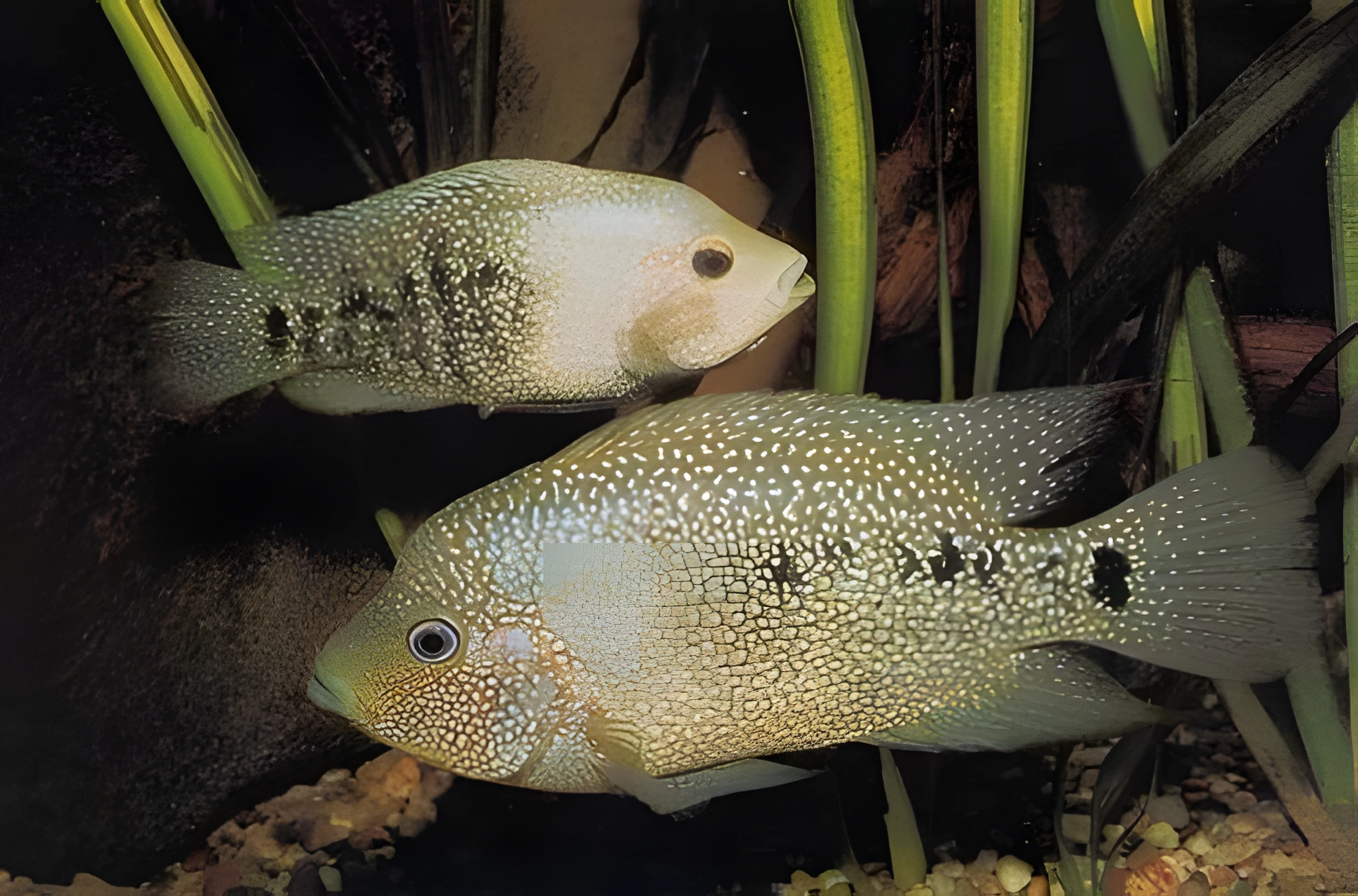
Herichthys cyanoguttatus, known as the diamond cichlid, belongs to the family Cichlidae. It is an energetic and temperamental fish, exhibiting complex behaviors, especially concerning parental care. Keeping this species is not recommended for novice aquarists.
- Required aquarium volume
- 300 L
- Size in aquarium
- 30 cm
- Temperature
- 20 – 33 °C
- Temperament
- Aggressive / incompatible / unfriendly
Parameters
Water pHSlightly acidic (6) – Neutral (7.5)
Water dHSoft (5) – Hard (13)
Water salinityno salt (freshwater)
Size in aquarium30 cm
Lifespan12 years
TemperamentAggressive / incompatible / unfriendly
Toward small fishnot a predator
Required aquarium volume300 L
Lightingany
Substratefine sand
Water flowweak or moderate
FeedingHigh protein (predominantly meat)
CarePair (male/female)
Description
Adults can reach up to 30 cm in length. Males are noticeably larger than females, and their dorsal and anal fins are pointed. Dominant males often develop a nuchal hump on their head, which is a characteristic feature of many Central American cichlids. Bluish or white hues dominate the front part of the body, while the caudal part is usually darker. The pattern consists of numerous turquoise speckles, chaotically distributed over the body and fins. Large dark spots may be visible along the lateral line. A closely related species, the pearl cichlid (Herichthys carpintis), has a similar coloration. For a long time, there was confusion between these two species, leading to the same species being mistakenly sold under different names.
Habitat
This cichlid inhabits North America. Its natural range covers vast territories of the Rio Grande basin, a river that serves as a natural border between the USA and Mexico. The fish prefer sections of rivers with slow currents, as well as swamps, lakes, and ponds rich in aquatic vegetation and numerous submerged snags.
Behavior and Compatibility
This species is territorial and aggressive. In small aquariums, males show intolerance towards rivals. It is recommended to acquire fish at a young age, preferably an already formed male-female pair. It is unacceptable to introduce an adult male to an adult female, as this can lead to a high probability of aggression and the death of the weaker individual. Cichlids are compatible with large, well-protected fish, such as plecos and other armored catfish.
Care and Maintenance
For a single pair of these fish, the optimal aquarium volume starts from 300–350 liters. In natural conditions, the diamond cichlid lives among plants, but in the confined space of an aquarium, it can pose a threat to aquatic vegetation. The fish actively digs up the substrate, uprooting plants and damaging their leaves. As an alternative, floating plants can be considered. The cichlid's behavior requires a thick layer of substrate, at least 8–10 cm, consisting of coarse sand, fine gravel, or other suitable substrates. In aquarium decoration, it is important to provide shelters created from driftwood, rock formations, or artificial decorations. The fish prefer soft, slightly acidic water and tolerate significant temperature increases (above 30°C) well. They can also live in environments with low to medium hardness. Standard aquarium maintenance includes weekly water changes of 25%–40% with fresh water, regular removal of organic waste, and equipment care.
Diet
In natural conditions, the fish eats almost anything it can find in the substrate at the bottom: small invertebrates, aquatic plants, and detritus. In a home aquarium, the daily diet can consist of popular dry foods such as flakes and pellets. It is recommended to choose products enriched with vegetable components. Many manufacturers offer specialized foods developed for specific groups of fish, including cichlids, which can be an optimal choice for a beginner aquarist.
Breeding and Reproduction
Breeding this species is quite straightforward and successfully achieved in a home aquarium. Sexual maturity occurs when the fish reach a length of about 6–9 cm. In artificial aquarium environments, they independently determine the breeding season. The onset of spawning can be identified by a change in coloration, which becomes more saturated during this period. The courtship process can be prolonged and sometimes manifests as excessive aggression. In some cases, temporary relocation of the female to a separate aquarium is required. The female meticulously chooses the location for the future clutch. Most often, this is a flat object on the bottom, such as the surface of a boulder or a large stone. The female lays several hundred eggs, the number of which can reach up to 1000. The incubation period is 2–3 days, after which the hatched larvae are moved to a pit dug in advance at the bottom, where they will spend another 5–8 days. After approximately 1–2 weeks, the fry begin to swim freely in search of food. Throughout this time, both parents actively protect their offspring, attacking any potential threats.
Diseases
Under suitable keeping conditions and with a balanced diet, diseases rarely occur. If any symptoms or suspicions of disease development arise, the first step is to check the water quality and its hydrochemical composition. If deviations are found, the parameters should be brought back to normal, and only then should treatment begin. Sometimes intervention may not be necessary, and the fish's body will cope with the ailment on its own. More detailed information on symptoms and treatment methods is presented in the section "Diseases of Aquarium Fish."
How to choose
When choosing individuals, preference should be given to young fish, as they adapt more easily to new conditions and accept tankmates more readily. A healthy fish should be active, have clean skin without spots, erosions, or film, and have tightly clamped fins without signs of damage. Avoid purchasing individuals that appear emaciated, have sunken bellies, or stay at the water surface, frequently gasping for air. In the store, pay attention to their behavior: a healthy cichlid should be curious and show interest in its surroundings, not constantly hide in corners. If the fish are kept in a community tank, ensure they do not show obvious signs of aggression from conspecifics, such as torn fins or deep scratches on the body.
Frequently asked questions
The essentials: size, tank volume, water parameters and care
How big does Diamond Cichlid get?
An adult reaches 30 cm in length. Plan the tank around the maximum size: the fish quickly outgrows a cramped setup.
What size aquarium does Diamond Cichlid need?
The minimum recommended volume is 300 L. A smaller tank speeds up nitrate build-up and raises stress levels.
What water parameters does Diamond Cichlid need?
Temperature 20–33 °C, pH 6–7.5, hardness 5–13 dGH. Stability matters more than exact values: sudden swings are harder on the fish than a small deviation from the ideal.
How long does Diamond Cichlid live?
Around 12 years when kept properly. Lifespan depends directly on tank volume, water quality and a varied diet.
Is Diamond Cichlid aggressive?
Temperament: aggressive / incompatible / unfriendly. Keep this in mind when choosing tank mates.
How many Diamond Cichlid should be kept together?
Recommended setup: pair (male/female). Ignoring this is a common cause of stress and disease.
What does Diamond Cichlid eat?
Diet type: high protein (predominantly meat). Feed small portions that are finished within a couple of minutes — overfeeding does more harm than underfeeding.
What is the scientific name of Diamond Cichlid?
The scientific name of the species is Herichthys cyanoguttatus, family Cichlids (Cichlidae). It also appears in the literature as: Cichlasoma cyanoguttatum, Cichlasoma pavonaceum, Heros pavonaceus.