Temperature18 – 24 °C
Natural range
- Durango area
- Mexico area
LivebearersConservation status: Endangered EN
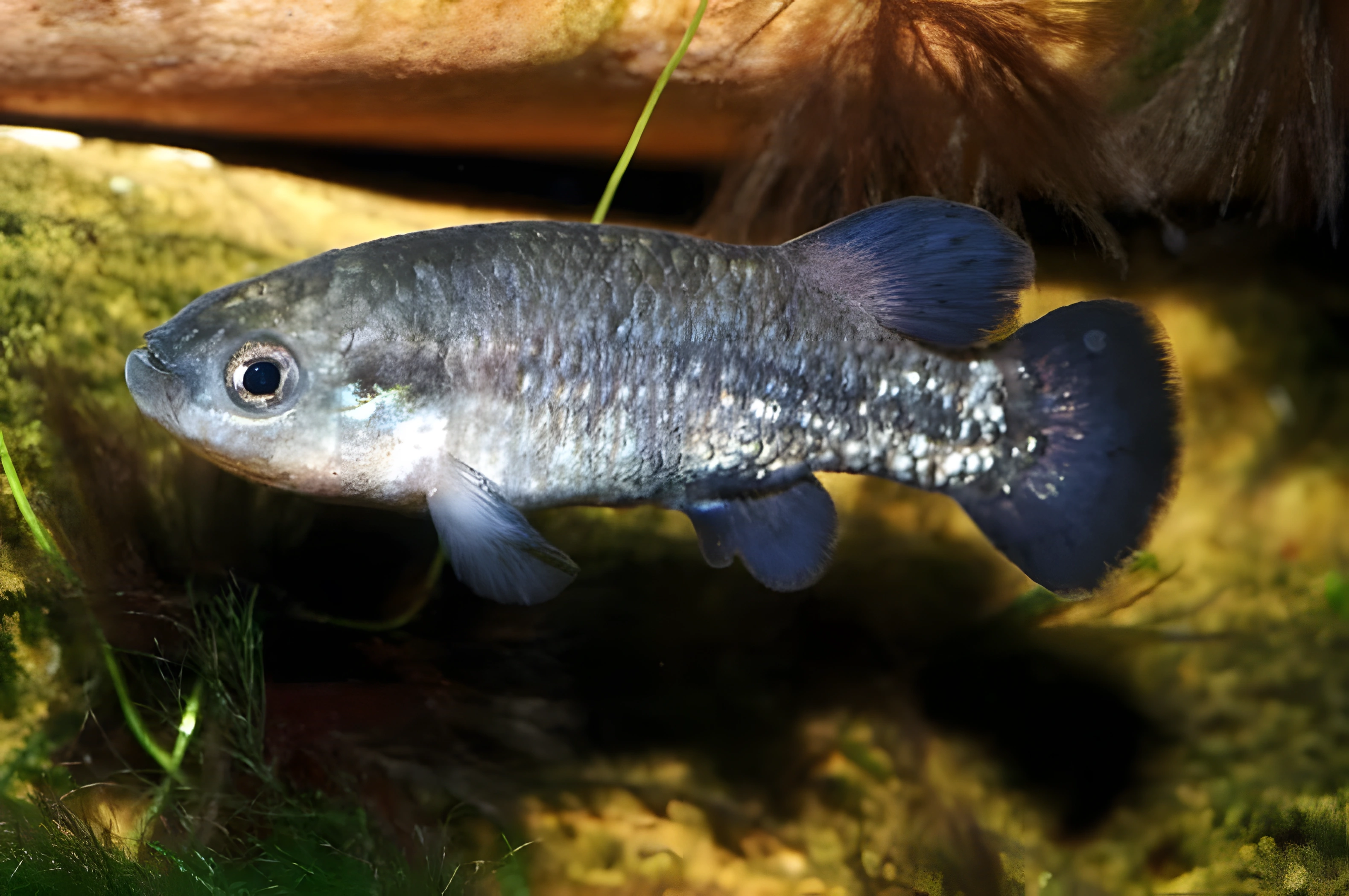
The Bold Characodon, also known as the "Black Prince" (scientific name Characodon audax), belongs to the family Goodeidae. This fish is quite rare and unique. Despite its relatively modest coloration, it attracts attention due to its complex and fascinating behavior. However, these behavioral characteristics create certain difficulties in keeping them, so this fish is not recommended for beginner aquarists.
- Required aquarium volume
- 80 L
- Size in aquarium
- 4 – 6 cm
- Temperature
- 18 – 24 °C
- Temperament
- Aggressive / incompatible / unfriendly
Parameters
Water pHNeutral (7) – Slightly alkaline (8)
Water dHMedium hardness (11) – Very hard (18)
Water salinityno salt (freshwater)
Size in aquarium4 – 6 cm
Lifespan5 years
TemperamentAggressive / incompatible / unfriendly
Toward small fishnot a predator
Required aquarium volume80 L
Lightingdimmed
Substraterocky (rock formations, boulders, etc.)
Water flowweak
FeedingMixed diet (meat + plant-based)
CareMedium group (6–8 individuals)
Description
This species is a close relative of the "Red Prince" (Characodon lateralis), sharing many characteristics with it. Males grow up to 4 cm, their bodies are silvery with a golden sheen, and their fins and tail are black. Females are typically larger, reaching up to 6 cm in length. Their coloration is less striking, mainly gray, with a silvery belly.
Habitat
These fish originate from unique water bodies in central Mexico. They can only be found in limited, isolated areas of the Durango plateau, with only 14 known habitats. Unfortunately, as of the time of this description, the fish are no longer present in 9 of these locations due to significant environmental pollution. In the wild, this species is on the verge of extinction. It is highly probable that the population successfully maintained in aquariums numerically surpasses its wild counterparts. In their natural environment, they prefer clear, shallow lakes and spring-fed streams abundant with aquatic vegetation.
Behavior and Compatibility
This fish is characterized by a very temperamental nature. Males exhibit territorial behavior and inevitably engage in skirmishes with each other to win the best territory or the attention of females. Females, on the other hand, are quite tolerant of each other and can coexist peacefully in one group. To escape the intrusive attention of males, they use crevices or plant thickets, which also serve as refuge for subdominant male individuals. Among Bold Characodons, a dominant alpha male always stands out; to mitigate his aggressiveness, it is recommended to keep a group of six or more fish. In a small group or when kept in pairs, one of the fish will inevitably be in a suppressed position. These fish are well compatible with other species that inhabit the water column or near the surface, provided that the tank mates are sufficiently active and somewhat larger. Any small or slow-moving aquarium inhabitants will be at risk.
Care and Maintenance
Although these fish are small, a group of six or more individuals requires an aquarium of at least 80 L for comfortable living. This need is due to their behavioral characteristics, which will be discussed later. When decorating the tank, it is advisable to use a rocky substrate and create piles of large stones and rock fragments to form crevices and grottoes. Live or artificial plants, planted in groups, will help enliven the landscape. These structures will serve as numerous and reliable hiding places. The long-term and successful keeping of these fish largely depends on the aquarist's ability to maintain high water quality. This implies preventing the accumulation of organic waste, such as food remnants and excrement, as well as maintaining temperature and hydrochemical parameters within acceptable limits.
Diet
Characodons are considered omnivores, so in a home aquarium, they readily accept most popular dry, frozen, and live foods. However, experienced aquarists advise avoiding a high-protein diet, recommending the inclusion of plant-based components in their diet. For aquarium fish, Aqvium flake food is excellent; it has already become a bestseller on Ozon with a 4.9 rating. It is developed for most aquarium fish, and the raw materials comply with new European Union standards (EU 2018/848). It contains vitamins A, C, D3, E, and Omega 3-6. It can be purchased on Ozon.
Breeding and Reproduction
Reproduction is possible throughout the year. To stimulate spawning, a gradual lowering of water temperature to 18–20 °C for several weeks is used. When the temperature begins to rise again, the likelihood of the breeding period increases. As with other live-bearing species, the "Black Prince" undergoes internal gestation of its offspring. Spawning is observed among plants, inside grottoes, or in other hiding places. Fry emerge fully formed, but in the first few days, they are unable to swim, sinking to the bottom and remaining motionless. During this period, they are most vulnerable to predation by other fish. Additionally, the "Black Prince" lacks parental instincts and may eat its own offspring. If possible, it is advisable to transfer the fry to a separate tank. While they are small, the fry get along well with each other. They can be fed any small food, such as crushed flakes.
Diseases
Optimal conditions for the Bold Characodon are quite specific, so the main cause of most diseases is an unsuitable environment. This causes suppression of the fish's immunity and, as a result, its increased susceptibility to various ailments. At the first symptoms of illness, the water quality should first be checked for contamination, as well as for exceeding permissible pH and GH values. Injuries sustained in skirmishes with the alpha male are also possible. Eliminating the root causes contributes to the disappearance of the disease, but in some cases, medication may be required. More detailed information can be found in the "Aquarium Fish Diseases" section.
How to choose
When purchasing, choose active individuals with clean fins and no visible body damage. It is important to note that this species exhibits pronounced intraspecific aggression, so fish in the store may show signs of skirmishes, such as nipped fins or abrasions. Avoid purchasing individuals that appear apathetic, stay near the surface, or show signs of emaciation. Since the "Black Prince" is a rare and territorial species, it is recommended to acquire a group of 6 or more individuals simultaneously to reduce stress and aggression during adaptation to a new aquarium. Before purchasing, ensure that the keeping conditions in the store meet the species' requirements, as the fish are sensitive to water quality and temperature.
Frequently asked questions
The essentials: size, tank volume, water parameters and care
How big does "Black Prince" get?
An adult reaches 4–6 cm in length. Plan the tank around the maximum size: the fish quickly outgrows a cramped setup.
What size aquarium does "Black Prince" need?
The minimum recommended volume is 80 L. A smaller tank speeds up nitrate build-up and raises stress levels.
What water parameters does "Black Prince" need?
Temperature 18–24 °C, pH 7–8, hardness 11–18 dGH. Stability matters more than exact values: sudden swings are harder on the fish than a small deviation from the ideal.
How long does "Black Prince" live?
Around 5 years when kept properly. Lifespan depends directly on tank volume, water quality and a varied diet.
Is "Black Prince" aggressive?
Temperament: aggressive / incompatible / unfriendly. Keep this in mind when choosing tank mates.
How many "Black Prince" should be kept together?
Recommended setup: medium group (6–8 individuals). Ignoring this is a common cause of stress and disease.
What does "Black Prince" eat?
Diet type: mixed diet (meat + plant-based). Feed small portions that are finished within a couple of minutes — overfeeding does more harm than underfeeding.
What is the scientific name of "Black Prince"?
The scientific name of the species is Characodon audax, family Goodeidae.