Temperature24 – 28 °C
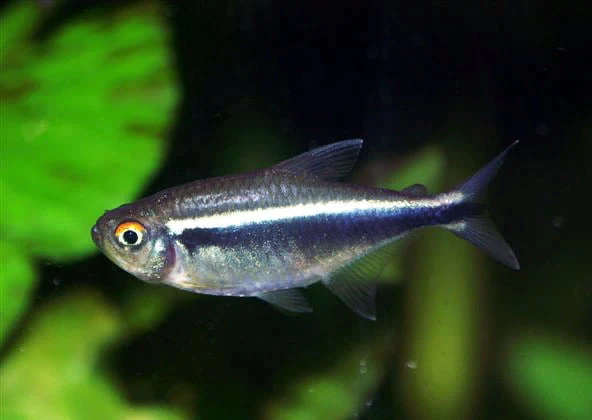
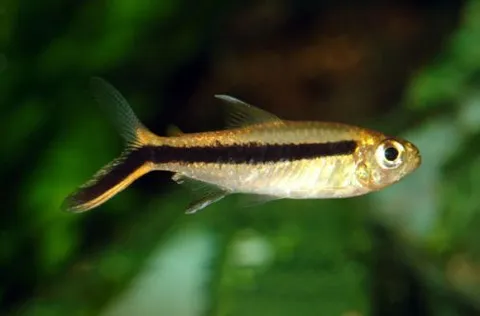
Hyphessobrycon herbertaxelrodi, also known as the Black Neon Tetra, belongs to the family Acestrorhamphidae. This fish is characterized by its energetic nature and attractive appearance, especially due to the bright, neon stripe along its side. By placing a small school of these fish in a spacious aquarium with abundant vegetation and a dark background, and with proper lighting, one can witness a mesmerizing spectacle of “neon sparks” from their movements.
These fish, compared to other Tetra species, are small, reaching a length of about 4 cm in a home aquarium. Their coloration is mainly gray or dark silver, and two distinct stripes—one black and one white—run from head to tail. Thanks to special pigmentation with high reflectivity, the white stripe creates a glowing effect, reminiscent of “neon light.”
The scientific description of the Black Neon Tetra was first obtained in 1961. The species inhabits slow-flowing rivers and still waters of the upper rio Paraguai basin, in the Brazilian states of Mato Grosso and Mato Grosso do Sul, both north and south of the Pantanal. Currently, they are not caught in the wild, as the species is successfully bred in aquarium conditions. In nature, these fish prefer small tributaries, streams, and areas with flooded forests and sandy shoals. Typically, in these locations, natural conditions are characterized by low pH levels and a dark brown tint to the water, caused by a high concentration of tannins from decomposing plant organic matter.
This species is ideal for cohabitation with other peaceful fish of appropriate size. Black Neon Tetras are very active and have a peaceful disposition, making them one of the most suitable for aquarium breeding. Buy them in a shoal of at least 8–10: this is a schooling species, and in a pair or a small group the fish stay hidden and lose colour.
Keeping Black Neon Tetras is not particularly difficult, provided that the water is regularly kept clean and frequent water changes are performed in the aquarium. Every two weeks, 25–50% of the total water volume should be replaced. Recommended equipment includes a filter with material that helps reduce pH levels, a heater, and a lighting system. The fish feel most comfortable in soft, slightly acidic water, where there is plant cover for hiding and a gravel bottom. River sand can be used as a substrate in combination with bark or tree branches. Adding dried leaves to the water can give it a slight brownish tint; these should be changed every few weeks. To enhance the fish's coloration, it is advisable to use subdued lighting, with floating plants creating additional shade.
The Black Neon Tetra is an omnivorous fish, allowing for a varied diet including live, vegetable, and dry foods. To ensure a balanced diet, they should be offered high-quality dry food daily. It is also recommended to diversify their diet by adding live (e.g., bloodworms, daphnia) or frozen foods.
Spawning of Black Neon Tetras should be carried out in a separate tank, as these fish tend to eat their eggs and fry. A 20-liter aquarium will suffice for a breeding tank; a low-power filter, such as an air-driven filter, is suitable for equipment. Groups of low-growing plants and a sandy substrate are used for decoration. Water conditions should be as follows: pH 6.0, softness 4 GH, and temperature no lower than 26°C. Spawning can begin at any moment; a high-protein diet (bloodworms, brine shrimp, daphnia) serves as a stimulating factor. When the female's abdomen noticeably swells, this is a signal to transfer the pair to a separate breeding aquarium. After some time, the female lays eggs, and the male fertilizes them; the process occurs over plant thickets, where the eggs then fall. If the plants are arranged in several groups, the pair may lay eggs in different areas. After spawning, the parent fish are returned to the main aquarium. The breeding tank is covered for a couple of days, during which time the fry appear. After the fry hatch, it is necessary to turn on the light and remove the cover, as they will not be able to find food in the dark and will die. Fry should be fed powdered food and brine shrimp nauplii.
When optimal keeping conditions are met, the risk of disease in Black Tetras is extremely low. However, under unfavorable conditions, they may be susceptible to typical diseases of tropical aquarium fish.
When purchasing, choose active, mobile individuals that stay in a school. Avoid fish with signs of emaciation, fin damage, film, or spots on their scales. An important indicator of health is the brightness of their coloration: if the longitudinal stripes on the body appear dull or blurry, this may indicate stress or hidden diseases. Observe their behavior in the store: healthy Neons should show interest in food and not constantly hide in the corners of the aquarium.
The essentials: size, tank volume, water parameters and care
An adult reaches 4 cm in length. Plan the tank around the maximum size: the fish quickly outgrows a cramped setup.
The recommended volume is 80 L. A smaller tank speeds up nitrate build-up and raises stress levels.
Temperature 24–28 °C, pH 5.5–7.5, hardness 5–15 dGH. Stability matters more than exact values: sudden swings are harder on the fish than a small deviation from the ideal.
Around 5 years when kept properly. Lifespan depends directly on tank volume, water quality and a varied diet.
Temperament: peaceful, active/mobile. Keep this in mind when choosing tank mates.
Recommended setup: schooling (usually from 5–6 individuals and more). Ignoring this is a common cause of stress and disease.
Diet type: any (universal). Feed small portions that are finished within a couple of minutes — overfeeding does more harm than underfeeding.
The scientific name of the species is Hyphessobrycon herbertaxelrodi, family Acestrorhamphidae.
Matched by family, categories and overlapping keeping conditions
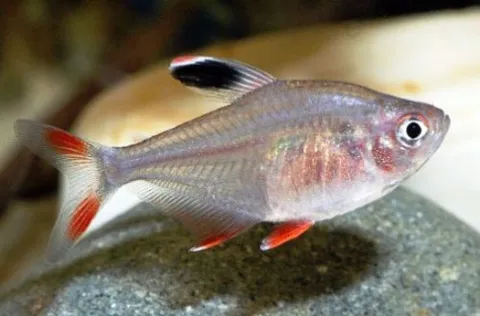
Megalamphodus bentosi
The Ornate Tetra, also known as the Common Ornate Tetra or by its scientific name Megalamphodus bentosi, belongs to the family Acestrorhamphidae. This species is a classic representative of the extensive group of…
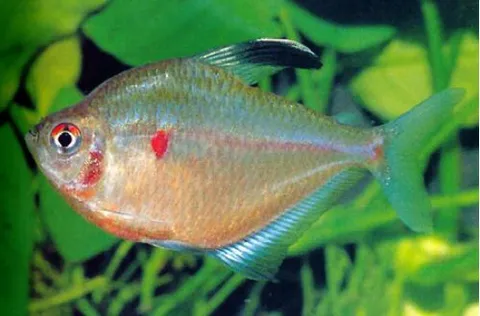
Megalamphodus erythrostigma
The Red-Spotted Tetra, also known as Rubrostigma or Ornate Red-Spotted Tetra (scientific name Megalamphodus erythrostigma), belongs to the Acestrorhamphidae family. This active, peaceful fish, distinguished by its…
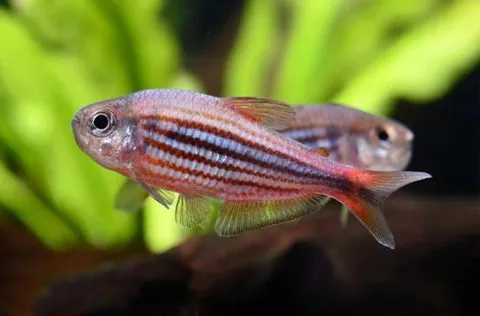
Moenkhausia agnesae
Moenkhausia agnesae, known in scientific literature as Moenkhausia agnesae, belongs to the Acestrorhamphidae family. This fish is native to South America, specifically found in the upper reaches of the Amazon River. It…
Thayeria boehlkei
The Crooked-Striped Thayeria, widely known as the Penguin Tetra, with the scientific name Thayeria boehlkei, is a member of the Acestrorhamphidae family. These fish are characterized by their cheerful, energetic, and…