Temperature15 – 21 °C
Natural range
- China area
UnusualConservation status: Vulnerable VU
Other scientific names: Carpiodes asiaticus, Carpiodes chinensis, Sclerognathus chinensis
The Chinese Sucker, also known as the Chinese Sailfin or by its scientific name Myxocyprinus asiaticus, belongs to the family Catostomidae. It is often called the Chinese Sucker Fish due to its unique mouth structure, which allows it to scrape organic growth from rocks and attach to them, resisting currents. This is a rather rare species, and in some countries, including European ones, its import is even prohibited, which only increases interest in it. However, due to the significant size of the Chinese Sucker, keeping it in a home aquarium becomes very problematic.
- Required aquarium volume
- 1000 L
- Size in aquarium
- 80 – 90 cm
- Temperature
- 15 – 21 °C
- Temperament
- Semi-peaceful (including aggression during spawning / intraspecific conflicts)
Parameters
Water pHSlightly acidic (6) – Slightly alkaline (8)
Water dHVery soft (3) – Very hard (21)
Water salinityno salt (freshwater)
Size in aquarium80 – 90 cm
Lifespan20 years
TemperamentSemi-peaceful (including aggression during spawning / intraspecific conflicts)
Toward small fishnot a predator
Required aquarium volume1000 L
Lightingdimmed
Substraterocky (rock formations, boulders, etc.)
Water flowmoderate or strong
FeedingSinking (any)
CareSmall group (3–4 individuals)
Description
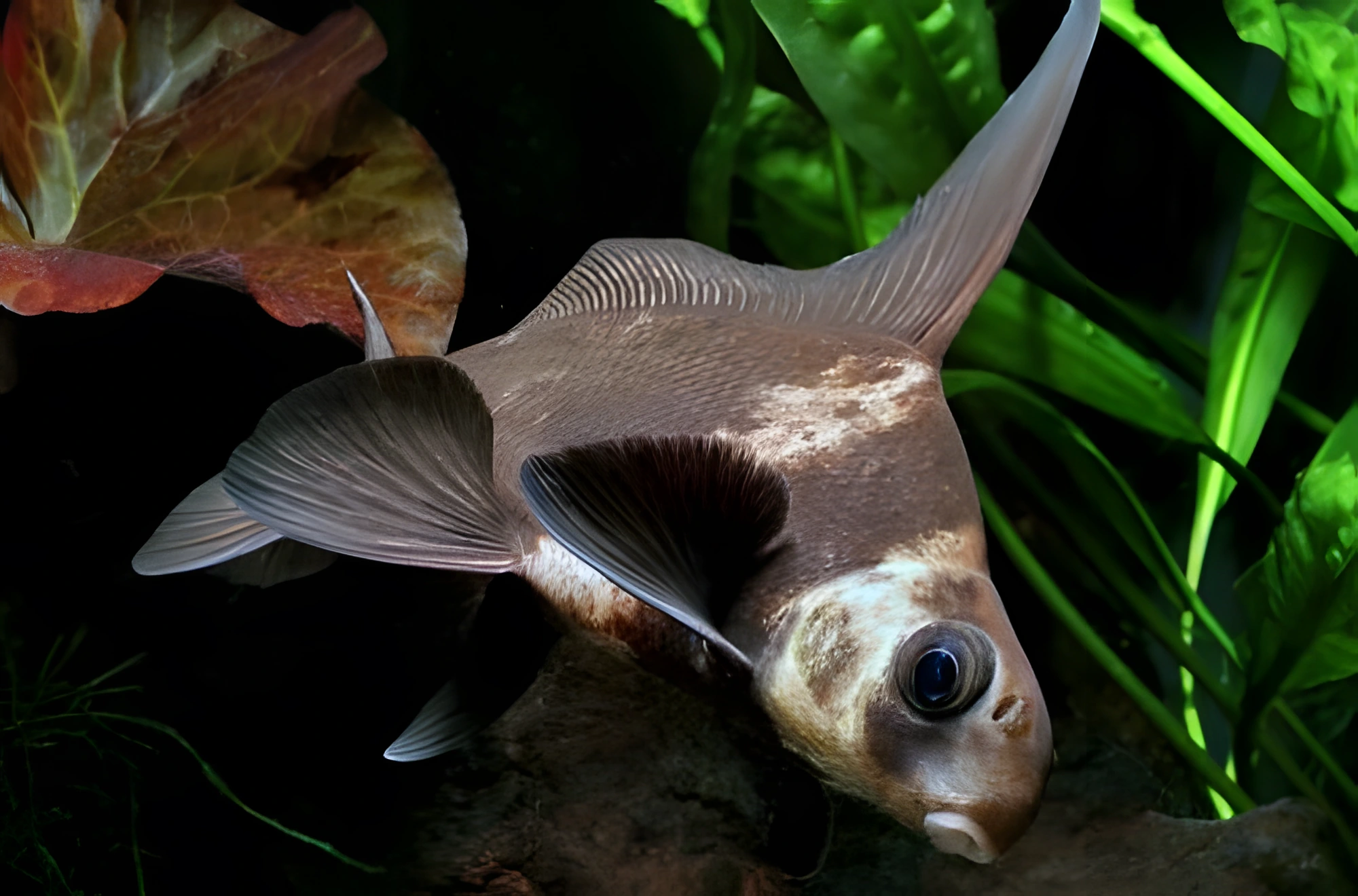
One of the most striking features of this species is its high, elongated dorsal fin, which resembles a sail in shape and gives the body a triangular outline. Other fins are also notably large in proportion to the body. It is important to note that this characteristic is only typical for juveniles; adult fish stretch out significantly and no longer resemble their young. Additionally, the coloration and body pattern change as they mature. Young fish, 8–10 cm long, have a brownish coloration with broad diagonal light stripes, and their head is lighter. When the fish reaches 15–20 cm in size, the brown color changes to dark gray, the striped body pattern remains, but the fins, previously uniform, become mottled. Adult Chinese Suckers, whose length can reach 80–90 cm and weight 40 kg, become predominantly gray, and their pattern retains only one horizontal stripe running from head to tail. Sexual dimorphism in this species is weakly expressed; distinguishing males and females, especially among juveniles, is almost impossible. Only during the breeding season do the males' fins acquire reddish hues.
Habitat
This species is native to China, where it inhabits the vast waters of the Yangtze River basin. It can be found in the main river channels and their tributaries. Adults most often live at depth in areas with fast currents, while juveniles prefer shallow waters and quiet backwaters where the water is still. In its natural habitat, the Chinese Sucker population is endangered. This is due to active human economic activity, including dam construction, water pollution, and intensive fishing. Therefore, in China, this species is listed as endangered.
Behavior and Compatibility
These fish are not aggressive and successfully coexist with similarly sized species. It is recommended to keep them in groups of 3–4 individuals. It is important to remember that, although they are not predators in the direct sense, very small fish can become an accidental victim of the Chinese Sailfin.
Care and Maintenance
For a small group of these fish, very large aquariums are necessary, with volumes that can reach hundreds or even thousands of liters. The setup of such an aquarium often mimics the natural habitat: a rocky riverbed, adorned with large boulders and snags. Arranging and maintaining such large-scale setups requires significant expense and considerable experience, so fish like the Chinese Sucker are usually not considered standard amateur aquaristics and fall outside the scope of our website's topics. Although juveniles can be temporarily kept in a home aquarium, as they grow rapidly, a serious question arises about their future fate.
Diet
In natural conditions, Chinese Suckers feed at the bottom, eating almost anything they can swallow. Their diet includes small crustaceans, aquatic insects, mollusks, worms, and plant matter. When kept in a home aquarium, they readily accept fresh, live, or frozen bloodworms, brine shrimp, pieces of worms, as well as most types of sinking dry foods rich in protein and plant additives.
Breeding and Reproduction
In nature, these fish reach sexual maturity at six years of age. The breeding season occurs in February–March and is accompanied by prolonged upstream migrations to shallow waters. In artificial aquarium conditions, creating the necessary conditions for spawning is practically impossible. Juveniles are obtained artificially at specialized fish farms using hormonal methods.
Diseases
Chinese Suckers do not have scales, which makes them extremely sensitive to water quality and the effects of chemical preparations. When kept in unsuitable conditions, especially with elevated water temperatures, the fish are susceptible to fungal and bacterial infections. They are also extremely sensitive to high nitrate levels.
The main signs of distress include pale coloration, the appearance of whitish spots on the body, and refusal to eat. To prevent diseases, it is necessary to maintain stable water parameters, ensure powerful aeration and effective filtration, preventing the accumulation of organic waste. It is important to avoid sudden temperature fluctuations and to use only smooth decorations, as any damage to the delicate skin quickly leads to the development of secondary infections.
How to choose
When choosing a Chinese Sucker, preference should be given to active individuals with bright, contrasting coloration appropriate for their age. A healthy fish should have clean fins without signs of erosion or film, and clear eyes without cloudiness. It is important to ensure there are no visible injuries, ulcers, or signs of emaciation on the body, where the fish's belly appears sunken.
It should be noted that very young individuals are often sold in stores, which will eventually grow into large fish requiring significant space. When purchasing, it is recommended to observe the fish's behavior: healthy individuals usually behave calmly but show interest in searching for food at the bottom. Avoid acquiring fish that appear apathetic, constantly stay near the surface, or have an unnaturally bloated abdomen, which may indicate internal diseases.
Frequently asked questions
The essentials: size, tank volume, water parameters and care
How big does Chinese Sucker get?
An adult reaches 80–90 cm in length. Plan the tank around the maximum size: the fish quickly outgrows a cramped setup.
What size aquarium does Chinese Sucker need?
The minimum recommended volume is 1000 L. A smaller tank speeds up nitrate build-up and raises stress levels.
What water parameters does Chinese Sucker need?
Temperature 15–21 °C, pH 6–8, hardness 3–21 dGH. Stability matters more than exact values: sudden swings are harder on the fish than a small deviation from the ideal.
How long does Chinese Sucker live?
Around 20 years when kept properly. Lifespan depends directly on tank volume, water quality and a varied diet.
Is Chinese Sucker aggressive?
Temperament: semi-peaceful (including aggression during spawning / intraspecific conflicts). Keep this in mind when choosing tank mates.
How many Chinese Sucker should be kept together?
Recommended setup: small group (3–4 individuals). Ignoring this is a common cause of stress and disease.
What does Chinese Sucker eat?
Diet type: sinking (any). Feed small portions that are finished within a couple of minutes — overfeeding does more harm than underfeeding.
What is the scientific name of Chinese Sucker?
The scientific name of the species is Myxocyprinus asiaticus, family Catostomidae. It also appears in the literature as: Carpiodes asiaticus, Carpiodes chinensis, Sclerognathus chinensis.