Temperature23 – 28 °C
Natural range
- South America area
CharacinsConservation status: Near threatened NT
Other scientific names: Colosomma macropomum, Colossoma macropodum, Colossoma marcopomum, Colossoma nigripinne, Colossoma nigripinnis, Colossoma oculus
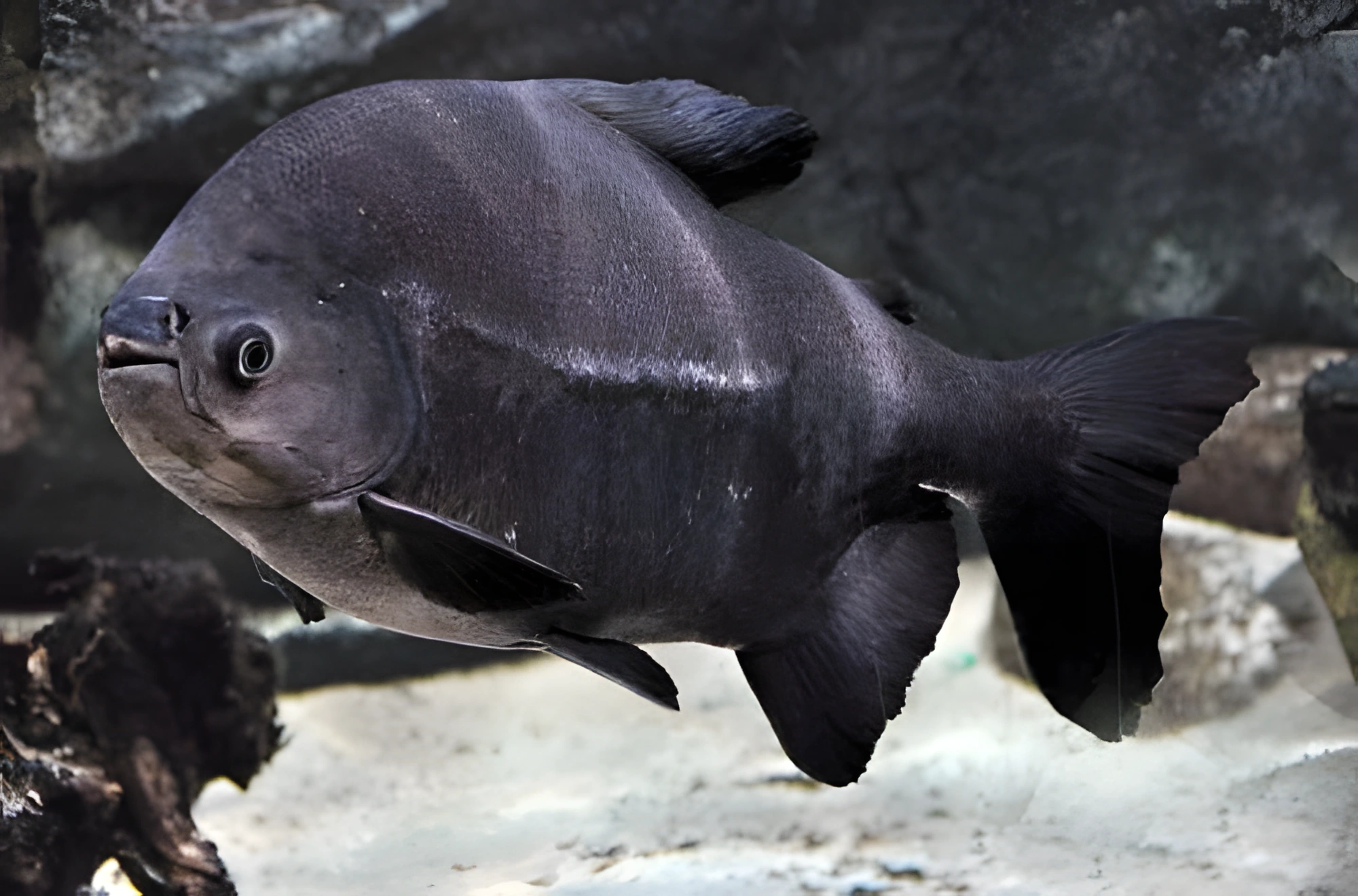
Colossoma macropomum, more commonly known as Black Pacu or Tambaqui, is a member of the family Serrasalmidae. Although it belongs to the same category as popular aquarium inhabitants like Tetras and Neons, the striking resemblance ends there. These fish reach impressive sizes, often exceeding one meter in length in their natural habitat. When young, they bear a strong resemblance to piranhas but lack their bloodthirsty nature. Since keeping Pacu is not particularly difficult, provided there is a sufficiently large aquarium, this species can be recommended to aquarists of all experience levels.
- Required aquarium volume
- 1000 L
- Size in aquarium
- 70 cm
- Temperature
- 23 – 28 °C
- Temperament
- Peaceful, active/mobile
Parameters
Water pHSlightly acidic (5) – Slightly alkaline (7.8)
Water dHVery soft (2) – Very hard (20)
Water salinityno salt (freshwater)
Size in aquarium70 cm
Lifespan25 years
TemperamentPeaceful, active/mobile
Toward small fishnot a predator
Required aquarium volume1000 L
Lightingmoderate (regular)
Substrateany (no restrictions)
Water flowweak or moderate
FeedingAny (universal)
CareBoth solitary and in group (flexible)
Description
The first thing that invariably catches the eye when observing a Black Pacu is its colossal size. In a home aquarium, the fish often grows to over 70 cm, and its high, laterally compressed body makes its appearance truly imposing. It is important not to confuse this species with the Red-bellied Pacu, its closest relative, which is distinguished by its reddish belly coloration and more modest dimensions, not exceeding 50 cm. The coloration of the Black Pacu can vary from gray to rich black tones, with the fins always being dark.
Habitat
The Black Pacu was first described by the researcher Cuvier in 1816, when he was studying the fauna of the Amazon and Orinoco river basins, located in South America. Nowadays, these fish are found in almost all major rivers of the tropical zone of the New World. Since the mid-90s of the last century, they can also be found in Asia, where they are actively bred as a food source. In their natural habitat, the fish prefer to stay alone, inhabiting the dark waters of flooded forests. Their diet is very diverse and consists of everything that can fit into their mouths: this includes fruits, grains, as well as insects and plant debris. Sometimes they are not averse to feasting on small fish.
Behavior and Compatibility
This fish prefers proud solitude, but at the same time, it will not refuse the company of other species if they meet certain conditions: they must be peaceful, non-aggressive, non-territorial, and large enough not to accidentally become part of its diet.
Care and Maintenance
The main difficulty in keeping Tambaqui is related to the need to acquire a very large aquarium and find a suitable place for its installation, as a fully filled system can weigh about a ton. To maintain high water quality, high-performance filters and regular water changes of 30–50% of the volume every two weeks are necessary. Other equipment is standard and includes a heater, aerator, and lighting fixtures. These fish prefer the middle layers of the water, so when decorating the aquarium, sufficient free swimming space should be provided. Large plants, driftwood, as well as artificial grottoes and shelters can be used as decor. Despite their impressive size, Pacu are timid; sudden noises and vibrations can cause them to panic, which may lead the fish to hit the aquarium walls.
Diet
In an aquarium environment, these fish exhibit an excellent appetite, consuming almost all types of food. They readily eat dry commercial foods, such as large pellets and tablets, as well as plant components and meat, including frozen. An approximate diet may include chopped pieces of apple, zucchini, or other vegetables and fruits, mixed with meat products, such as shrimp or mollusks.
Breeding and Reproduction
Due to their impressive size, Black Pacu are not bred in home aquariums; this requires specialized nurseries located in natural backwaters. Nevertheless, attempts have been made to breed this species, mainly for research purposes. The first successful experiments to obtain offspring in captivity date back to 1992, when healthy offspring of these giants were obtained using hormonal stimulation at a research center in Natal, Brazil.
Diseases
As with any large fish, insufficient space and nutrient deficiency can be common problems for Pacu, which often negatively affects their well-being. Otherwise, this species is highly resilient. More detailed information on the symptoms of possible diseases and methods of treatment is presented in the section “Diseases of Aquarium Fish.”
How to choose
When purchasing a black pacu, it's important to consider that it is a large fish, often mistakenly sold as a piranha due to its external resemblance when young. Healthy specimens should be active, have clean fins without signs of damage, coatings, or ulcers, and exhibit even breathing. Avoid fish with sunken bellies, cloudy eyes, or unnatural behavior, such as constantly hovering at the surface. Given their rapid growth and the enormous size of adult specimens, before purchasing, it is essential to ensure that you have the conditions to keep the fish long-term, as most aquariums are not suitable for an adult pacu. Often, specimens with signs of stunting are found in stores due to prolonged keeping in cramped tanks, which can lead to irreversible health problems.
Frequently asked questions
The essentials: size, tank volume, water parameters and care
How big does Black Pacu get?
An adult reaches 70 cm in length. Plan the tank around the maximum size: the fish quickly outgrows a cramped setup.
What size aquarium does Black Pacu need?
The minimum recommended volume is 1000 L. A smaller tank speeds up nitrate build-up and raises stress levels.
What water parameters does Black Pacu need?
Temperature 23–28 °C, pH 5–7.8, hardness 2–20 dGH. Stability matters more than exact values: sudden swings are harder on the fish than a small deviation from the ideal.
How long does Black Pacu live?
Around 25 years when kept properly. Lifespan depends directly on tank volume, water quality and a varied diet.
Is Black Pacu aggressive?
Temperament: peaceful, active/mobile. Keep this in mind when choosing tank mates.
How many Black Pacu should be kept together?
Recommended setup: both solitary and in group (flexible). Ignoring this is a common cause of stress and disease.
What does Black Pacu eat?
Diet type: any (universal). Feed small portions that are finished within a couple of minutes — overfeeding does more harm than underfeeding.
What is the scientific name of Black Pacu?
The scientific name of the species is Colossoma macropomum, family Serrasalmidae. It also appears in the literature as: Colosomma macropomum, Colossoma macropodum, Colossoma marcopomum.