Temperature23 – 28 °C
Natural range
- West and Central Africa area
UnusualConservation status: Least concern LC
Other scientific names: Notopterus nigri, Notopterus nili, Xenomystes nigri
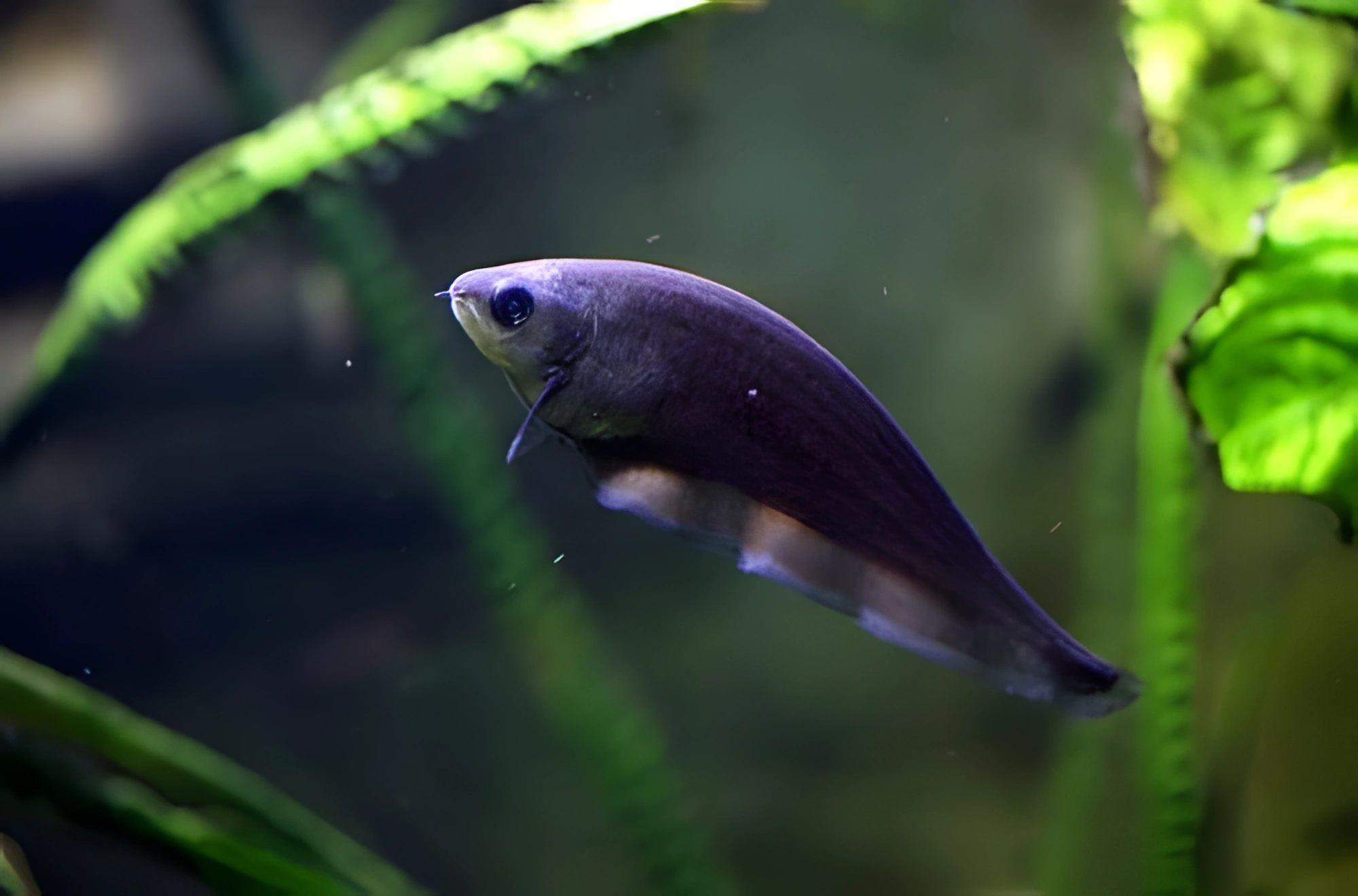
The African knife fish, scientifically known as Xenomystus nigri, belongs to the Notopteridae family. This species is notably hardy and can coexist well with many aquarium inhabitants of appropriate size. For novice aquarists who dream of owning an unusual, exotic fish that doesn't require complex conditions, the Black Knife Fish can be an excellent choice.
- Required aquarium volume
- 200 L
- Size in aquarium
- 30 cm
- Temperature
- 23 – 28 °C
- Temperament
- Semi-peaceful (including aggression during spawning / intraspecific conflicts)
Parameters
Water pHSlightly acidic (5.8) – Neutral (7.5)
Water dHVery soft (1) – Very hard (20)
Water salinityno salt (freshwater)
Size in aquarium30 cm
Lifespan10 years
TemperamentSemi-peaceful (including aggression during spawning / intraspecific conflicts)
Toward small fishnot a predator
Required aquarium volume200 L
Lightingdimmed (dull)
Substratesoft silted
Water flowweak
FeedingMeat / protein (live, frozen, fresh)
CareSolitary + other species (large / compatible)
Description
Adults can reach approximately 30 cm in length. Their body shape resembles a knife blade, which gives the species its name. The anal fin, starting near the head, smoothly transitions into the tail and serves as the primary means of propulsion, allowing the fish to move forward and backward with undulating movements. A distinctive feature is the complete absence of a dorsal fin. The African knife fish lives in low-light conditions, so it has large eyes and a well-developed sense of smell. Another interesting feature is the structure of its swim bladder, which not only functions to maintain buoyancy but also serves as an accessory respiratory organ. The fish regularly rises to the surface to gulp atmospheric air, supplementing its gill respiration.
Habitat
The natural habitats of this fish are located in the equatorial and tropical regions of the African continent. Its range extends across Nigeria, Cameroon, the Democratic Republic of Congo, Egypt, Chad, Liberia, Gabon, Togo, Sudan, Benin, Sierra Leone, and Angola. Xenomystus nigri inhabits the basins of large rivers such as the Nile, Congo, and Niger. It prefers sections of rivers and floodplain lakes with dense vegetation, although this species can adapt to various biotopes.
Behavior and Compatibility
As they age, Black Knife Fish display territorial behavior, so a sufficiently spacious aquarium will be required to house multiple individuals. It coexists well with non-aggressive species of comparable size, such as Armored Catfish, Corydoras Catfish, or Synodontis. However, for smaller fish that can fit into its mouth, the Black Knife Fish poses a potential danger, as they may become accidental prey.
Care and Maintenance
For a single fish, an aquarium of at least 200 liters is optimal. When decorating, it is advisable to use a soft sandy substrate, as well as various snags, smooth stones, and boulders. Dense plant thickets are recommended to create the most comfortable conditions. To mimic its natural aquatic environment, dried oak leaves, Indian almond leaves, or treated peat can be added. Gradually decomposing, they stain the water a characteristic brownish hue, enriching it with tannins. Since the diet involves a large amount of organic matter, an effective filtration system and regular aquarium maintenance are necessary to maintain biological balance. These procedures include weekly partial water changes with fresh water and constant cleaning of the substrate and decorative elements.
Diet
As a carnivorous species, this fish should receive fresh or frozen foods in aquarium conditions. Its diet should include bloodworms, shrimp, earthworms, mussels, and other mollusks. Granulated dry foods can also be offered, but they should not form the basis of its diet.
Breeding and Reproduction
Breeding this species in a home aquarium is very difficult, and the appearance of offspring is unlikely. During the breeding season, males emit unusual sounds to attract females. The female lays 150 to 200 eggs, attaching them to the surface of snags or stones. The male remains near the clutch, guarding it and creating a constant water flow with his fins to ensure sufficient oxygen supply for the eggs. The incubation period lasts about 10 days, after which parental instincts weaken, and the male leaves the clutch, allowing the fry to develop independently.
Diseases
This is an unpretentious and hardy species. The main causes of diseases are sharp and significant deteriorations in keeping conditions, such as poor water quality or substandard food, as well as various injuries. More detailed information on symptoms and treatment methods can be found in the "Diseases of Aquarium Fish" section.
How to choose
When choosing a Black Knife Fish, preference should be given to individuals with clean skin free of visible damage, ulcers, or white film, as this species has no scales and is extremely sensitive to water quality and medications. A healthy fish should be active during twilight hours, have clear eyes, and exhibit the characteristic undulating movements of its anal fin.
- Avoid purchasing individuals with signs of emaciation or sunken bellies, which may indicate chronic illness or refusal to eat.
- Pay attention to the fish's behavior in the aquarium: a healthy knife fish should be timid but react adequately to movement, rather than lying motionless at the bottom.
- Ensure that the fish in the store are kept in dimly lit conditions with hiding places, as constant bright light is a strong stress factor for this species.
Frequently asked questions
The essentials: size, tank volume, water parameters and care
How big does Black Knife Fish get?
An adult reaches 30 cm in length. Plan the tank around the maximum size: the fish quickly outgrows a cramped setup.
What size aquarium does Black Knife Fish need?
The minimum recommended volume is 200 L. A smaller tank speeds up nitrate build-up and raises stress levels.
What water parameters does Black Knife Fish need?
Temperature 23–28 °C, pH 5.8–7.5, hardness 1–20 dGH. Stability matters more than exact values: sudden swings are harder on the fish than a small deviation from the ideal.
How long does Black Knife Fish live?
Around 10 years when kept properly. Lifespan depends directly on tank volume, water quality and a varied diet.
Is Black Knife Fish aggressive?
Temperament: semi-peaceful (including aggression during spawning / intraspecific conflicts). Keep this in mind when choosing tank mates.
How many Black Knife Fish should be kept together?
Recommended setup: solitary + other species (large / compatible). Ignoring this is a common cause of stress and disease.
What does Black Knife Fish eat?
Diet type: meat / protein (live, frozen, fresh). Feed small portions that are finished within a couple of minutes — overfeeding does more harm than underfeeding.
What is the scientific name of Black Knife Fish?
The scientific name of the species is Xenomystus nigri, family Notopteridae. It also appears in the literature as: Notopterus nigri, Notopterus nili, Xenomystes nigri.