Temperature24 – 28 °C
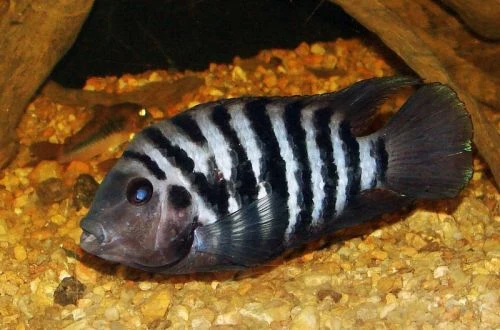
Other scientific names: Archocentrus nigrofasciatus, Cichlasoma nigrofasciatum, Cichlosoma nigrofasciatum, Cryptoheros nigrofascaitus, Cryptoheros nigrofasciatus, Heros nigrofasciatus
The Convict Cichlid, scientifically known as Amatitlania nigrofasciata, belongs to the family Cichlidae. This fish possesses many qualities attractive to aquarists: unpretentiousness in keeping, ease of breeding, hardiness, and an attractive, distinctive coloration. Although its somewhat quarrelsome nature may tarnish its idealized image, this has not prevented the species from becoming one of the most popular cichlids.
Adults grow to approximately 15 cm in length. A distinctive feature of their coloration is the alternation of blackish-blue and gray stripes, reminiscent of traditional prisoner uniforms, which gave rise to the name “Convict Cichlid.” Males are usually larger and have more pointed dorsal and anal fins. Females, on the other hand, are distinguished by brighter coloration, with yellow hues particularly noticeable on the lower part of their bodies.
This species is widespread throughout Central America and has been introduced and successfully established on other continents; for example, wild populations of these fish even inhabit Australia. The Convict Cichlid prefers diverse aquatic environments — from swift streams to calm lakes and ponds. It usually stays near the shoreline, and only rarely can it be found in open waters.
The Convict Cichlid is often sold as a friendly fish suitable for a community tank, but in reality, it is a rather aggressive and territorial species, especially during spawning. It will fiercely defend its territory from other inhabitants, which can lead to conflicts. It is recommended to keep these fish in a species-specific tank. If the aquarium is small, one male/female pair is sufficient. In a large aquarium, an entire group can be kept, provided that each male has enough territory to live in. Among other fish, cohabitation with cichlids from the same region and/or larger species is possible.
For keeping a single pair of fish, an aquarium of 100 liters or more will be required. In terms of decor, the main emphasis should be on creating numerous shelters. These can be piles of stones, snags, intertwined branches and tree roots, while ceramic pots perfectly mimic caves. Live plants are not essential, as the fish will likely quickly uproot them. Other environmental parameters, such as the hydrochemical composition of the water, temperature, and light level, are not critical and allow for significant fluctuations.
These fish are not at all capricious about food. They readily accept any common aquarium foods: dry, freeze-dried, live, and frozen. To ensure the full development and health of the fish, it is advisable to use high-quality foods from well-known manufacturers, specifically designed for cichlids and containing all necessary trace elements.
This cichlid species is considered one of the easiest to successfully breed at home. With the onset of the breeding season, the male and female form a temporary pair. In a spacious aquarium with several fish, several pairs usually form, each occupying its own territory. It is important to remember that during this period, males become extremely aggressive and attack anyone who invades their territory, so temporary relocation of other fish may be required. Caves are essential for spawning – for example, the aforementioned ceramic pots. The stimulus for spawning to begin is daily water changes of about 50% with fresh water for several days. The female chooses a suitable cave, thoroughly cleans it, and lays eggs, usually about 300. The female takes care of the nest, while the male patrols the territory and drives away intruders. Fry appear after 3–4 days, and after another week, they begin to swim actively. The young stay near the female, who, along with the male, continues to protect them for some time. The fry feed on detritus, algae; they can also be offered finely crushed dry flakes or specialized food.
The main cause of most diseases in these fish is unsuitable keeping conditions and poor-quality nutrition. If initial symptoms are observed, it is first necessary to check water parameters and the concentration of dangerous substances such as ammonia, nitrites, and nitrates. If the indicators deviate from the norm, they should be brought back into order, and only then should treatment begin.
When choosing a Convict Cichlid, pay attention to the fish's overall activity and the condition of its skin. Healthy individuals should be active, curious, and free of visible damage, ulcers, film, or unnatural spots on their bodies. Fins should be spread, without signs of damage or clamping. Avoid buying fish that appear emaciated, stay near the water surface, or, conversely, constantly hide in the corner of the aquarium, showing signs of stress or apathy. It is important to consider that Convict Cichlids are territorial fish, so in the store, they may often exhibit aggressive behavior even towards their tank mates. When purchasing a pair, ensure there are no signs of serious fights between the fish. If you plan to acquire a young group, remember that as they mature, the fish will begin to pair off and actively defend their territories, which will require a large number of shelters in the aquarium.
The essentials: size, tank volume, water parameters and care
An adult reaches 8–15 cm in length. Plan the tank around the maximum size: the fish quickly outgrows a cramped setup.
The recommended volume is 100 L. A smaller tank speeds up nitrate build-up and raises stress levels.
Temperature 24–28 °C, pH 6–8, hardness 5–26 dGH. Stability matters more than exact values: sudden swings are harder on the fish than a small deviation from the ideal.
Around 10 years when kept properly. Lifespan depends directly on tank volume, water quality and a varied diet.
Temperament: aggressive / incompatible / unfriendly. Keep this in mind when choosing tank mates.
Recommended setup: pair (male/female). Ignoring this is a common cause of stress and disease.
Diet type: any (universal). Feed small portions that are finished within a couple of minutes — overfeeding does more harm than underfeeding.
The scientific name of the species is Amatitlania nigrofasciata, family Cichlids (Cichlidae). It also appears in the literature as: Archocentrus nigrofasciatus, Cichlasoma nigrofasciatum, Cichlosoma nigrofasciatum.
Matched by family, categories and overlapping keeping conditions
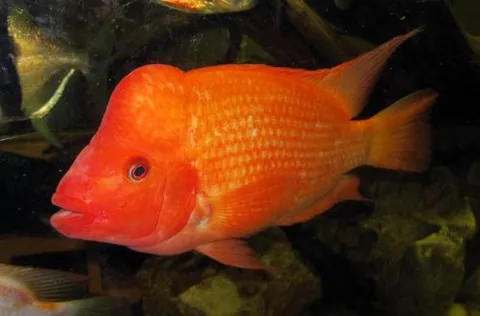
Amphilophus labiatus
The Red Devil Cichlid, or Amphilophus labiatus, belongs to the Cichlidae family. This species attracts attention with its exotic appearance and vibrant coloration, as well as its ease of care and undemanding diet,…
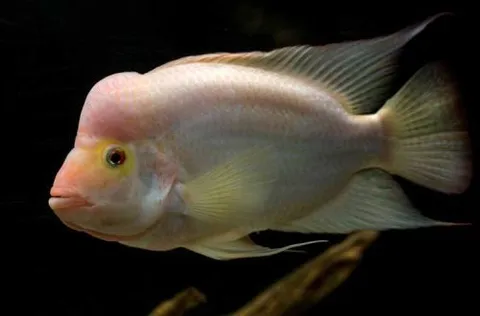
Amphilophus citrinellus
The Midas Cichlid, or Citron Cichlid, scientifically known as Amphilophus citrinellus, belongs to the Cichlidae family. Its name alludes to the myth of King Midas and his boundless greed. Observing the behavior of this…
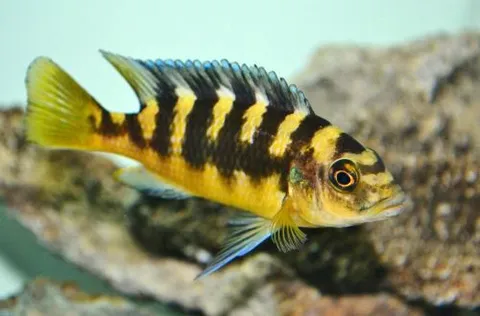
Pseudotropheus crabro
Pseudotropheus crabro, also known as the Chameleon Cichlid or Bumblebee Cichlid, has the scientific name Pseudotropheus crabro and belongs to the family Cichlidae. This fish is a representative of the Mbuna cichlid…
Pseudotropheus crabro
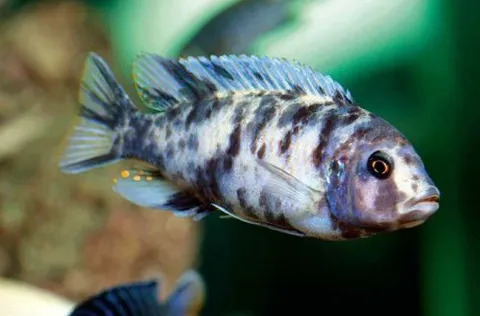
The OB Mbuna form (OB Mbuna) represents an example of natural polymorphism, characteristic of some species of Malawian cichlids. These fish inhabit the African Lake Nyasa and are distinguished by their peculiar…