Temperature20 – 26 °C
Natural range
- South America area
CharacinsConservation status: Least concern LC
Other scientific names: Tetragonopterus nigripinnis
Markiana nigripinnis, also known as the Blackfin Markiana, is a member of the Characidae family, which includes characin fish. Its native range is the subtropical regions of South America. These fish inhabit the Paraná and Paraguay river basins, extending across the southern regions of Brazil, northern Argentina, Paraguay, and Uruguay. They are often found in open water areas within the main river channels.
- Required aquarium volume
- 200 L
- Size in aquarium
- 12 – 15 cm
- Temperature
- 20 – 26 °C
- Temperament
- Peaceful (regular)
Parameters
Water pHNeutral (6.5) – Slightly alkaline (8)
Water dHHard (12) – Very hard (30)
Water salinityno salt (freshwater)
Size in aquarium12 – 15 cm
Lifespan5 years
TemperamentPeaceful (regular)
Toward small fishnot a predator
Required aquarium volume200 L
Lightingdimmed
Substrateany (no restrictions)
Water flowmoderate
FeedingAny (universal)
CareSmall group (5–6 individuals)
Description
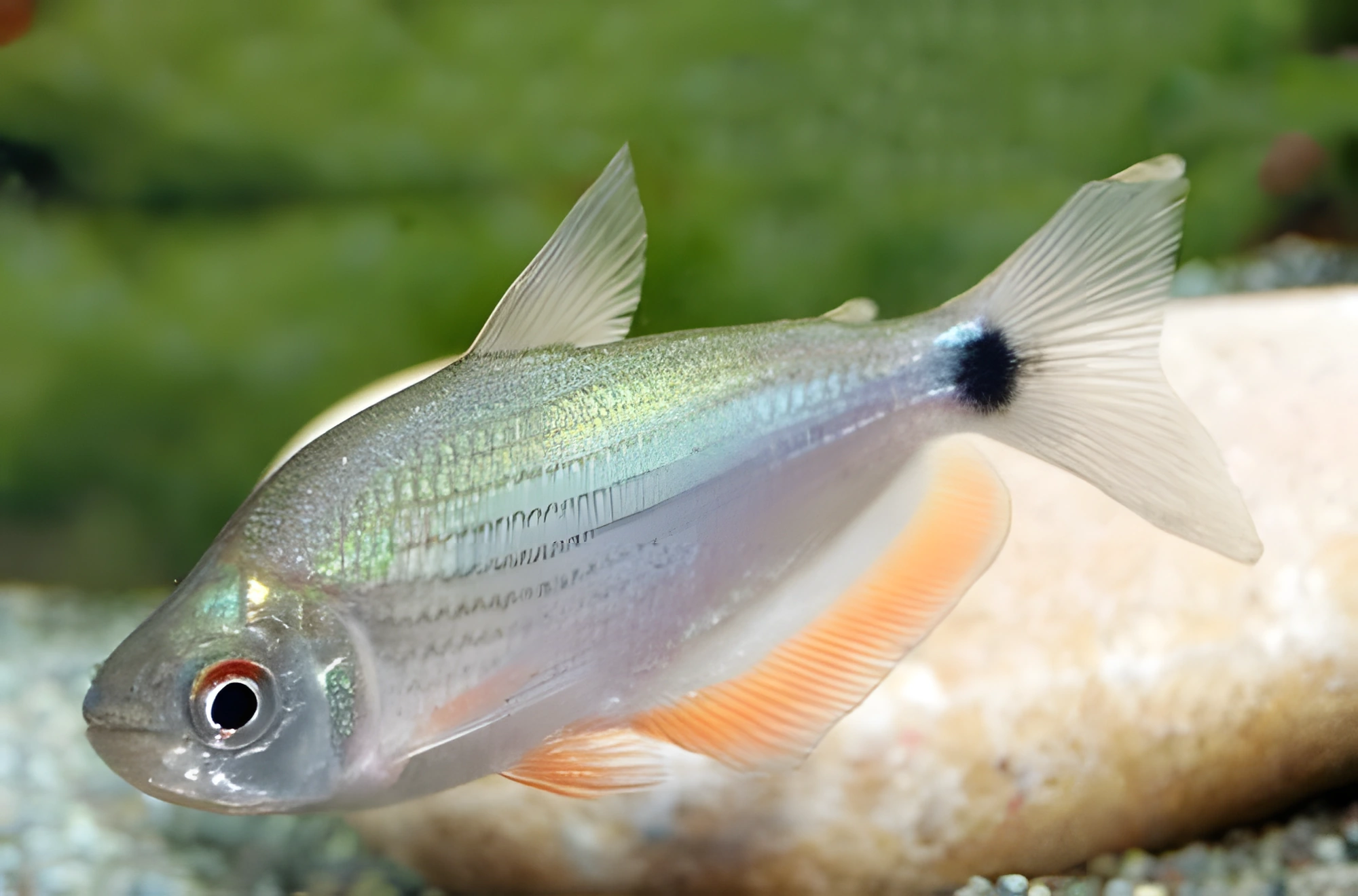
This fish has a robust, strong build. In its natural habitat, it can reach a length of 15 cm, but in aquarium conditions, it rarely grows beyond 12 cm. Its primary coloration is silvery, with scales displaying beautiful iridescent green, red, and blue hues. The fins are semi-transparent, and red tones are sometimes visible on the anal and pelvic fins.
Habitat
This species is found in South America, inhabiting the Paraná, Paraguay, and Mamoré river basins. In nature, it prefers shallow areas, slow-moving zones, channels, and flooded territories with abundant riparian vegetation. The water in its habitat is characterized by tropical temperatures ranging from 20–26°C, moderate to high hardness, and neutral to slightly alkaline pH values.
Behavior and Compatibility
Despite its peaceful nature, the activity of this fish can be inconvenient for slower tank mates, especially noticeable during feeding. They coexist well with species of similar size and temperament, including other characins, various catfish, and some American cichlids, such as Geophagus and Cichlasoma.
Care and Maintenance
For a school of 5–6 individuals, an aquarium of at least 200 liters will be required. The most important condition for aquascaping is to provide spacious open areas for swimming in the middle and upper water layers. Creating hiding places, such as various snags or dense plant thickets, will be very beneficial. It is important to regularly trim and thin out vegetation to prevent its excessive growth. Since Markiana nigripinnis originates from relatively cool latitudes, it can comfortably live at temperatures from 20°C, which often eliminates the need for a heater. It is also recommended to simulate moderate current and maintain a high level of dissolved oxygen in the water, using additional air stone diffusers. This species is considered quite voracious, and in combination with its activity, this makes it a serious competitor for food resources. The fish readily accepts most common foods — both dry, frozen, and live.
Diet
The species is characterized by its voracious appetite, and its activity makes it a strong competitor for food resources. It readily eats most popular foods, whether dry, frozen, or live. Markiana nigripinnis is generally peaceful, but its energy can be a problem for slower fish, especially during feeding. They are compatible with species of comparable size and temperament — these can include other characins, various catfish species, and American cichlids, such as Geophagus and Cichlasoma.
Breeding and Reproduction
Precise data on the breeding process in captivity are insufficiently studied. It is assumed that the species is an egg-layer and does not exhibit parental care. To stimulate spawning, it is recommended to use aquariums with fine-leaved plants or special meshes to protect the eggs from being eaten by the parents. Sexual dimorphism is expressed in the coloration of the anal fin: in males, it is bright orange with a black border, while in females, it is lighter and lacks the dark edging.
Diseases
No specific diseases unique to this fish have been described for this species. Like other members of the Characidae family, when husbandry conditions are violated, such as sudden temperature fluctuations, poor water quality, or high concentrations of organic compounds, the species becomes susceptible to typical aquarium pathologies, including ichthyophthiriasis and bacterial infections. Prevention involves maintaining stable water parameters, regular filtration, and ensuring sufficient oxygen levels, as the fish is adapted to flowing waters.
How to choose
When selecting individuals, attention should be paid to the activity of the fish and the cleanliness of their skin. Healthy fish should exhibit pronounced schooling behavior and actively respond to food. It is important to avoid specimens with signs of emaciation, fin damage, or visible growths. Given the high activity of the species, it is recommended to acquire a group of 5–6 individuals to reduce stress and ensure natural behavior in the aquarium.
Frequently asked questions
The essentials: size, tank volume, water parameters and care
How big does Blackfin Markiana get?
An adult reaches 12–15 cm in length. Plan the tank around the maximum size: the fish quickly outgrows a cramped setup.
What size aquarium does Blackfin Markiana need?
The minimum recommended volume is 200 L. A smaller tank speeds up nitrate build-up and raises stress levels.
What water parameters does Blackfin Markiana need?
Temperature 20–26 °C, pH 6.5–8, hardness 12–30 dGH. Stability matters more than exact values: sudden swings are harder on the fish than a small deviation from the ideal.
How long does Blackfin Markiana live?
Around 5 years when kept properly. Lifespan depends directly on tank volume, water quality and a varied diet.
Is Blackfin Markiana aggressive?
Temperament: peaceful (regular). Keep this in mind when choosing tank mates.
How many Blackfin Markiana should be kept together?
Recommended setup: small group (5–6 individuals). Ignoring this is a common cause of stress and disease.
What does Blackfin Markiana eat?
Diet type: any (universal). Feed small portions that are finished within a couple of minutes — overfeeding does more harm than underfeeding.
What is the scientific name of Blackfin Markiana?
The scientific name of the species is Markiana nigripinnis, family Characidae. It also appears in the literature as: Tetragonopterus nigripinnis.