Temperature18 – 28 °C
Natural range
- Taiwan area
UnusualConservation status: Least concern LC
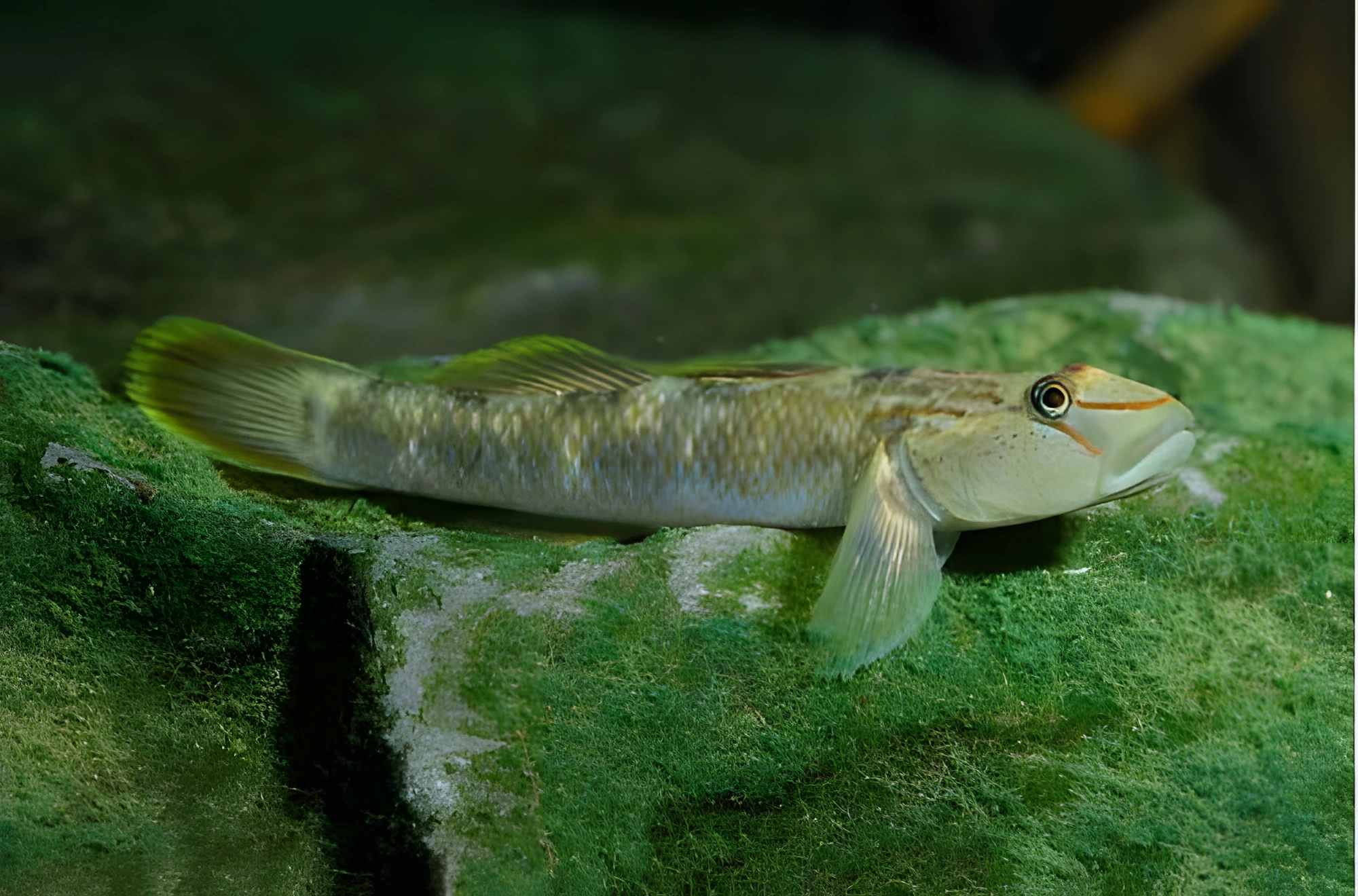
The Taiwan Goby, known scientifically as Rhinogobius nantaiensis, belongs to the Gobiidae family. As its name suggests, this species inhabits the island of Taiwan, located 180 km east of the Chinese coast. Its natural habitat consists of shallow, fast-flowing mountain rivers and streams.
- Required aquarium volume
- 50 L
- Size in aquarium
- 5 – 6 cm
- Temperature
- 18 – 28 °C
- Temperament
- Semi-peaceful (including aggression during spawning / intraspecific conflicts)
Parameters
Water pHSlightly acidic (6) – Slightly alkaline (8)
Water dHSoft (5) – Hard (15)
Water salinityno salt (freshwater)
Size in aquarium5 – 6 cm
Lifespan5 years
TemperamentSemi-peaceful (including aggression during spawning / intraspecific conflicts)
Toward small fishnot a predator
Required aquarium volume50 L
Lightingmoderate (regular)
Substraterocky (rock formations, boulders, etc.)
Water flowmoderate or strong
FeedingAny (universal)
CarePair (male/female)
Description
Adults typically reach 5–6 cm in length. This fish has an elongated body and a rather large head, with eyes positioned high on the crown. Its coloration is gray-blue with red scaling. A pair of red stripes is visible on its head. Males and females have a similar appearance, but males are distinguished by a white first ray on their dorsal fin.
Habitat
The species is endemic to Taiwan, where it inhabits the Zengwun and Kaoping river basins. In nature, it lives in small mountain rivers, tributaries, and streams with fast currents. It prefers areas with a rocky bottom composed of gravel, boulders, and bedrock, where environmental conditions are subject to seasonal fluctuations in water level, current speed, and clarity.
Behavior and Compatibility
Males display a pronounced temperament, engaging in clashes over territory and female attention. However, this apparent hostility is merely a demonstration of competition and is essentially harmless. In an aquarium setting, it is recommended to keep at least two males and two females to keep the males constantly stimulated. Otherwise, males may become less active and lose their vibrant coloration. Since the Taiwan Goby inhabits the bottom layer and is modest in size, it should not be kept with larger and more territorial fish. Coexistence with species occupying a similar ecological niche, such as Schistura loaches, is also undesirable. This species coexists well with fish that inhabit the water column or surface, and can adapt to moderate currents. These include Danios, White Cloud Mountain Minnows (both common and Vietnamese varieties), most livebearers, tetras, and others.
Care and Maintenance
Starting from 50 liters — this is the optimal aquarium volume for a group of four fish. In terms of design, it is desirable to recreate a semblance of a mountain river bottom, using a rocky substrate supplemented with boulders and snags. For planting, suitable options include plants that can attach to hard surfaces like rocks or wood; these include Anubias, various aquatic mosses and ferns, and Bucephalandra. A more complete list of such plants can be found in the “Aquarium Plants” section, using the appropriate filter. Like many species inhabiting fast-flowing waters, the Taiwan Goby is sensitive to organic pollutants and requires clean, oxygen-rich water. A powerful filtration system will not only help maintain consistently high water quality but also provide the necessary water flow and aeration. However, relying solely on the filter's operation is not advisable. Regular aquarium maintenance is critically important for successful keeping. This includes weekly partial water changes, cleaning accumulated food debris and other organic waste, and prophylactic equipment inspection. In their natural environment, these fish feed on small invertebrates found on the bottom. In a home aquarium, their daily diet should consist of live or frozen foods such as Daphnia, bloodworms, Artemia, and mosquito larvae. Over time, they can also be accustomed to dry foods.
Diet
The natural diet of these fish includes small invertebrates they find on the bottom. In a home aquarium, their daily diet should consist of live or frozen Daphnia, bloodworms, Artemia, and mosquito larvae. They can also be accustomed to dry foods. Breeding in aquariums is not uncommon, and no special conditions are required for spawning. The fish lay their eggs in shelters, so suitable spawning sites such as grottoes, caves, or crevices should be provided in the aquarium. The anticipated appearance of offspring can be predicted by the prolonged absence of the male and female. The pair secludes itself in the chosen shelter for 2–3 days to lay several hundred eggs, attaching them to a rock surface. After spawning, the female departs, and the male takes over the care of guarding the clutch throughout the incubation period, which lasts 9–12 days. Gobies are very prolific, and their fry have high survival rates. Over time, a single pair of fish can significantly increase its population.
Breeding and Reproduction
Breeding Taiwan Gobies in a home aquarium is quite common. No special conditions are required for reproduction. The fish lay their eggs in shelters, so potential spawning sites such as grottoes, caves, or crevices should be provided in the aquarium. A sign of impending offspring will be the prolonged absence of the male and female. The pair secludes itself in a shelter for 2–3 days, where it lays several hundred eggs, attaching them to a rock surface. After spawning, the female leaves the nesting site, and the male remains to guard it throughout the incubation period, which lasts 9–12 days. Gobies are highly prolific, and their fry have good survival rates. Over time, a single pair of fish can give rise to a large population.
Diseases
Species-specific diseases for this type are not described in aquarium literature. The main health risk is sensitivity to water quality: fish tolerate the accumulation of organic pollutants poorly and require a high level of dissolved oxygen. Prevention includes regular water changes, maintaining stable parameters, and ensuring effective filtration that mimics natural current.
How to choose
When purchasing, choose active individuals with clean fins and no visible skin damage. It is important to pay attention to their behavior: healthy fish show interest in their surroundings and do not appear lethargic. Due to the difficulty of species identification within the genus Rhinogobius, it is recommended to purchase fish from trusted suppliers, as similar species requiring different keeping conditions are often found in trade.
Frequently asked questions
The essentials: size, tank volume, water parameters and care
How big does Taiwan Goby get?
An adult reaches 5–6 cm in length. Plan the tank around the maximum size: the fish quickly outgrows a cramped setup.
What size aquarium does Taiwan Goby need?
The minimum recommended volume is 50 L. A smaller tank speeds up nitrate build-up and raises stress levels.
What water parameters does Taiwan Goby need?
Temperature 18–28 °C, pH 6–8, hardness 5–15 dGH. Stability matters more than exact values: sudden swings are harder on the fish than a small deviation from the ideal.
How long does Taiwan Goby live?
Around 5 years when kept properly. Lifespan depends directly on tank volume, water quality and a varied diet.
Is Taiwan Goby aggressive?
Temperament: semi-peaceful (including aggression during spawning / intraspecific conflicts). Keep this in mind when choosing tank mates.
How many Taiwan Goby should be kept together?
Recommended setup: pair (male/female). Ignoring this is a common cause of stress and disease.
What does Taiwan Goby eat?
Diet type: any (universal). Feed small portions that are finished within a couple of minutes — overfeeding does more harm than underfeeding.
What is the scientific name of Taiwan Goby?
The scientific name of the species is Rhinogobius nantaiensis, family Gobiidae.