Temperature20 – 26 °C
Natural range
- Southeast Asia area
- India area
- Pakistan area
- Indo-Pacific area
UnusualConservation status: Least concern LC
Other scientific names: Gobius apogonius, Gobius sadanundio
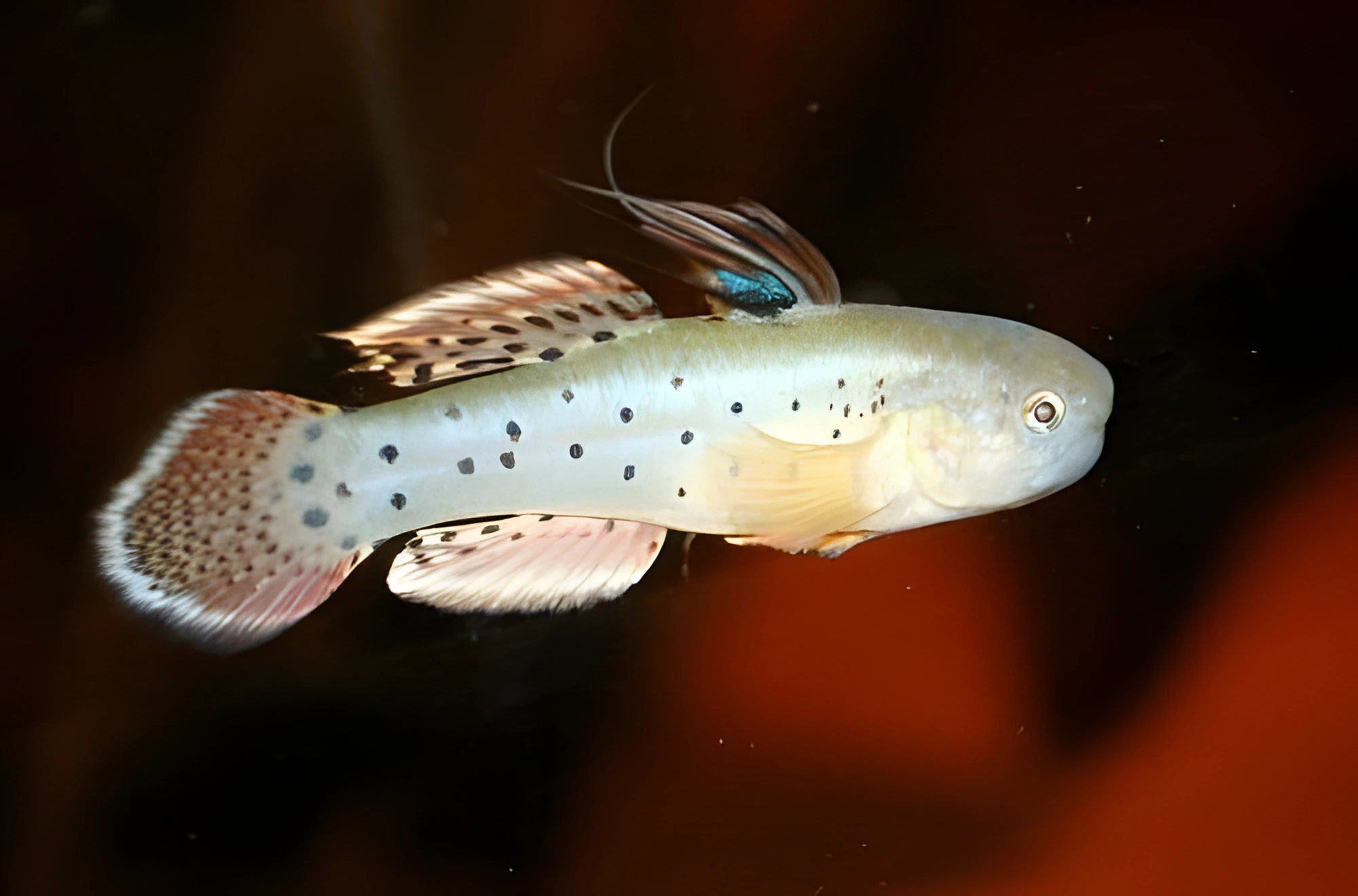
The Knight Goby, also known as the Spotted Goby (scientific name Stigmatogobius sadanundio), belongs to the family Gobiidae. Keeping them may not be the easiest, as they require brackish water and careful selection of tank mates. However, despite their challenging nature, these fish attract many aquarists with their original appearance and lively behavior.
- Required aquarium volume
- 70 L
- Size in aquarium
- 9 cm
- Temperature
- 20 – 26 °C
- Temperament
- Territorial (often aggressive)
Parameters
Water pHNeutral (7) – Slightly alkaline (8.5)
Water dHMedium hardness (10) – Very hard (20)
Water salinitymoderate (5–10 g/L)
Size in aquarium9 cm
Lifespan6 years
TemperamentTerritorial (often aggressive)
Toward small fishnot a predator
Required aquarium volume70 L
Lightingdimmed
Substratesandy (regular, light)
Water flowweak or moderate
FeedingAny (universal)
CareBoth solitary and in group (flexible)
Description
Adults can reach up to 9 cm in length. Sexual dimorphism is not pronounced. Males are usually slightly larger than females and have a higher dorsal fin; their coloration is predominantly silvery. Females, accordingly, are smaller, and their coloration may include yellowish hues. An important feature of the body pattern in both sexes is the presence of black speckles. The fish earned the name “Knight Goby” due to its dorsal fin, which resembles a banner on a knight's spear, and its steel-colored body is associated with armor. This impression is further enhanced by their warlike behavior, which will be discussed later.
Habitat
Its range covers Southeast Asia, India, and Pakistan. This species inhabits river deltas flowing into the Indian Ocean, as well as numerous coastal lakes and backwaters, preferring brackish water. It can often be found further upstream, in freshwater bodies.
Behavior and Compatibility
The Knight Goby is a territorial species, not particularly friendly. It can attack very small fish and will not be a good neighbor for those with long, flowing fins. Good compatibility is observed with species of comparable size that inhabit the middle or upper water layers and can also tolerate brackish conditions. Examples of such tank mates include Archerfish, Rainbowfish, and Green and Orange Chromides. If keeping multiple gobies is planned, it should be noted that they will compete for territory, so a sufficient number of shelters must be provided.
Care and Maintenance
For keeping one or two fish, an aquarium of at least 70 liters is considered optimal. The decor should include a sandy substrate and an abundance of shelters, such as driftwood, caves, and grottoes. It is desirable that the number of shelters corresponds to the number of fish, allowing each to have its own corner. The presence of vegetation is welcome, but it is important that the plants are able to adapt to brackish conditions. It has been observed that in dim lighting, the fish become more active and spend less time in their hiding places. The Spotted Goby can live in both fresh and brackish water, but a brackish environment is preferred. The salt concentration should not exceed a quarter of seawater, which is about 8 grams per 1 liter of water. The success of keeping them directly depends on maintaining high water quality. A powerful filtration system is essential; when choosing one, make sure it is suitable for use in brackish conditions. Weekly partial water changes with fresh water and regular cleaning of the aquarium from organic waste are also extremely important.
Diet
This species is omnivorous. In a home aquarium, it readily accepts both dry and frozen or live foods. The daily diet can consist of flakes or pellets, supplemented with bloodworms or Artemia. It is worth noting that the fish can do quite well exclusively on dry foods.
Breeding and Reproduction
In their natural environment, gobies spawn with the onset of the rainy season. After prolonged courtship, the female lays several hundred eggs in a cave or other suitable shelter. The male takes care of the clutch. He actively protects the future offspring throughout the incubation period. When the fry begin to swim freely and leave the spawning site, the male's parental instincts weaken.
Diseases
No specific diseases unique to this species have been identified. Like other gobies, this species is susceptible to standard infections that arise from improper keeping conditions, especially with poor filtration or sharp fluctuations in water parameters. Fin rot and bacterial skin lesions often result from injuries sustained during territorial disputes between individuals. Due to their territorial behavior, fish are prone to fin and skin damage, through which pathogens can easily penetrate. Prevention includes maintaining stable water parameters, providing a sufficient number of shelters to reduce stress and aggression, and regular partial water changes. Sensitivity to environmental quality increases if the aquarium is overstocked or lacks secluded areas.
How to choose
When choosing individuals, attention should be paid to the fish's activity and the integrity of its integument. A healthy goby should show interest in its surroundings, actively explore the bottom, and display natural coloration without signs of paleness or dark spots unrelated to its natural pattern. Signs of ill health include clamped fins, rapid breathing, the presence of a whitish film or sores on the body, and apathetic behavior, where the fish lies motionless on the surface or in the water column for a long time. It is advisable to avoid purchasing fish with visible fin damage, as this may indicate chronic fighting in the community tank or poor keeping conditions. Before purchasing, make sure that the fish do not show signs of emaciation and actively respond to offered food.
Frequently asked questions
The essentials: size, tank volume, water parameters and care
How big does Knight Goby get?
An adult reaches 9 cm in length. Plan the tank around the maximum size: the fish quickly outgrows a cramped setup.
What size aquarium does Knight Goby need?
The minimum recommended volume is 70 L. A smaller tank speeds up nitrate build-up and raises stress levels.
What water parameters does Knight Goby need?
Temperature 20–26 °C, pH 7–8.5, hardness 10–20 dGH. Stability matters more than exact values: sudden swings are harder on the fish than a small deviation from the ideal.
How long does Knight Goby live?
Around 6 years when kept properly. Lifespan depends directly on tank volume, water quality and a varied diet.
Is Knight Goby aggressive?
Temperament: territorial (often aggressive). Keep this in mind when choosing tank mates.
How many Knight Goby should be kept together?
Recommended setup: both solitary and in group (flexible). Ignoring this is a common cause of stress and disease.
What does Knight Goby eat?
Diet type: any (universal). Feed small portions that are finished within a couple of minutes — overfeeding does more harm than underfeeding.
What is the scientific name of Knight Goby?
The scientific name of the species is Stigmatogobius sadanundio, family Gobiidae. It also appears in the literature as: Gobius apogonius, Gobius sadanundio.