Temperature20 – 25 °C
Natural range
- Brunei area
- Sarawak area
Labyrinth fishConservation status: Vulnerable VU
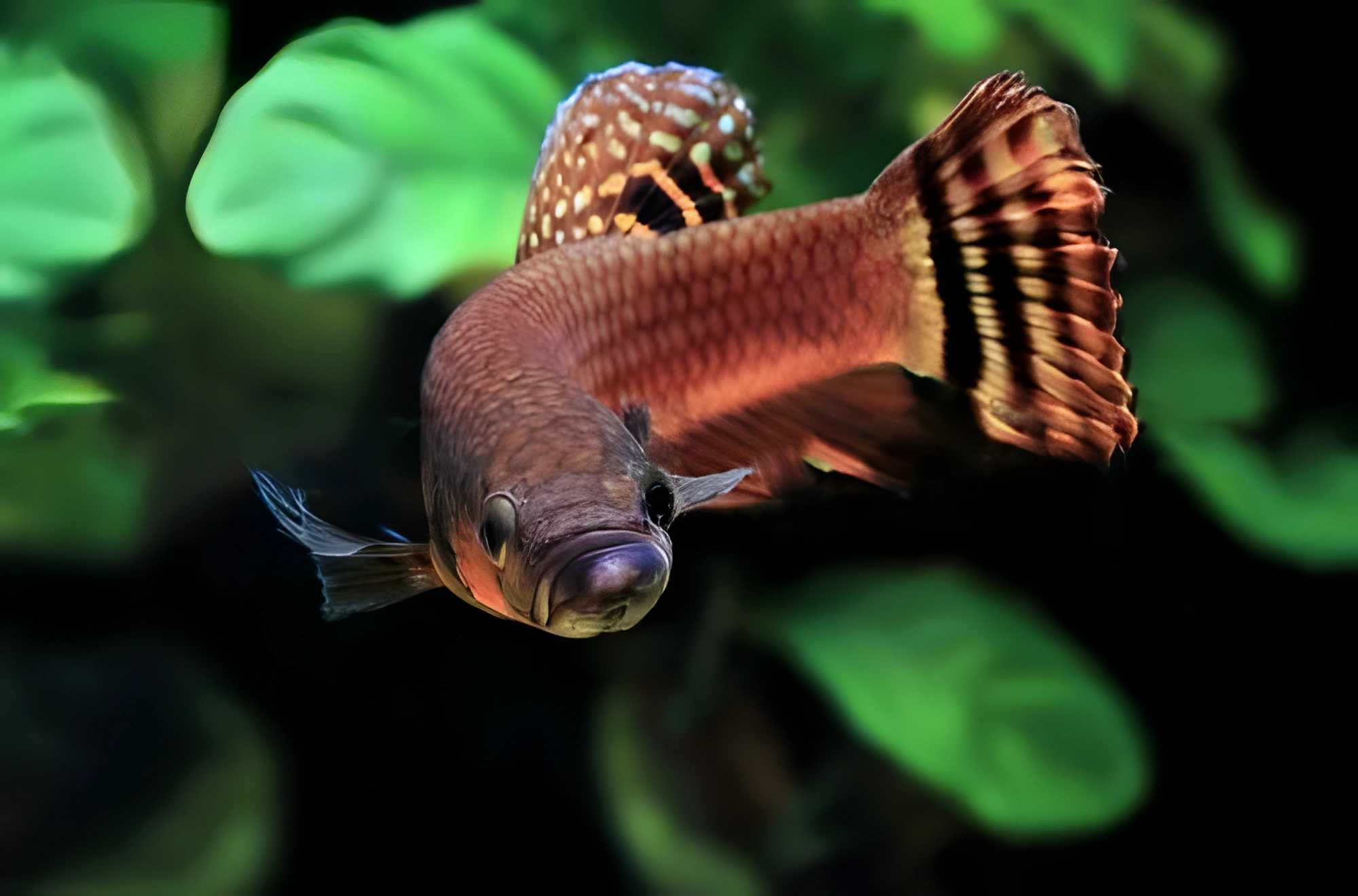
The "Brunei Beauty" Betta, scientifically known as Betta macrostoma, is a member of the Osphronemidae family. Distinguished by its vibrant coloration and characteristic behavior, this fish attracts the attention of many aquarists. Male and female individuals in a spacious aquarium may engage in "fights" to establish hierarchy, which led to their classification as fighting fish. It is important to note that in confined spaces, such clashes can lead to tragic consequences for the weaker individual.
- Required aquarium volume
- 80 L
- Size in aquarium
- 9 – 10 cm
- Temperature
- 20 – 25 °C
- Temperament
- Semi-peaceful (including aggression during spawning / intraspecific conflicts)
Parameters
Water pHAcidic (4) – Slightly acidic (6)
Water dHVery soft (0) – Soft (5)
Water salinityno salt (freshwater)
Size in aquarium9 – 10 cm
Lifespan4 years
TemperamentSemi-peaceful (including aggression during spawning / intraspecific conflicts)
Toward small fishnot a predator
Required aquarium volume80 L
Lightingdimmed
Substrateany, but dark
Water flownone or stagnant (no flow)
FeedingAny (universal)
CareBoth solitary and in group (flexible)
Description
Adults grow up to 9–10 cm. Males are distinguished by their larger size and rich red coloration with black patterns on the head and fins. The edges and tips of their fins have a white border. Females, however, look different; their coloration is less expressive, most often gray, with barely noticeable horizontal stripes extending from head to tail.
Habitat
The origin of this fish is associated with Southeast Asia, specifically the island of Borneo (Kalimantan), where it inhabits the northern parts of the Malaysian state of Sarawak and the adjacent state of Brunei Darussalam. Its limited natural habitat is heavily impacted by human activity, which has led to a significant reduction in population numbers. Currently, Betta macrostoma is listed in the Red Book as an endangered species. Despite the ban on catching and exporting endangered species imposed by the Sultan of Brunei, Sarawak does not have such restrictions, which sometimes allows for the acquisition of wild specimens. The Betta inhabits the upper reaches of small streams and rivers with fast currents and clear water, located in tropical forests. Due to dense vegetation, sunlight poorly penetrates the water surface, creating conditions of constant twilight. The bottom of the reservoirs is covered with stony and sandy substrate containing a small amount of organic debris, such as leaves and branches. Aquatic plants mainly grow along the banks.
Behavior and Compatibility
This is a very temperamental fish. Intraspecific relationships are based on the dominance of an alpha male over subdominant individuals, which is determined through struggles, often escalating into peculiar contests. Even among females, there is a hierarchy, and sometimes clashes occur between them. In a small aquarium, it is advisable to keep only one pair. Aggressive behavior towards other species has not been observed. Moreover, large and active fish can, in turn, intimidate Bettas and push them away from the feeder. They are compatible with peaceful species of comparable size.
Care and Maintenance
For keeping one or two fish, the optimal aquarium volume will be 80 liters or more. When setting up an aquarium for the "Brunei Beauty" Betta, it is necessary to recreate conditions close to their natural environment. Gravel or sand substrate, treated natural snags, and shade-loving plants such as:
- Cryptocorynes
- Java Fern
- Java Moss
- Bucephalandra
can be used for decoration. An additional element can be the leaves of some trees, pre-soaked and placed on the bottom. Leaves not only serve as part of the decor but also contribute to the formation of the water's chemical composition characteristic of the natural habitat of this species, by releasing tannins as they decompose. Detailed information is available in the article "Which tree leaves can be used in an aquarium".
Maintaining high water quality is ensured by the uninterrupted operation of equipment, primarily the filtration system, as well as regular performance of mandatory aquarium care procedures. These procedures include weekly partial water changes with fresh water of identical pH, GH, and temperature values, timely removal of organic debris (such as food remnants and excrement), and other less significant activities.
Diet
In its natural habitat, this fish feeds on small invertebrates, zooplankton, and freshwater shrimp. Newly acquired individuals may initially refuse unfamiliar foods, but acclimated fish or offspring of wild specimens readily accept popular aquarium dry, frozen, and live foods. It is recommended to use specially formulated foods for Betta fighting fish.
Breeding and Reproduction
The main difficulty in the breeding process lies in selecting a suitable pair. If, for example, a male and female are acquired from different places and housed together, peaceful cohabitation is unlikely, and in some cases, the weaker individual may even die. For a successful breeding period, the fish must grow up together. Spawning is preceded by lengthy courtship, during which the male and female perform a peculiar "embrace dance," pressing closely against each other. At this moment, the eggs are fertilized, which the male immediately collects into his mouth. The incubation period, during which the eggs are in the male's mouth, lasts from 14 to 35 days. The hatched fry are quite large (about 5 mm) and are already capable of accepting micro-foods, such as Artemia nauplii or specialized products for juvenile aquarium fish.
Diseases
Most health problems in fish often arise from unsuitable keeping conditions. Maintaining a stable and comfortable habitat is a key factor for successful keeping. If symptoms of illness appear, the first step is to check the water quality. If deviations are found, it is important to take immediate measures to eliminate them. If the symptoms do not disappear or worsen, medicinal treatment may be required. More detailed information on symptoms and treatment methods can be found in the "Diseases of Aquarium Fish" section.
How to choose
When choosing individuals, attention should be paid to their activity and the absence of fin or scale damage. A healthy fish should show curiosity, have clear eyes, and even breathing without signs of rapid gill movement. Avoid purchasing specimens with signs of emaciation, sunken bellies, or unnatural coating on the body.
It is important to note that this species often exhibits intraspecific aggression, so when purchasing a group of fish in a store, it is necessary to carefully observe their behavior in the general aquarium. If possible, it is preferable to acquire an already formed pair, as selecting partners from different batches can lead to serious conflicts and injuries.
Frequently asked questions
The essentials: size, tank volume, water parameters and care
How big does "Brunei Beauty" get?
An adult reaches 9–10 cm in length. Plan the tank around the maximum size: the fish quickly outgrows a cramped setup.
What size aquarium does "Brunei Beauty" need?
The minimum recommended volume is 80 L. A smaller tank speeds up nitrate build-up and raises stress levels.
What water parameters does "Brunei Beauty" need?
Temperature 20–25 °C, pH 4–6, hardness 0–5 dGH. Stability matters more than exact values: sudden swings are harder on the fish than a small deviation from the ideal.
How long does "Brunei Beauty" live?
Around 4 years when kept properly. Lifespan depends directly on tank volume, water quality and a varied diet.
Is "Brunei Beauty" aggressive?
Temperament: semi-peaceful (including aggression during spawning / intraspecific conflicts). Keep this in mind when choosing tank mates.
How many "Brunei Beauty" should be kept together?
Recommended setup: both solitary and in group (flexible). Ignoring this is a common cause of stress and disease.
What does "Brunei Beauty" eat?
Diet type: any (universal). Feed small portions that are finished within a couple of minutes — overfeeding does more harm than underfeeding.
What is the scientific name of "Brunei Beauty"?
The scientific name of the species is Betta macrostoma, family Osphronemidae.