Temperature20 – 26 °C
Natural range
- Mato Grosso area
- Upper Paraguay River
CorydorasConservation status: Least concern LC
Other scientific names: Brochis britskii
Brochis britskii, also known as the Giant Corydoras or Giant Emerald Catfish, bears the scientific name Corydoras britskii and belongs to the family Callichthyidae, or Armored Catfish. It was named in honor of the Brazilian ichthyologist Heraldo Antonio Britski, who first described this species. Until 2003, this fish was classified in the now-defunct genus Brochis and had the scientific name Brochis britskii, which can still be found in various sources as a synonym.
- Required aquarium volume
- 200 L
- Size in aquarium
- 9 cm
- Temperature
- 20 – 26 °C
- Temperament
- Peaceful (regular)
Parameters
Water pHSlightly acidic (6) – Neutral (7)
Water dHVery soft (2) – Hard (12)
Water salinityno salt (freshwater)
Size in aquarium9 cm
Lifespan8 years
TemperamentPeaceful (regular)
Toward small fishnot a predator
Required aquarium volume200 L
Lightingdimmed or moderate
Substratesandy (regular, light)
Water flowweak or moderate
FeedingAny (universal)
CareMedium group (6–8 individuals)
Description
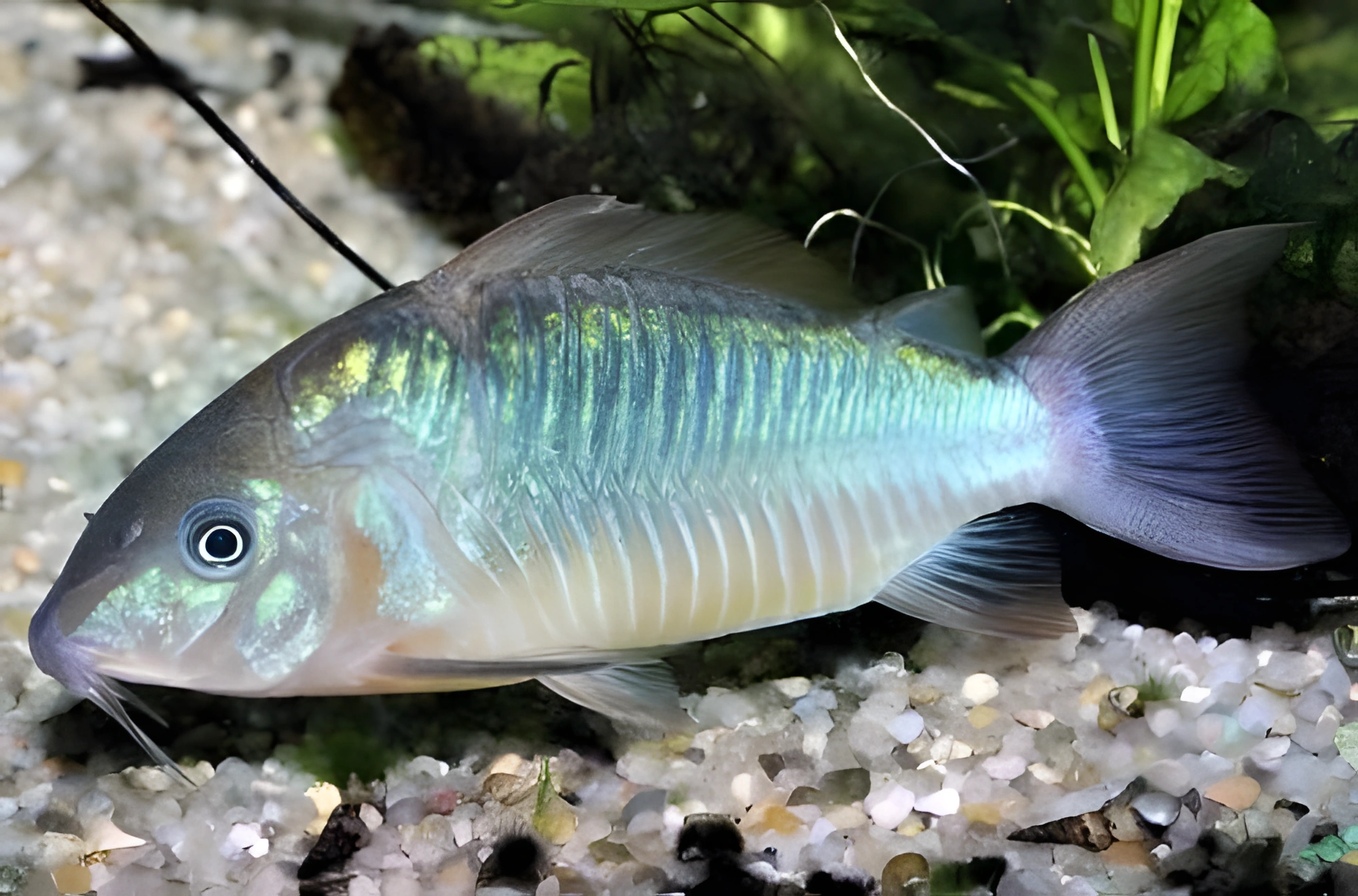
Adults of this catfish can reach a length of 8–9 cm. Outwardly, it resembles the Emerald Catfish, its close relative, but significantly surpasses it in size. Brochis britskii also shares similarities with another species, Brochis multiradiatus, due to its elongated dorsal fin, which extends almost to the tail. The fish's coloration is striking, shimmering from orange hues to emerald-green tones depending on the intensity of the lighting. Noticeable barbels are located near the mouth, and the catfish uses them to sift through the substrate in search of food. Sexual dimorphism in this species is weakly expressed, making sex determination quite difficult without specialized knowledge.
Habitat
This species is endemic to a small section of the Paraguay River (Río Paraguay in Spanish, Rio Paraguai in Portuguese), located in the Brazilian state of Mato Grosso. It can be found in the upper reaches of the river, in the area of numerous backwaters, small tributaries, and lakes.
Behavior and Compatibility
This peaceful and gregarious species is preferably kept in a group of at least 6–8 individuals. Brochis britskii coexists successfully with many other common aquarium fish. Furthermore, due to its impressive size and natural "armor," it can even live with fairly aggressive species.
Care and Maintenance
For a small group of these catfish, the optimal aquarium size starts from 200 liters. Special attention should be paid to the substrate; it is recommended to use soft sand or fine gravel to minimize the risk of injuring their delicate barbels. It is also advisable to provide several shelters, for example, in the form of snags or other decorative elements. The remaining elements of the aquarium decor do not play a critical role and can be adapted to the aquarist's preferences or the needs of other inhabitants. Acceptable water parameters include a slightly acidic pH level and low carbonate hardness, and a comfortable temperature is in the range of 20–27°C. These fish are sensitive to water quality, so it is necessary to install an efficient filtration system, regularly clean the substrate of organic debris, and weekly replace part of the water (15–20% of the total volume) with fresh water.
Diet
The catfish readily accepts all common types of food: dry, frozen, and live. The only important thing is that the food must be sinking. A varied diet contributes to the well-being of the fish and positively affects their appearance.
Breeding and Reproduction
At the time of preparing this article, no reliable data has been found on the successful breeding of the Giant Emerald Catfish in home aquarium conditions. Fish sold are usually raised on fish farms or, less frequently, caught from natural bodies of water.
Diseases
The main cause of most diseases in Leaf Fish is unsuitable keeping conditions and poor-quality nutrition. If initial symptoms are observed, it is first necessary to check water parameters and the concentration of dangerous substances such as ammonia, nitrites, and nitrates. If the indicators deviate from the norm, they should be brought back into order, and only then should treatment begin. More detailed information on symptoms and treatment methods can be found in the "Aquarium Fish Diseases" section.
How to choose
When choosing Corydoras britskii in a store, attention should be paid to the activity and appearance of the individuals. Healthy fish should show interest in searching for food on the bottom, have clean fins without signs of erosion, intact barbels, and smooth scales without spots, sores, or film. Avoid specimens with sunken bellies, signs of emaciation, or unnaturally bloated abdomens.
- check for any damage or redness in the gill and fin areas
- observe their behavior: the fish should be active, not sluggish or constantly lying on their side
- clarify the keeping conditions in the store, as stress from transportation and changes in water parameters can weaken the species' immunity
Since this species is schooling, it is recommended to purchase a group of several individuals at once. It is important to ensure that there are no aggressive neighbors in the aquarium with the fish, as a stressed catfish becomes more vulnerable to diseases.
Frequently asked questions
The essentials: size, tank volume, water parameters and care
How big does Brochis britskii get?
An adult reaches 9 cm in length. Plan the tank around the maximum size: the fish quickly outgrows a cramped setup.
What size aquarium does Brochis britskii need?
The minimum recommended volume is 200 L. A smaller tank speeds up nitrate build-up and raises stress levels.
What water parameters does Brochis britskii need?
Temperature 20–26 °C, pH 6–7, hardness 2–12 dGH. Stability matters more than exact values: sudden swings are harder on the fish than a small deviation from the ideal.
How long does Brochis britskii live?
Around 8 years when kept properly. Lifespan depends directly on tank volume, water quality and a varied diet.
Is Brochis britskii aggressive?
Temperament: peaceful (regular). Keep this in mind when choosing tank mates.
How many Brochis britskii should be kept together?
Recommended setup: medium group (6–8 individuals). Ignoring this is a common cause of stress and disease.
What does Brochis britskii eat?
Diet type: any (universal). Feed small portions that are finished within a couple of minutes — overfeeding does more harm than underfeeding.
What is the scientific name of Brochis britskii?
The scientific name of the species is Corydoras britskii, family Armored Catfish (Callichthyidae). It also appears in the literature as: Brochis britskii.