Temperature24 – 28 °C
Natural range
- Paraguay River Basin
- Paraguay area
- Argentina area
CharacinsConservation status: Least concern LC
Other scientific names: Brycon melanoxanthus, Brycon microlepis, Chalceus hilarii, Salmo paraputanga
Brycon hilarii, known scientifically as Brycon hilarii, belongs to the family Bryconidae. This rather large fish can reach impressive sizes – over 60 cm in length and a weight exceeding 3 kg. For its successful keeping, aquariums of significant volume, starting from 500 liters, are necessary. It is worth noting that in confined spaces, Brycon hilarii can show aggression towards smaller inhabitants.
- Required aquarium volume
- 3000 L
- Size in aquarium
- 40 – 50 cm
- Temperature
- 24 – 28 °C
- Temperament
- Semi-peaceful (including aggression during spawning / intraspecific conflicts)
Parameters
Water pHSlightly acidic (6) – Neutral (7)
Water dHSoft (4) – Hard (15)
Water salinityno salt (freshwater)
Size in aquarium40 – 50 cm
Lifespan10 years
TemperamentSemi-peaceful (including aggression during spawning / intraspecific conflicts)
Toward small fishnot a predator
Required aquarium volume3000 L
Lightingdimmed
Substratesand or gravel + stones/boulders
Water flowmoderate or strong
FeedingMeat with plant additives (omnivores)
CareSchooling (usually from 5–6 individuals and more)
Description
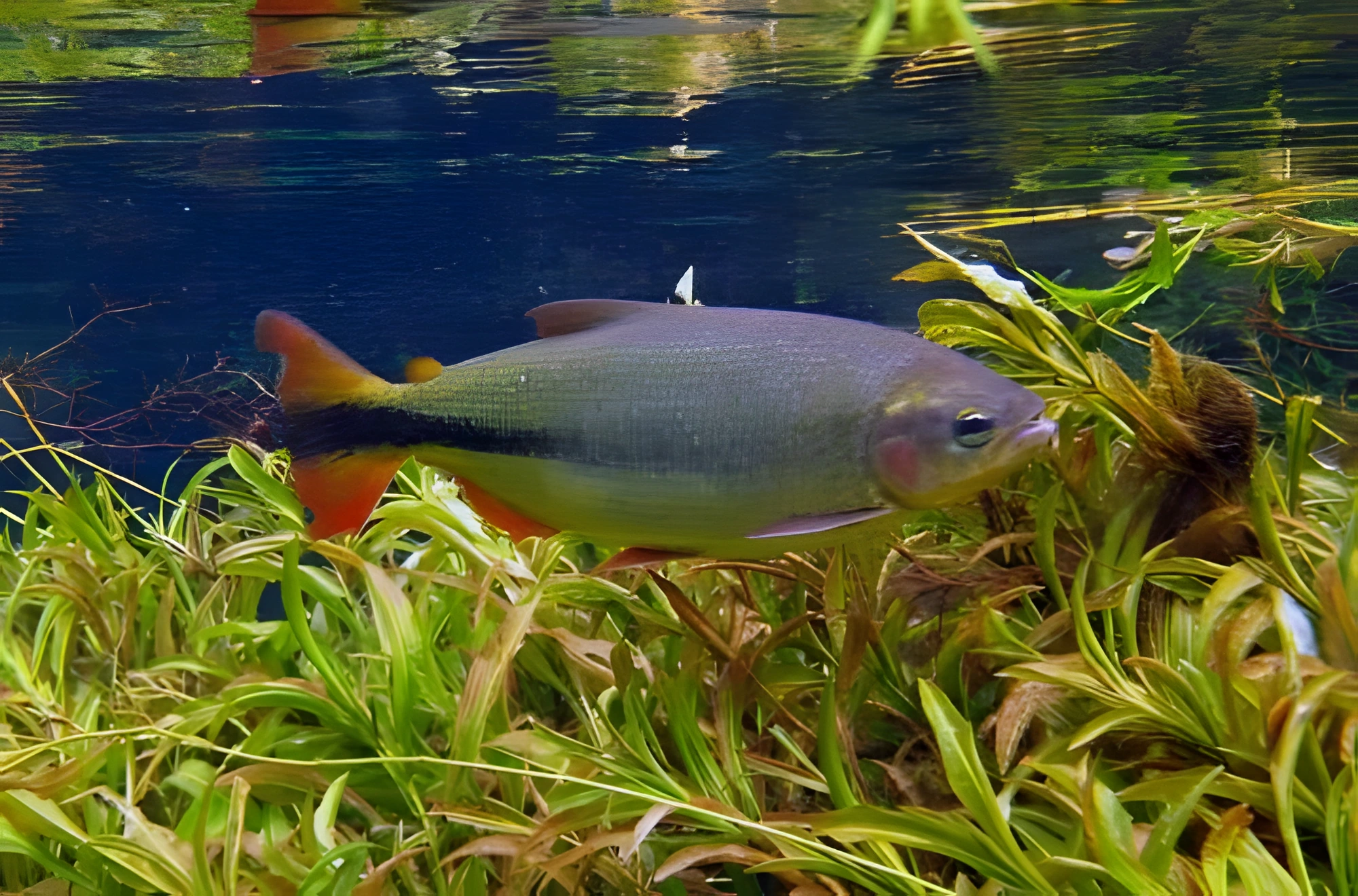
As mentioned, these fish can grow to very impressive sizes. However, in aquarium conditions, they usually reach 40–50 cm. The body has a gray coloration. Under certain lighting, the scales may shimmer with yellow or orange hues. The caudal peduncle of this fish is adorned with a noticeable black stripe, and the caudal fin lobes are colored red. Sometimes red tones can also be seen on other fins. No significant external differences between males and females, indicating sexual dimorphism, are observed.
Habitat
The natural habitats of this fish are located in South America. Initially, its range was limited to the Paraguay River basin, flowing through the territory of the eponymous state and Argentina. Currently, Brycon hilarii is found in many tributaries of the Amazon, where it arrived from fish farms, as it is a commercial species. It can be found in the main river channels, especially in areas with abundant aquatic vegetation.
Behavior and Compatibility
Young Brycon hilarii prefer to stay in large schools. However, as they mature, their need for the constant presence of conspecifics decreases. Brycon hilarii is generally considered a relatively peaceful fish, although small fish can sometimes become accidental victims, which, however, is characteristic of many large species. In small aquariums or with overpopulation, aggressive behavior towards other inhabitants may occur.
Care and Maintenance
A key aspect of long-term keeping is the availability of a spacious aquarium capable of comfortably accommodating several adult specimens. Optimal conditions are created in warm, soft water with a slightly acidic reaction. Young fish often seek shelter, for example, in thickets of aquarium plants, so such places must be provided for them. With age, the need for shelters decreases in fish, and for adult specimens, sufficient free swimming space is much more important. According to ScienceDirect research, in the wild, the diet of Brycon hilarii consists mainly of plants, seeds, and fruits, and to a lesser extent of small crustaceans, snails, and other invertebrates. Thus, the diet in the aquarium should include foods with a high content of plant components, as well as chopped fresh vegetables, such as cucumber, spinach, or lettuce leaves. These fish can feed on aquarium plants, so when decorating, it is advisable to choose fast-growing species. It should be noted that they are capable of eating smaller, similarly sized tankmates.
Diet
According to ScienceDirect, in their natural habitat, the diet of Brycon hilarii consists mainly of plants, seeds, and fruits, supplemented to a lesser extent by small crustaceans, snails, and other invertebrates. Consequently, daily feeding in the aquarium should include foods with a high content of plant components, as well as chopped fresh vegetables, such as cucumber, spinach, or lettuce leaves. These fish can feed on aquarium plants, so when decorating, it is advisable to choose fast-growing species. Sometimes they are capable of eating smaller fish. Juveniles prefer to stay in numerous schools, but with age, their need for conspecifics decreases. Brycon hilarii is relatively peaceful, although small fish can become its accidental prey, which is a common trait of many large species. In small tanks or with an excess of inhabitants, aggression towards tankmates may occur.
Breeding and Reproduction
Based on available sources, a separate block cannot be compiled: the data is insufficient or contradictory. The entry can be updated later when verified information becomes available.
Diseases
Based on available sources, a separate block cannot be compiled: the data is insufficient or contradictory. The entry can be updated later when verified information becomes available.
How to choose
When purchasing, choose active individuals with clean scales and no visible fin damage. It is important to consider that in a store environment, fish may be under stress, so it is worth observing their behavior for some time. Avoid acquiring specimens with signs of emaciation, lethargy, or atypical coloration, as this may indicate hidden infections or improper keeping conditions in the past.
Frequently asked questions
The essentials: size, tank volume, water parameters and care
How big does Brycon hilarii get?
An adult reaches 40–50 cm in length. Plan the tank around the maximum size: the fish quickly outgrows a cramped setup.
What size aquarium does Brycon hilarii need?
The minimum recommended volume is 3000 L. A smaller tank speeds up nitrate build-up and raises stress levels.
What water parameters does Brycon hilarii need?
Temperature 24–28 °C, pH 6–7, hardness 4–15 dGH. Stability matters more than exact values: sudden swings are harder on the fish than a small deviation from the ideal.
How long does Brycon hilarii live?
Around 10 years when kept properly. Lifespan depends directly on tank volume, water quality and a varied diet.
Is Brycon hilarii aggressive?
Temperament: semi-peaceful (including aggression during spawning / intraspecific conflicts). Keep this in mind when choosing tank mates.
How many Brycon hilarii should be kept together?
Recommended setup: schooling (usually from 5–6 individuals and more). Ignoring this is a common cause of stress and disease.
What does Brycon hilarii eat?
Diet type: meat with plant additives (omnivores). Feed small portions that are finished within a couple of minutes — overfeeding does more harm than underfeeding.
What is the scientific name of Brycon hilarii?
The scientific name of the species is Brycon hilarii, family Bryconidae. It also appears in the literature as: Brycon melanoxanthus, Brycon microlepis, Chalceus hilarii.