Temperature25 – 30 °C
Natural range
- Sumatra area
- Borneo area
LoachesConservation status: Least concern LC
Other scientific names: Botia hymenophysa, Botia hymeophysa, Cobitis hymenophysa, Hymenophysa macclellandi
The Tiger Loach, also known as the Tiger Botia or Green Tiger Loach (scientific name Syncrossus hymenophysa), belongs to the family Cobitidae. Its limited suitability for a community aquarium is due to its complex temperament, which requires careful selection of tankmates, as well as specific keeping conditions that are not always straightforward. This species is not recommended for beginner aquarists.
- Required aquarium volume
- 300 L
- Size in aquarium
- 15 – 21 cm
- Temperature
- 25 – 30 °C
- Temperament
- Aggressive / incompatible / unfriendly
Parameters
Water pHNeutral (6.5) – Neutral (7.5)
Water dHVery soft (1) – Hard (12)
Water salinityno salt (freshwater)
Size in aquarium15 – 21 cm
Lifespan7 years
TemperamentAggressive / incompatible / unfriendly
Toward small fishnot a predator
Required aquarium volume300 L
Lightingdimmed
Substratefine sand
Water flowweak or moderate
FeedingSinking (any)
CareSmall group (5–6 individuals)
Description
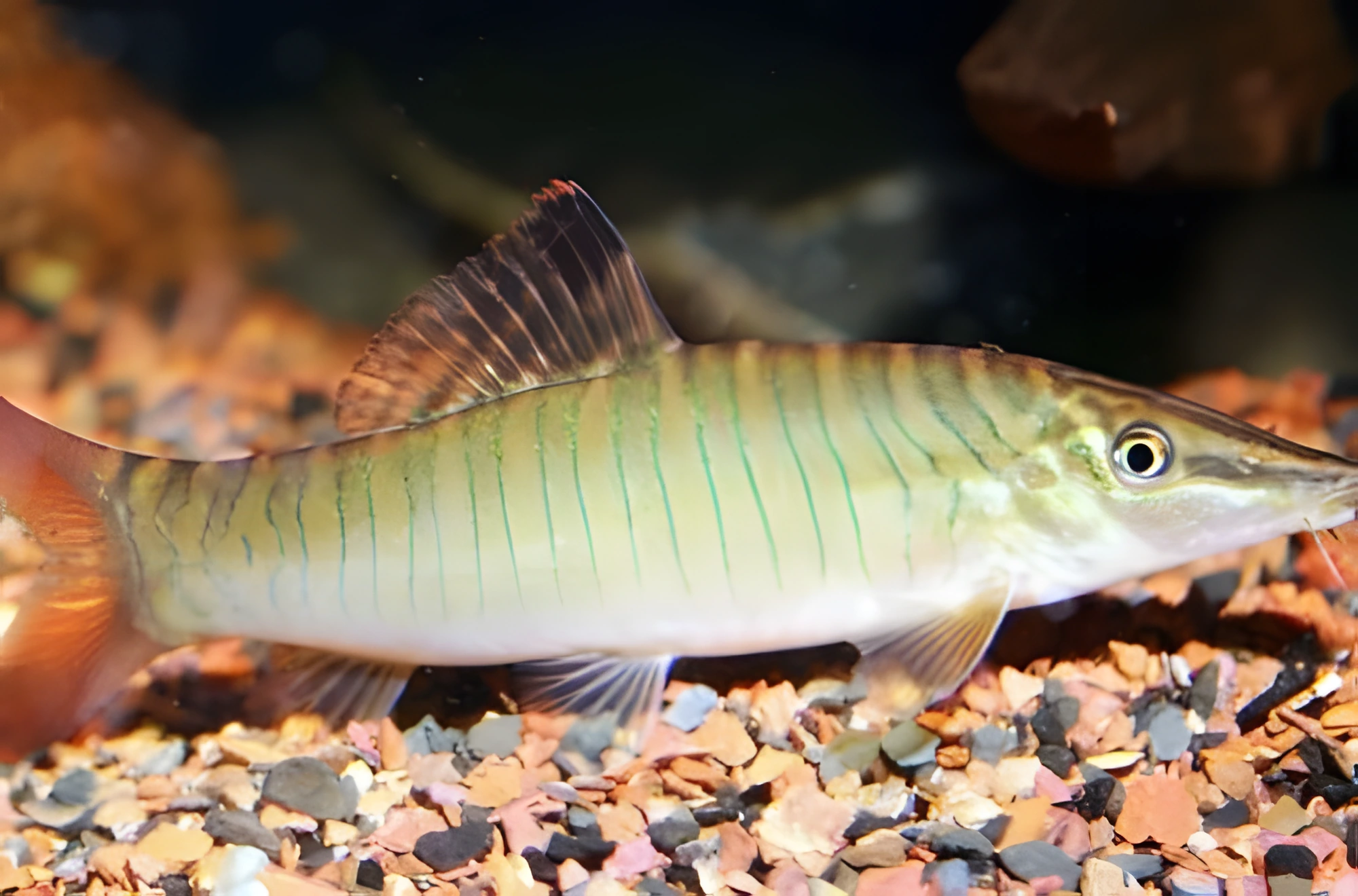
Adults can range in length from 15 to 21 cm, with females being larger than males. Other external differences between the sexes are not as pronounced. The coloration of adult Tiger Loaches is characterized by a yellowish background with thin vertical green stripes. Juveniles are gray, and the yellow pigments develop as they mature.
Habitat
The natural habitat of this species includes river systems on the islands of Sumatra and Kalimantan (Borneo), as well as territories in peninsular Malaysia. Notably, wild populations on mainland Malaysia have likely disappeared; the last documented sighting was in 1955. These fish inhabit rivers and lakes, and during the rainy season, when adjacent areas are flooded, they migrate there to spawn. This means their natural environment is characterized by a variety of biotopes with variable water conditions. Typically, they prefer to stay near the banks among aquatic vegetation, submerged snags, and various woody debris.
Behavior and Compatibility
Their attitude towards smaller fish is quite unfriendly. They can also harm larger tankmates if they have long, flowing fins, such as ornamental goldfish or bettas. Keeping them with species of comparable size that inhabit the mid-water or surface is acceptable. Intraspecific relationships are based on a hierarchy, from strong individuals to weaker ones, with no noted conflicts among conspecifics. It is recommended to acquire a group of at least 5–6 fish; with fewer numbers, their behavior may become aggressive.
Care and Maintenance
For a group of 5–6 fish, an aquarium of at least 300 L is recommended. The setup can include a substrate of sand or fine gravel, several snags, and areas planted with aquatic vegetation. In general, the choice of decor elements is not critical, as the fish can successfully adapt to various conditions. However, water quality plays a crucial role in keeping this loach species. The accumulation of organic waste and sharp fluctuations in key hydrochemical parameters, such as pH and dGH, are unacceptable. In addition, a high level of dissolved oxygen must be ensured, which can be a challenge since the Tiger Loach prefers warm water, and as is known, oxygen retention is poor in warm water. In such cases, an additional aeration system will help.
Diet
Regarding feeding, this species is undemanding. The Tiger Loach readily consumes most common foods, whether dry, frozen, or live. It is important to consider two main conditions: the food must be sinking and contain plant components. To enrich their diet, once a week they can be offered finely chopped fresh vegetables and fruits, such as cucumber, melon, spinach, or zucchini.
Breeding and Reproduction
In natural conditions, spawning coincides with the rainy season and is characterized by the migration of fish to flooded areas where eggs are laid. Thus, the stimulus for reproduction is a complex set of factors, the reproduction of which in an artificial aquarium environment presents a significant challenge. Mass breeding of this species is carried out in specialized fish farms using hormonal injections.
Diseases
Non-ornamental fish species that have retained a close resemblance to their wild relatives usually exhibit high endurance, strong immunity, and resistance to various diseases. The occurrence of health problems most often indicates unsuitable keeping conditions. Therefore, before proceeding with treatment, it is strongly recommended to check the water quality and parameters. Only after all indicators have been brought back to normal should treatment begin, if it is still necessary. Detailed information on diseases, their symptoms, and therapy methods can be found in the “Aquarium Fish Diseases” section.
How to choose
When choosing Tiger Loaches, pay attention to the activity and appearance of the individuals. Healthy fish should be curious, active, and have clean, undamaged fins. It is important to avoid specimens showing signs of stress, as their coloration fades significantly in this state, and the characteristic stripes become difficult to distinguish. Examine the area around the mouth: the barbels should be intact, without damage, as their absence indicates improper keeping conditions.
- Avoid fish with sunken bellies or signs of emaciation, which may indicate internal parasites.
- Prefer individuals that actively respond to food and do not show signs of apathy or constant lying on the bottom.
- Keep in mind that this species exhibits high intraspecific aggression, so it is best to acquire a group of 5–8 individuals simultaneously to minimize stress from relocation and hierarchical conflicts.
Frequently asked questions
The essentials: size, tank volume, water parameters and care
How big does Tiger Loach get?
An adult reaches 15–21 cm in length. Plan the tank around the maximum size: the fish quickly outgrows a cramped setup.
What size aquarium does Tiger Loach need?
The minimum recommended volume is 300 L. A smaller tank speeds up nitrate build-up and raises stress levels.
What water parameters does Tiger Loach need?
Temperature 25–30 °C, pH 6.5–7.5, hardness 1–12 dGH. Stability matters more than exact values: sudden swings are harder on the fish than a small deviation from the ideal.
How long does Tiger Loach live?
Around 7 years when kept properly. Lifespan depends directly on tank volume, water quality and a varied diet.
Is Tiger Loach aggressive?
Temperament: aggressive / incompatible / unfriendly. Keep this in mind when choosing tank mates.
How many Tiger Loach should be kept together?
Recommended setup: small group (5–6 individuals). Ignoring this is a common cause of stress and disease.
What does Tiger Loach eat?
Diet type: sinking (any). Feed small portions that are finished within a couple of minutes — overfeeding does more harm than underfeeding.
What is the scientific name of Tiger Loach?
The scientific name of the species is Syncrossus hymenophysa, family Cobitidae (Loaches). It also appears in the literature as: Botia hymenophysa, Botia hymeophysa, Cobitis hymenophysa.