Temperature19 – 27 °C
Natural range
- India area
- Pakistan area
- Nepal area
- Bangladesh area
Loaches
The Marble Loach, also known as Botia lohachata (scientific name Botia lohachata), belongs to the family Botiidae. This species is native to Asia, where it is found in river systems flowing through Pakistan, India, Nepal, and Bangladesh. It prefers main river channels and streams characterized by moderate to fast currents and a rocky substrate.
- Required aquarium volume
- 200 L
- Size in aquarium
- 15 cm
- Temperature
- 19 – 27 °C
- Temperament
- Semi-peaceful (including aggression during spawning / intraspecific conflicts)
Parameters
Water pHSlightly acidic (6) – Slightly alkaline (8)
Water dHVery soft (2) – Hard (15)
Water salinityno salt (freshwater)
Size in aquarium15 cm
Lifespan10 years
TemperamentSemi-peaceful (including aggression during spawning / intraspecific conflicts)
Toward small fishnot a predator
Required aquarium volume200 L
Lightingdimmed
Substratesandy (regular, light)
Water flowweak or moderate
FeedingSinking (any)
CareSmall group (5–6 individuals)
Description
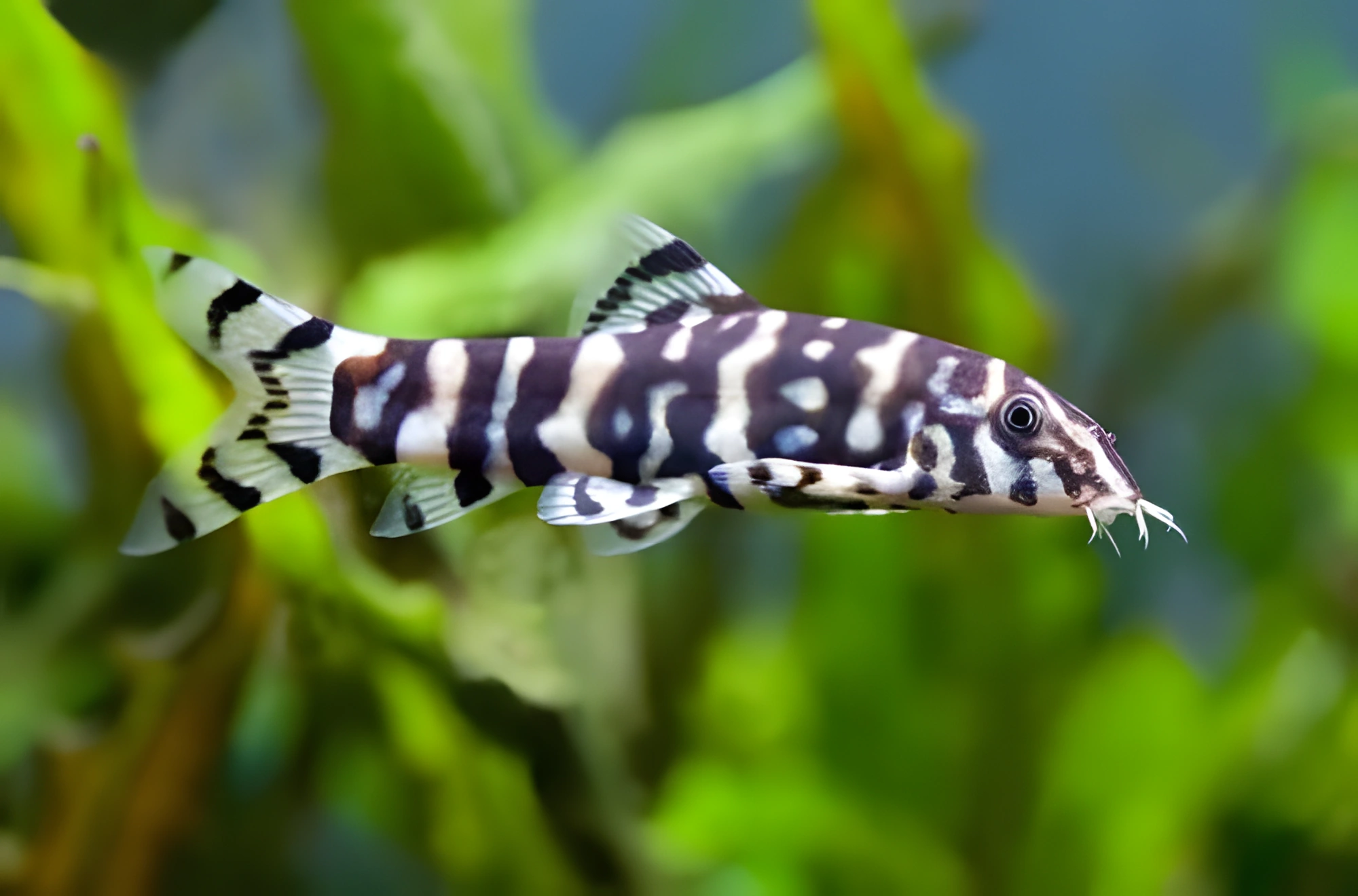
This fish, regardless of the specific species, possesses a number of unique features. Adults reach approximately 15 cm in length. Their coloration is a gray-green background with a large dark pattern resembling marble veins. Young fish, in contrast, display a golden or silvery hue with a characteristic metallic sheen.
Habitat
The species inhabits rivers and streams with stony or gravel bottoms in India, Pakistan, Nepal, and Bangladesh. In nature, the fish prefer areas with moderate currents and abundant shelters in the form of stones, snags, and aquatic vegetation. Water parameters in their natural habitats are characterized by a neutral or slightly acidic reaction and moderate hardness.
Behavior and Compatibility
The Marble Loach is an active and peaceful fish. However, its high mobility can create difficulties for slower or smaller aquarium inhabitants, so cohabitation with species such as guppies or rasboras is not recommended. Fish with lush fins, such as bettas or young goldfish, are also at risk. The best compatibility is observed with species of similar size that prefer to stay in the water column or near its surface. Loaches also need the company of their own kind; therefore, it is recommended to acquire a group of at least 5–6 individuals, with more than 10 fish considered optimal. When kept alone, they can become either excessively timid or, conversely, aggressive. Keeping them in pairs or trios risks the dominant individual suppressing its conspecifics.
Care and Maintenance
For a group of 5–6 loaches, an aquarium of at least 200 L is recommended. It is worth emphasizing here that the bottom area of the tank is more important than its height. The aquarium decor should include a soft substrate, such as sand or fine pebbles, as Botia lohachata likes to dig in it for food. It is also advisable to provide various shelters made of snags or other decorative elements. Due to the dietary habits of these fish, aquatic plants may be uprooted or seriously damaged. For this reason, it is preferable to use either artificial plants or hard-leaved species, as well as ferns and mosses that attach to snags. Plants rooted in the substrate are unlikely to survive. Although loaches originate from fast mountain rivers, creating a strong current in the aquarium is not an urgent necessity. Successful and long-term keeping largely depends on the regularity and thoroughness of maintenance activities. At a minimum, it is necessary to weekly replace a portion of the water with fresh water, combining this with cleaning the substrate of accumulated organic waste.
Diet
Being omnivorous, these fish will gladly accept sinking foods that should include vegetable additives. They are also prone to eating the soft parts of aquatic plants. Live or frozen foods, such as bloodworms, brine shrimp, and others, will be an excellent addition to their diet.
Breeding and Reproduction
Breeding in aquarium conditions is considered extremely difficult and has practically not been recorded at the amateur level. In nature and in commercial farms, spawning is stimulated in flowing water, often using hormonal preparations. The eggs are demersal, non-adhesive, and transparent. Successful offspring production requires specific conditions close to the fish's natural migratory cycles.
Diseases
Fish are extremely sensitive to water quality and the accumulation of organic waste, which often provokes bacterial infections. A characteristic problem is emaciation, known as wasting disease, which is accompanied by weight loss despite a normal appetite and is often caused by parasitic protozoa. Prevention includes maintaining impeccable cleanliness, regular water changes, and eliminating stressful factors.
How to choose
When purchasing, choose active individuals with rounded bellies and clean skin without signs of plaque or damage. It is important to avoid specimens with sunken bellies, which may indicate chronic emaciation or the presence of parasites. In the store, the fish should exhibit social behavior, as solitary keeping leads to stress and increased susceptibility to diseases.
Frequently asked questions
The essentials: size, tank volume, water parameters and care
How big does Marble Loach get?
An adult reaches 15 cm in length. Plan the tank around the maximum size: the fish quickly outgrows a cramped setup.
What size aquarium does Marble Loach need?
The minimum recommended volume is 200 L. A smaller tank speeds up nitrate build-up and raises stress levels.
What water parameters does Marble Loach need?
Temperature 19–27 °C, pH 6–8, hardness 2–15 dGH. Stability matters more than exact values: sudden swings are harder on the fish than a small deviation from the ideal.
How long does Marble Loach live?
Around 10 years when kept properly. Lifespan depends directly on tank volume, water quality and a varied diet.
Is Marble Loach aggressive?
Temperament: semi-peaceful (including aggression during spawning / intraspecific conflicts). Keep this in mind when choosing tank mates.
How many Marble Loach should be kept together?
Recommended setup: small group (5–6 individuals). Ignoring this is a common cause of stress and disease.
What does Marble Loach eat?
Diet type: sinking (any). Feed small portions that are finished within a couple of minutes — overfeeding does more harm than underfeeding.
What is the scientific name of Marble Loach?
The scientific name of the species is Botia lohachata, family Botiidae.