Temperature23 – 28 °C
Natural range
- Mekong River Basin
- Chao Phraya River Basin
- Cambodia area
- Thailand area
LoachesConservation status: Least concern LC
Other scientific names: Botia horae, Botia morleti
The Skunk Botia, or Skunk Loach, is also known as the Skunk Botia. Its scientific name is Yasuhikotakia morleti, and it belongs to the family Cobitidae. This fish is considered relatively peaceful provided that tank mates are chosen correctly. Its unpretentious coloration is more than compensated for by its ease of care and high adaptability.
- Required aquarium volume
- 100 L
- Size in aquarium
- 8 cm
- Temperature
- 23 – 28 °C
- Temperament
- Semi-peaceful (including aggression during spawning / intraspecific conflicts)
Parameters
Water pHSlightly acidic (6) – Neutral (7.5)
Water dHVery soft (2) – Hard (12)
Water salinityno salt (freshwater)
Size in aquarium8 cm
Lifespan8 years
TemperamentSemi-peaceful (including aggression during spawning / intraspecific conflicts)
Toward small fishnot a predator
Required aquarium volume100 L
Lightingdimmed
Substrateany (no restrictions)
Water flowmoderate
FeedingSinking (any)
CareSmall group (5–6 individuals)
Description
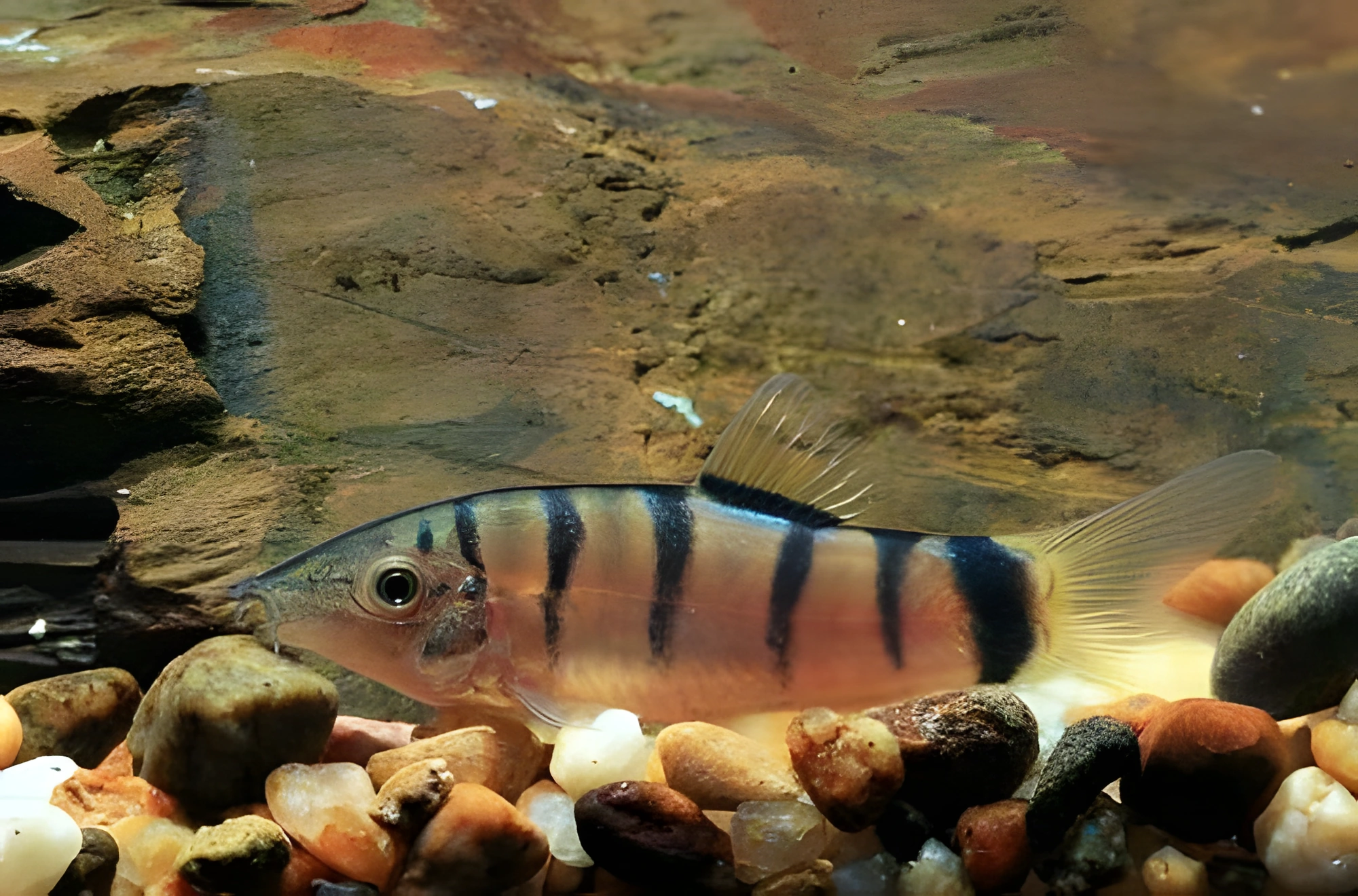
Adults reach approximately 7–8 cm in length. Distinguishing males from females is quite difficult, as sexual dimorphism is weakly expressed. The fish's mouth is equipped with sensitive barbels that help it find food in the substrate. The main body coloration is white, with a yellow or golden hue. Young loaches have noticeable vertical stripes on their sides, which disappear with age. Adult fish retain a single black stripe running along the entire back, as well as a “belt” at the base of the caudal fin.
Habitat
Its origin is linked to Southeast Asia, where it inhabits the extensive river systems of the Mekong and Chao Phraya. Its habitat extends across modern-day Cambodia, Thailand, Laos, and Vietnam. The species' wide distribution is explained by seasonal migrations. The zebra loach can be found both in the main river channels along their entire length and in temporarily flooded areas along the banks.
Behavior and Compatibility
To avoid aggressive behavior, which can manifest when kept alone, it is preferable to acquire these fish in a group of at least 5 individuals. Keeping them in a group of more than 10 fish is considered most favorable. Botia morleti are peaceful both towards their own kind and towards representatives of other related species. However, when choosing tank mates that are not loaches, special attention should be paid. It is recommended to avoid introducing fish of similar size that prefer the bottom layer, such as Corydoras catfish. Ideal companions will be species that inhabit the upper water layers, or large but peaceful fish.
Care and Maintenance
For a comfortable habitat for a group of five individuals, an aquarium of at least 100 liters will be required. The decor can be chosen at your discretion, but key points should be taken into account: the mandatory presence of a soft sandy substrate and various shelters. If you strive to recreate a semblance of a natural environment, we recommend the same sandy substrate, supplemented with several smooth stones and pebbles. Snags, imitating roots, branches, or other fragments of wood, will look spectacular. Add shade-loving plants, such as Java and Malay ferns, Anubias, or Java moss. It is important to equip the aquarium with a tight lid to prevent accidental jumping out of the fish. When caring for the inhabitants, maintain high water quality, ensure moderate current, and good oxygen saturation. Do not forget to weekly change 30–50% of the water volume with fresh water and promptly remove organic waste.
Diet
Botia morleti are undemanding in terms of diet. They readily eat any sinking food, including dry flakes and granules. Their diet can include frozen foods such as daphnia, bloodworms, brine shrimp, as well as chopped earthworms and mollusks. An important condition is the presence of vegetable components in the food.
Breeding and Reproduction
Breeding these fish in a home aquarium is not realistic. In natural conditions, their reproduction occurs after a long annual migration, observed from November to December, accompanied by a gradual change in hydrochemical water parameters. It is impossible to recreate such a complex of conditions in one aquarium. In commercial farms, special hormonal injections are used to stimulate spawning.
Diseases
Health problems usually arise only as a result of injuries or keeping in unsuitable conditions, which leads to a weakening of the immune system and, as a rule, provokes the development of various diseases. At the first signs of illness, the primary task is to check the water parameters for excesses or dangerous concentrations of toxic substances (nitrates, nitrites, ammonia, etc.). After bringing all indicators back to normal, treatment can begin. More detailed information on symptoms and treatment methods is presented in the "Aquarium Fish Diseases" section.
How to choose
When choosing Botia morleti in a store, pay attention to the activity and appearance of the fish. Healthy individuals should be active, curious, and actively explore the bottom of the aquarium. Avoid fish with signs of emaciation, sunken bellies, skin lesions, plaque, or spots on the body and fins. Make sure that all the fish's barbels are intact, as their damage may indicate poor keeping conditions or transport injuries.
Since Botia morleti are schooling fish, it is recommended to acquire a group of 5 or more individuals at once, which reduces stress and aggression. Keep in mind that these fish can be very feisty, so carefully observe the behavior of individuals in the display tank: they should not show excessive aggression towards their kin or appear intimidated. Remember that under stress, botias can release suborbital spines, so be careful when examining and transporting them to avoid damaging the bag.
Frequently asked questions
The essentials: size, tank volume, water parameters and care
How big does Skunk Botia get?
An adult reaches 8 cm in length. Plan the tank around the maximum size: the fish quickly outgrows a cramped setup.
What size aquarium does Skunk Botia need?
The minimum recommended volume is 100 L. A smaller tank speeds up nitrate build-up and raises stress levels.
What water parameters does Skunk Botia need?
Temperature 23–28 °C, pH 6–7.5, hardness 2–12 dGH. Stability matters more than exact values: sudden swings are harder on the fish than a small deviation from the ideal.
How long does Skunk Botia live?
Around 8 years when kept properly. Lifespan depends directly on tank volume, water quality and a varied diet.
Is Skunk Botia aggressive?
Temperament: semi-peaceful (including aggression during spawning / intraspecific conflicts). Keep this in mind when choosing tank mates.
How many Skunk Botia should be kept together?
Recommended setup: small group (5–6 individuals). Ignoring this is a common cause of stress and disease.
What does Skunk Botia eat?
Diet type: sinking (any). Feed small portions that are finished within a couple of minutes — overfeeding does more harm than underfeeding.
What is the scientific name of Skunk Botia?
The scientific name of the species is Yasuhikotakia morleti, family Loaches (Cobitidae). It also appears in the literature as: Botia horae, Botia morleti.