Temperature21 – 26 °C
Natural range
- Karnataka area
- Maharashtra area
LoachesConservation status: Endangered EN
The Striata Loach, also known as the Zebra Loach or Striped Loach (scientific name Botia striata), belongs to the family Cobitidae. This species is undemanding and relatively easy to keep if provided with suitable conditions. The loach is considered a conditionally peaceful fish, but care should be taken when choosing tank mates. It is compatible with many other species, but very small fish should be avoided. In addition, loaches are prone to damaging long fins and tails, which some ornamental species often possess.
- Required aquarium volume
- 100 L
- Size in aquarium
- 9 cm
- Temperature
- 21 – 26 °C
- Temperament
- Semi-peaceful (including aggression during spawning / intraspecific conflicts)
Parameters
Water pHSlightly acidic (6) – Neutral (7.5)
Water dHVery soft (1) – Hard (12)
Water salinityno salt (freshwater)
Size in aquarium9 cm
Lifespan10 years
TemperamentSemi-peaceful (including aggression during spawning / intraspecific conflicts)
Toward small fishnot a predator
Required aquarium volume100 L
Lightingdimmed
Substratesandy (regular, light)
Water flowmoderate
FeedingSinking (any)
CareSmall group (5–6 individuals)
Description
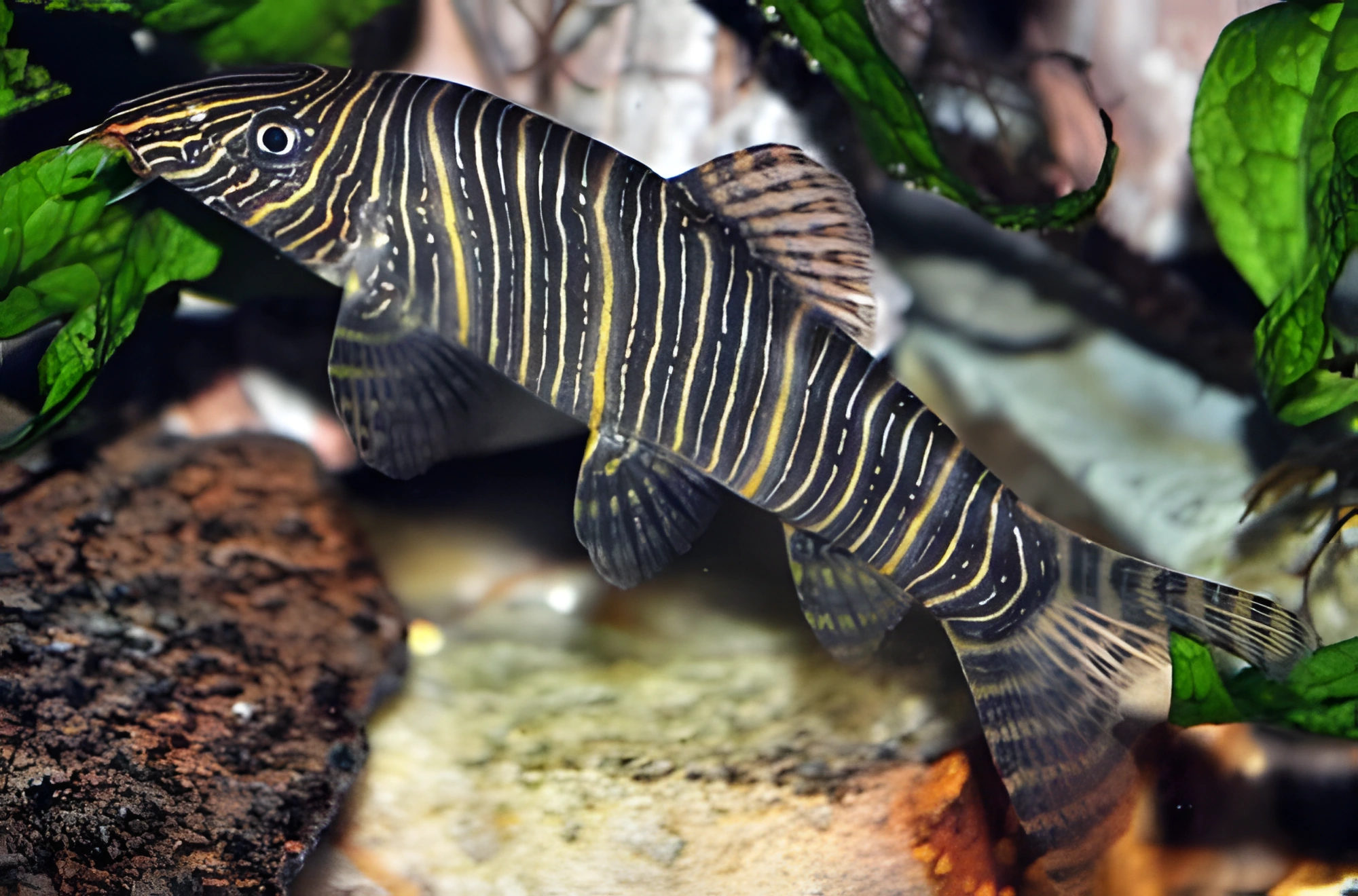
Adults reach a length of 8–9 cm. Sexual dimorphism is not pronounced; females are usually slightly larger than males, which is especially noticeable during spawning, although this phenomenon is rarely observed in aquarium conditions. These fish have a dark coloration, and their body pattern consists of alternating diagonal stripes of gray or brown and pale yellow. Sometimes the pattern may include not only stripes but also circles or spots, which is typically characteristic of hybrid specimens.
Habitat
The natural habitat of this fish is South India, where it is found in river systems flowing through the states of Karnataka, Maharashtra, and Andhra Pradesh, before emptying into the Bay of Bengal. These fish are usually found in coastal zones at depths of up to 1.5 meters, among accumulations of snags and dense aquatic vegetation.
Behavior and Compatibility
These fish prefer to live in shoals of at least 10 individuals. It is acceptable to acquire a group of 5 Striped Loaches. When kept alone, they may exhibit aggression towards other aquarium inhabitants. It is recommended to avoid very small fish and species with long fins. Loaches can be compatible with other loaches and catfish if there is enough space in the aquarium, as well as with fish of similar size that inhabit the water column or surface.
Care and Maintenance
For a group of 5 fish, the optimal aquarium volume starts from 100 liters. Sand substrate mixed with gravel and large boulders is recommended. The decor should include several snags, mimicking tree roots and branches, or any other artificial shelters. Groups of shade-loving plants are also appropriate. Lighting should be subdued. Adding Indian almond leaves will give the water a brownish tint, which corresponds to their natural habitat. It is important to note that the Zebra Loach prefers moderate current and requires clean, oxygen-rich water. In addition to a high-performance filtration system, 30–35% of the water volume must be renewed weekly with fresh water, and the aquarium should be regularly cleaned of organic waste.
Diet
These fish are carnivorous. In their natural environment, their diet consists of aquatic insects and their larvae, as well as small crustaceans and other zooplankton living on the riverbed. In aquarium conditions, it is recommended to offer sinking foods such as dry flakes, pellets, as well as frozen bloodworms, brine shrimp, and daphnia. Pieces of earthworms or mollusks can also be used. It is important that the diet includes vegetable supplements, otherwise these fish may start damaging fine-leaved plants.
Breeding and Reproduction
Successful breeding of loaches in home aquariums is very rare. In commercial fish farms, they are bred through hormonal injections.
Diseases
Health problems in these fish arise only in the presence of injuries or keeping in unsuitable conditions, which leads to a weakening of the immune system and the subsequent occurrence of various diseases. At the first signs of illness, it is necessary first to check the water parameters for exceeding permissible values or the presence of toxic substances (such as nitrites, nitrates, ammonia). If deviations are found, all indicators should be normalized, and then treatment should begin. More detailed information on symptoms and treatment methods is available in the "Diseases of Aquarium Fish" section.
How to choose
When choosing a zebra loach, prioritize individuals at least 5 cm in size, as younger fish are often weaker and adapt less well to new conditions. A healthy fish should be active, constantly exploring the substrate, and socializing with its conspecifics. Avoid specimens with signs of emaciation, sunken bellies, or skin damage.
- Carefully inspect the fish for signs of infections, such as white spots on the body or fins, indicating ichthyophthiriasis.
- Pay attention to behavior: healthy loaches are curious and active, while lethargy or constant attempts to hide in a corner can be signs of stress or illness.
- Ensure that the fish has no damage to the sensitive barbels around its mouth, as these are necessary for finding food in the substrate.
Since this species is prone to stress during transportation and changes in water parameters, it is recommended to purchase individuals only from reputable sources where the fish are kept in clean, well-aerated aquariums. After purchase, quarantine is mandatory to prevent the transfer of parasites to the main aquarium.
Frequently asked questions
The essentials: size, tank volume, water parameters and care
How big does Zebra Loach get?
An adult reaches 9 cm in length. Plan the tank around the maximum size: the fish quickly outgrows a cramped setup.
What size aquarium does Zebra Loach need?
The minimum recommended volume is 100 L. A smaller tank speeds up nitrate build-up and raises stress levels.
What water parameters does Zebra Loach need?
Temperature 21–26 °C, pH 6–7.5, hardness 1–12 dGH. Stability matters more than exact values: sudden swings are harder on the fish than a small deviation from the ideal.
How long does Zebra Loach live?
Around 10 years when kept properly. Lifespan depends directly on tank volume, water quality and a varied diet.
Is Zebra Loach aggressive?
Temperament: semi-peaceful (including aggression during spawning / intraspecific conflicts). Keep this in mind when choosing tank mates.
How many Zebra Loach should be kept together?
Recommended setup: small group (5–6 individuals). Ignoring this is a common cause of stress and disease.
What does Zebra Loach eat?
Diet type: sinking (any). Feed small portions that are finished within a couple of minutes — overfeeding does more harm than underfeeding.
What is the scientific name of Zebra Loach?
The scientific name of the species is Botia striata, family Loaches (Cobitidae).