Temperature24 – 30 °C
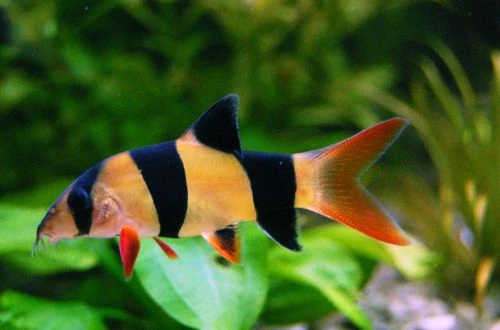
Other scientific names: Botia macracanthus, Botia macrocanthus, Cobitis macracanthus
The Clown Loach, also known as Chromobotia macracanthus, belongs to the family Botiidae. This species of loach is often perceived as an unpretentious and peaceful fish. However, this perception is not always accurate. First, the fish can reach quite impressive sizes (30 cm and more), although this rarely happens in home aquariums. It is important to note that its lifespan can reach 20 years, with growth continuing throughout this time. In addition, the Clown Loach poses a potential threat to smaller fish, so the choice of tank mates requires special attention.
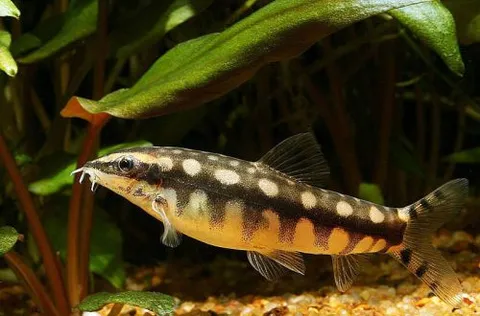
In aquarium conditions, adult specimens usually grow to 15–20 cm in length, although in their natural environment, individuals reaching almost 40 cm are found. Sexual dimorphism in this species is weakly expressed. Males are generally slightly smaller than females, but in a group consisting of fish of different ages, determining sex is practically impossible. The body coloration is characterized by alternating wide vertical black and orange stripes. Near the mouth are sensitive barbels, which the fish uses to search for food in the substrate.
This species originates from Southeast Asia, including the islands of Borneo (Kalimantan) and Sumatra. Its natural habitat is the main river channels that flow through humid tropical forests. During the rainy season, the fish migrate upstream for spawning and also enter smaller tributaries. Depending on the time of year, water parameters such as temperature, turbidity, pH, and dGH can vary significantly. The habitat is characterized by abundant vegetation, the presence of submerged roots and tree branches, as well as numerous snags. The river bottom is always covered with a layer of fallen leaves.
Aggressive behavior is exhibited by this fish when kept alone; therefore, it is recommended to acquire a group of at least five individuals. They also show aversion to significantly smaller fish. The Clown Loach is known for its tendency to nip the long fins of other aquarium inhabitants. They get along well with peaceful tank mates that are similar in size and prefer to stay in the middle water layers or near the surface.
For keeping a small group of Clown Loaches, an aquarium of 600 L is recommended. The aquarium setup can be arbitrary, provided several important requirements are met: the presence of a soft sandy substrate and a sufficient number of appropriately sized shelters. The aquarium acquires the most natural look under dim lighting, using decorative elements such as smooth stones, small boulders, and snags (both natural and artificial), as well as thickets of shade-loving plants and Indian almond leaves. Maintaining high water quality is paramount. To achieve this, in addition to installing a powerful filtration system, it is necessary to perform weekly water changes (15–20% of the total volume) with fresh water and regularly remove organic waste, including excrement, food remnants, and decaying plant parts.
Since these fish feed at the bottom, their diet should primarily consist of sinking foods. Dry flakes, pellets, as well as frozen bloodworms and brine shrimp can be used. It is also permissible to add pieces of earthworms and mollusks. It is crucial to include vegetable supplements in their diet, otherwise, the fish may start damaging soft-leaved aquarium plants.
In natural conditions, the breeding season begins with the onset of the rainy season. Fish migrate upstream and into adjacent flooded areas where spawning occurs. Eggs are released into open water and drift freely until they attach to aquatic vegetation. Among this vegetation, the hatched fry find both shelter and food sources. As they mature, young Clown Loaches move downstream. The change in external conditions and subsequent migration have made it impossible to breed this loach species in home aquariums. Fish are sold either from commercial fish farms, where spawning is artificially stimulated by hormonal injections, or they are caught from the wild. On the islands of Borneo and Sumatra, the collection of Clown Loach eggs for sale is a common practice among the local population.
Health problems usually arise only as a result of injuries or keeping in unsuitable conditions, which leads to a weakening of the immune system and, as a rule, provokes the development of various diseases. At the first signs of illness, the primary task is to check the water parameters for excesses or dangerous concentrations of toxic substances (nitrates, nitrites, ammonia, etc.). After bringing all indicators back to normal, treatment can begin.
When choosing a clown loach in a store, opt for the most active individuals with bright, vibrant coloration. Avoid fish with signs of emaciation, sunken bellies, skin lesions, or film on their fins. Since this species lacks classic scales, it is extremely susceptible to skin parasites and infections, so carefully inspect the fish for white spots or patches. Ensure that the individuals in the tank exhibit social behavior, as solitary or apathetic individuals may be severely weakened or under significant stress. Keep in mind that clown loaches are often sold at a young age and require adaptation to aquarium conditions. When purchasing, it is advisable to inquire how long the fish have been imported and whether they are undergoing quarantine. Due to the presence of suborbital spines, when catching the fish from the sales tank, ensure it does not get entangled in the net, as this can lead to injuries to the fins or gill covers, increasing the risk of subsequent diseases.
The essentials: size, tank volume, water parameters and care
An adult reaches 30 cm in length. Plan the tank around the maximum size: the fish quickly outgrows a cramped setup.
The recommended volume is 600 L. A smaller tank speeds up nitrate build-up and raises stress levels.
Temperature 24–30 °C, pH 5–7, hardness 2–12 dGH. Stability matters more than exact values: sudden swings are harder on the fish than a small deviation from the ideal.
Around 20 years when kept properly. Lifespan depends directly on tank volume, water quality and a varied diet.
Temperament: peaceful, but may bite fins. Keep this in mind when choosing tank mates.
Recommended setup: small group (5–6 individuals). Ignoring this is a common cause of stress and disease.
Diet type: sinking (any). Feed small portions that are finished within a couple of minutes — overfeeding does more harm than underfeeding.
The scientific name of the species is Chromobotia macracanthus, family Botiidae. It also appears in the literature as: Botia macracanthus, Botia macrocanthus, Cobitis macracanthus.
Matched by family, categories and overlapping keeping conditions
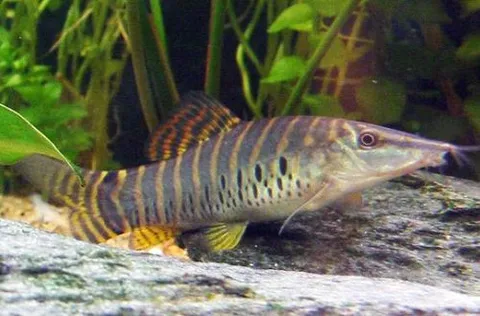
Syncrossus helodes
The Banded Loach, also known as the Tiger Loach, belongs to the family Botiidae and bears the scientific name Syncrossus helodes. This large, active fish prefers to spend its time at the bottom of the aquarium. Under…
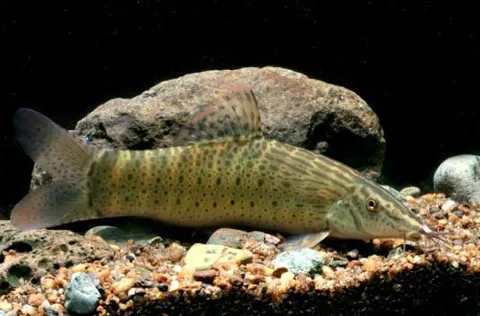
Syncrossus beauforti
The Chameleon Loach, officially known by its scientific name Syncrossus beauforti, belongs to the family Botiidae. This species can be unfriendly towards other aquarium inhabitants, which sometimes complicates the…
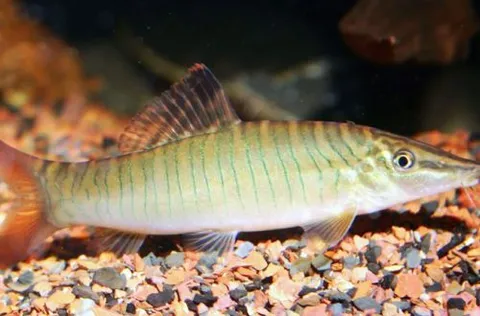
Syncrossus hymenophysa
The Tiger Loach, also known as the Tiger Botia or Green Tiger Loach (scientific name Syncrossus hymenophysa), belongs to the family Botiidae. Its limited suitability for a community aquarium is due to its complex…
Ambastaia sidthimunki
The Dwarf Loach, scientifically known as Ambastaia sidthimunki, is a member of the Botiidae family. This undemanding and relatively easy-to-keep fish is characterized by its peaceful nature and remarkable body pattern.…