Temperature20 – 30 °C
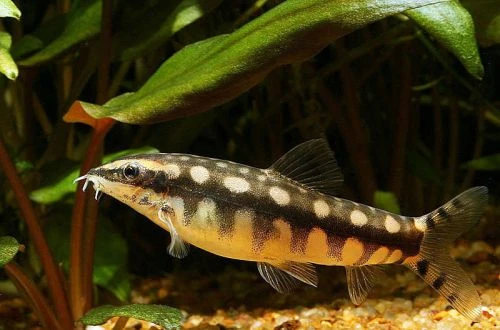
Other scientific names: Botia sidthimunki, Yasuhikotakia sidthimunki
The Dwarf Loach, scientifically known as Ambastaia sidthimunki, is a member of the Botiidae family. This undemanding and relatively easy-to-keep fish is characterized by its peaceful nature and remarkable body pattern. Its ability to comfortably coexist with many other species living in similar conditions makes it an excellent choice for a community tank.
Adults of this species reach approximately 6 cm in length. Distinguishing the sexes is quite difficult, as sexual dimorphism is weakly expressed; females are only slightly larger than males. In addition, adult males have a noticeably elongated snout and fleshier, thickened lips, whereas females have a rounded one. Accurate sex determination becomes even more challenging, especially in an aquarium where fish of different ages reside. The body is adorned with intersecting horizontal and vertical dark stripes against a light yellow background, creating large spotted patterns. Sensitive barbels are located near the mouth on the head, which help the dwarf loach navigate and find food.
The natural habitat of these fish spans Southeast Asia, specifically the western regions of Thailand bordering Myanmar. They inhabit slow-flowing rivers and streams that run through dense tropical forests. Loaches are most often found near the shoreline, where there are many shelters formed by submerged trees and roots, and the bottom is covered with fallen leaves.
This peaceful and calm fish coexists well with other species of comparable size and temperament. However, there have been instances where dwarf loaches have been observed nipping the long fins of their tank mates. This species is schooling, so it is recommended to keep them in groups of at least 5 individuals of both sexes.
For a group of 5 dwarf loaches, an aquarium of at least 80 liters is recommended. The tank's decor can be varied: the fish will feel equally comfortable among lush vegetation or in a more spacious aquarium with a sandy substrate and several hiding places. To recreate conditions close to their natural habitat, soft substrate combined with large stones and pebbles can be used. Low-growing, shade-loving plants with broad leaves are also suitable, as loaches sometimes rest on them. Natural snags, mimicking roots, branches, and tree fragments, create additional shelters. Lighting should be subdued, and water movement weak to moderate. Maintaining optimal conditions requires exceptionally clean and oxygen-rich water. In addition to installing an effective filtration system, it is necessary to refresh 30–35% of the water volume weekly and regularly clean the aquarium of organic waste.
In their natural environment, these fish actively scour the bottom, searching for small aquatic insects and their larvae, as well as crustaceans and other benthic zooplankton. When kept in a home aquarium, they should be offered sinking foods, such as dry flakes or granules, as well as frozen bloodworms, brine shrimp, and chopped earthworms. Vegetable supplements play an important role in their diet. It is worth noting that in the early stages of development, loaches may even feed on ornamental snails.
In their natural environment, the breeding period of these fish is closely linked to seasonal changes in water composition and their migration upstream. Recreating the necessary spawning stimuli in a home aquarium is an extremely difficult task. Nevertheless, in large groups, instances of offspring appearing have sometimes been observed, but this is more episodic. Targeted breeding in artificial conditions is practically impossible. In commercial fish farms, hormonal injections are usually used for these purposes.
Health problems usually arise only as a result of injuries or keeping in unsuitable conditions, which leads to a weakening of the immune system and, as a rule, provokes the development of various diseases. At the first signs of illness, the primary task is to check the water parameters for excesses or dangerous concentrations of toxic substances (nitrates, nitrites, ammonia, etc.). After bringing all indicators back to normal, treatment can begin.
When choosing a dwarf loach, attention should be paid to the overall health of the individuals in the aquarium. A healthy fish should be active, curious, and have a good appetite. Avoid specimens with sunken bellies, as this may indicate emaciation or internal diseases. Inspect the body for white spots, ulcers, scale damage, or signs of fungal infections, which often appear as white, cotton-like growths. It is critically important to assess the condition of the fins: they should be intact, without signs of splitting, redness, or rot. In a healthy fish, the eyes are clear, without cloudiness. Since these fish are schooling, it is best to acquire a group of 6–10 individuals at once, as solitary keeping leads to stress and increased aggression. Keep in mind that loaches have sharp suborbital spines, so when catching and transporting them, it is important to use soft nets to avoid injuring the fish and damaging the bags.
The essentials: size, tank volume, water parameters and care
An adult reaches 5–6 cm in length. Plan the tank around the maximum size: the fish quickly outgrows a cramped setup.
The recommended volume is 80 L. A smaller tank speeds up nitrate build-up and raises stress levels.
Temperature 20–30 °C, pH 5.5–7.5, hardness 2–12 dGH. Stability matters more than exact values: sudden swings are harder on the fish than a small deviation from the ideal.
Around 8 years when kept properly. Lifespan depends directly on tank volume, water quality and a varied diet.
Temperament: peaceful (regular). Keep this in mind when choosing tank mates.
Recommended setup: small group (5–6 individuals). Ignoring this is a common cause of stress and disease.
Diet type: sinking (any). Feed small portions that are finished within a couple of minutes — overfeeding does more harm than underfeeding.
The scientific name of the species is Ambastaia sidthimunki, family Botiidae. It also appears in the literature as: Botia sidthimunki, Yasuhikotakia sidthimunki.
Matched by family, categories and overlapping keeping conditions
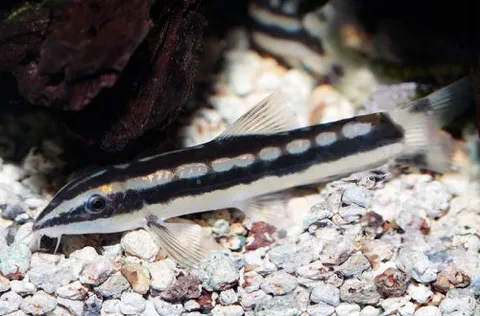
Ambastaia nigrolineata
The scientific name Ambastaia nigrolineata indicates that this fish belongs to the family Botiidae, specifically to the species Ambastaia nigrolineata. Among loaches, this species is not as frequently available for sale…
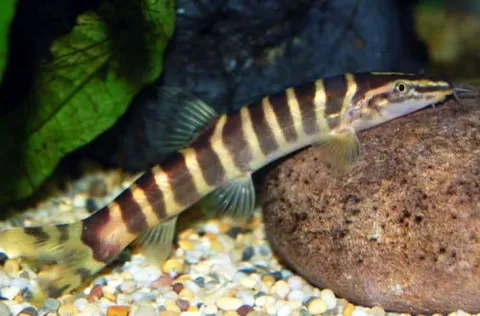
Sinibotia pulchra
Botia pulchra, or Golden Zebra Loach (scientific name Sinibotia pulchra), belongs to the family Botiidae (Loaches). This fish is characterized by its peaceful nature and undemanding care requirements, making it an…
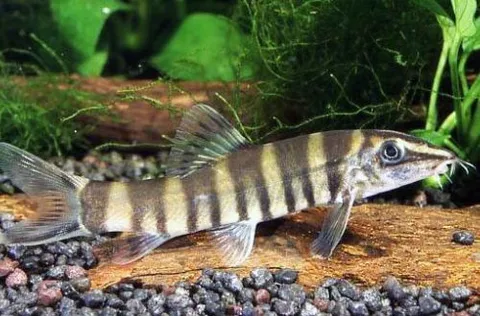
Sinibotia robusta
The Chinese Loach, known scientifically as Sinibotia robusta, belongs to the family Botiidae. This fish is characterized by its ease of care and unpretentiousness, coexisting well with other species, which makes it an…
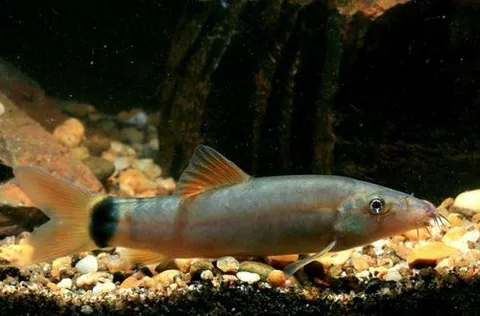
Yasuhikotakia lecontei
The Silver Loach, or Leconte's Loach (scientific name Yasuhikotakia lecontei), is a member of the Botiidae family. This name was given in honor of Dr. and entomologist John L. LeConte from Philadelphia, USA. Provided…