Temperature22 – 26 °C
Natural range
- Malay Peninsula area
- Thailand area
- Peninsular Malaysia area
- Borneo area
CyprinidsConservation status: Least concern LC
Other scientific names: Leuciscus einthovenii, Rasbora labuana, Rasbora vegae
Rasbora einthovenii, known as the Brilliant Rasbora, belongs to the family Cyprinidae. This active schooling fish can be successfully kept under specific conditions, but overall it is quite undemanding and easy to breed.
- Required aquarium volume
- 150 L
- Size in aquarium
- 5 – 9 cm
- Temperature
- 22 – 26 °C
- Temperament
- Peaceful, active/mobile
Parameters
Water pHSlightly acidic (5) – Neutral (7.5)
Water dHVery soft (2) – Medium hardness (10)
Water salinityno salt (freshwater)
Size in aquarium5 – 9 cm
Lifespan5 years
TemperamentPeaceful, active/mobile
Toward small fishnot a predator
Required aquarium volume150 L
Lightingdimmed
Substratesandy (regular, light)
Water flownone or stagnant (no flow)
FeedingAny (universal)
CareMedium group (6–8 individuals)
Description
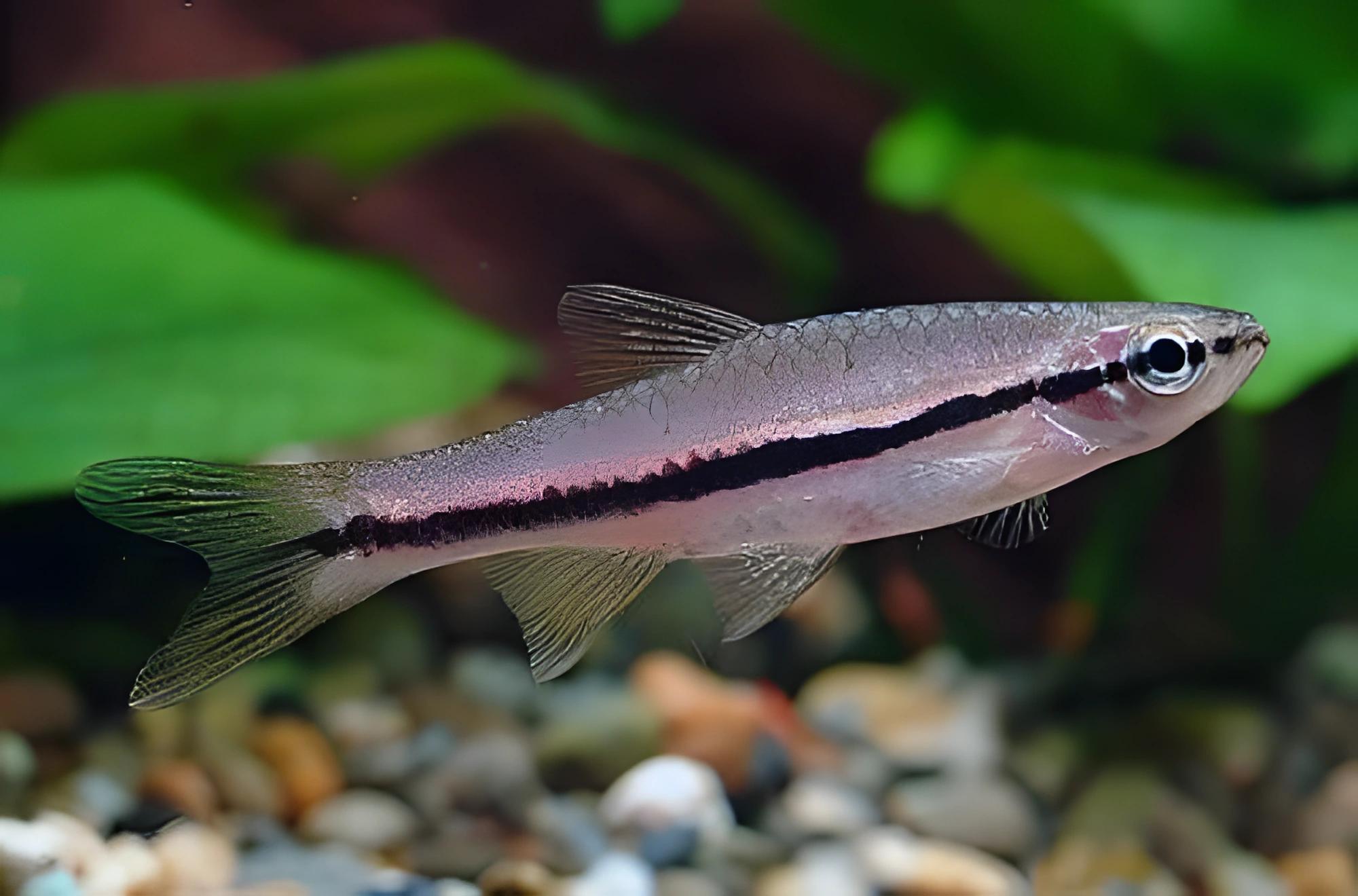
Adult fish can reach up to 9 cm in length, with females typically being slightly larger than males. Their body coloration varies from pinkish to rich purple, and their fins have a slight reddish tint. One of the distinguishing features of their pattern is a dark stripe running along the midline of the body from the head to the base of the tail.
Habitat
The natural habitats of this species extend across the southern part of the Malay Peninsula, including areas of modern-day Thailand, Peninsular Malaysia, and the large Sunda Islands such as Borneo and Sumatra. Rasboras prefer ancient peat swamps in tropical forests, where the water takes on a brown hue due to the high concentration of tannins and other chemical compounds formed during the decomposition of organic matter. The bottom of these bodies of water is covered with a layer of fallen leaves, branches, and other plant debris. Unfortunately, many of these unique biotopes in Southeast Asia are under threat of extinction due to active human economic activity.
Behavior and Compatibility
This species is characterized by a peaceful and friendly nature, preferring to stay in schools of at least 6 individuals, which allows them to display their vibrant coloration and active behavior to the fullest. Brilliant Rasboras are well compatible with many fish of similar size and temperament that can adapt to similar living conditions.
Care and Maintenance
For these fish, optimal conditions are created in a biotope aquarium that replicates the features of their natural habitat. A detailed guide on how to set up such an artificial ecosystem can be found in the article "How to Create a Biotope of Southeast Asian River Systems." To comfortably house a school of 8–10 individuals, an aquarium of at least 150 liters will be required. It is preferable to use a soft sandy substrate in the design, as well as several natural wood elements — these can be snags, roots, or branches. Adding dry leaves will not only decorate the aquarium but also contribute to enriching the water with tannins as they decompose, giving it a characteristic tea-like tint. It is recommended to replace the leaves once every few weeks. You can also plant Asian plants in the aquarium, for example, Malaysian or Java ferns, Java moss, and others. As for water parameters, maintain low hardness and high acidity. To stabilize the desired hydrochemical indicators, peat can be used — either as part of the filtration system or by placing it in a regular cloth bag on the bottom. The main equipment for the aquarium includes a filter (preferably with a peat filler), a heater, an aerator, and a lighting system with low power, as the fish feel better in subdued light. Aquarium care involves renewing 15–20% of the water volume weekly, as well as regularly cleaning the substrate from organic residues and the glass from possible plaque.
Diet
Brilliant Rasboras readily accept a variety of foods: dry, live, and frozen. It is important to provide them with a varied diet, as only with complete nutrition will the fish display the most vibrant coloration and maintain high activity.
Breeding and Reproduction
The Brilliant Rasbora is an egg-scattering species that disperses its eggs in the water column. Their parental instinct is weakly expressed, which increases the risk of adults eating the fry. To successfully raise the fry, it is recommended to use a separate spawning tank of 40–50 L, filled halfway with water. Dense thickets of low-growing, fine-leaved plants or ferns/mosses are suitable for its decoration. For equipment, a simple sponge air-driven filter and a heater are sufficient. Spawning occurs under dim lighting, so specialized lights are not required. When the female becomes noticeably rounded and the males begin to actively court their partners, this indicates the start of the breeding period, and the fish can be transferred to the spawning tank. Adding small portions of cool water and including live foods (bloodworms, daphnia, brine shrimp) in their diet stimulates spawning. A few days after the eggs are laid, the parents are returned to the main aquarium. The fry hatch after 1–2 days, depending on the water temperature, and begin to swim freely after another day. From this point, they should be fed specialized micro-food.
Diseases
Brilliant Rasboras have a strong immune system when kept in proper conditions, but they are sensitive to water quality. Poor parameters, such as the accumulation of nitrogenous compounds, can lead to bacterial infections or fin rot. Prevention includes weekly water changes, maintaining a stable temperature, and using filtration with peat media to mimic their natural environment. When stressed or injured, the fish are prone to developing fungal infections, so it is important to avoid sudden changes in environmental parameters and ensure peaceful tankmates.
How to choose
When purchasing, choose active individuals that stay in a school and show natural curiosity. Avoid fish with visible fin damage, film on their bodies, sunken bellies, or signs of apathy. It is important to ensure that the fish in the store are kept in conditions close to those recommended, as a sudden change in water parameters during transfer can cause severe stress. It is optimal to acquire a group of 6 or more individuals at once to reduce shyness during adaptation to a new aquarium.
Frequently asked questions
The essentials: size, tank volume, water parameters and care
How big does Brilliant Rasbora get?
An adult reaches 5–9 cm in length. Plan the tank around the maximum size: the fish quickly outgrows a cramped setup.
What size aquarium does Brilliant Rasbora need?
The minimum recommended volume is 150 L. A smaller tank speeds up nitrate build-up and raises stress levels.
What water parameters does Brilliant Rasbora need?
Temperature 22–26 °C, pH 5–7.5, hardness 2–10 dGH. Stability matters more than exact values: sudden swings are harder on the fish than a small deviation from the ideal.
How long does Brilliant Rasbora live?
Around 5 years when kept properly. Lifespan depends directly on tank volume, water quality and a varied diet.
Is Brilliant Rasbora aggressive?
Temperament: peaceful, active/mobile. Keep this in mind when choosing tank mates.
How many Brilliant Rasbora should be kept together?
Recommended setup: medium group (6–8 individuals). Ignoring this is a common cause of stress and disease.
What does Brilliant Rasbora eat?
Diet type: any (universal). Feed small portions that are finished within a couple of minutes — overfeeding does more harm than underfeeding.
What is the scientific name of Brilliant Rasbora?
The scientific name of the species is Rasbora einthovenii, family Cyprinids (Cyprinidae). It also appears in the literature as: Leuciscus einthovenii, Rasbora labuana, Rasbora vegae.