Temperature22 – 27 °C
Natural range
- Borneo area
- Southeast Asia area
Labyrinth fishConservation status: Vulnerable VU
Betta uberis, or Betta Ubera, is classified in the family Osphronemidae. This species of Betta fish is not recommended for beginner aquarists, as it requires maintaining very strict hydrochemical water parameters.
- Required aquarium volume
- 40 L
- Size in aquarium
- 4 cm
- Temperature
- 22 – 27 °C
- Temperament
- Semi-peaceful (including aggression during spawning / intraspecific conflicts)
Parameters
Water pHAcidic (4) – Slightly acidic (6)
Water dHVery soft (1) – Soft (5)
Water salinityno salt (freshwater)
Size in aquarium4 cm
Lifespan3 years
TemperamentSemi-peaceful (including aggression during spawning / intraspecific conflicts)
Toward small fishnot a predator
Required aquarium volume40 L
Lightingdimmed
Substrateany (no restrictions)
Water flownone or stagnant (no flow)
FeedingAny (universal)
CarePair (male/female)
Description
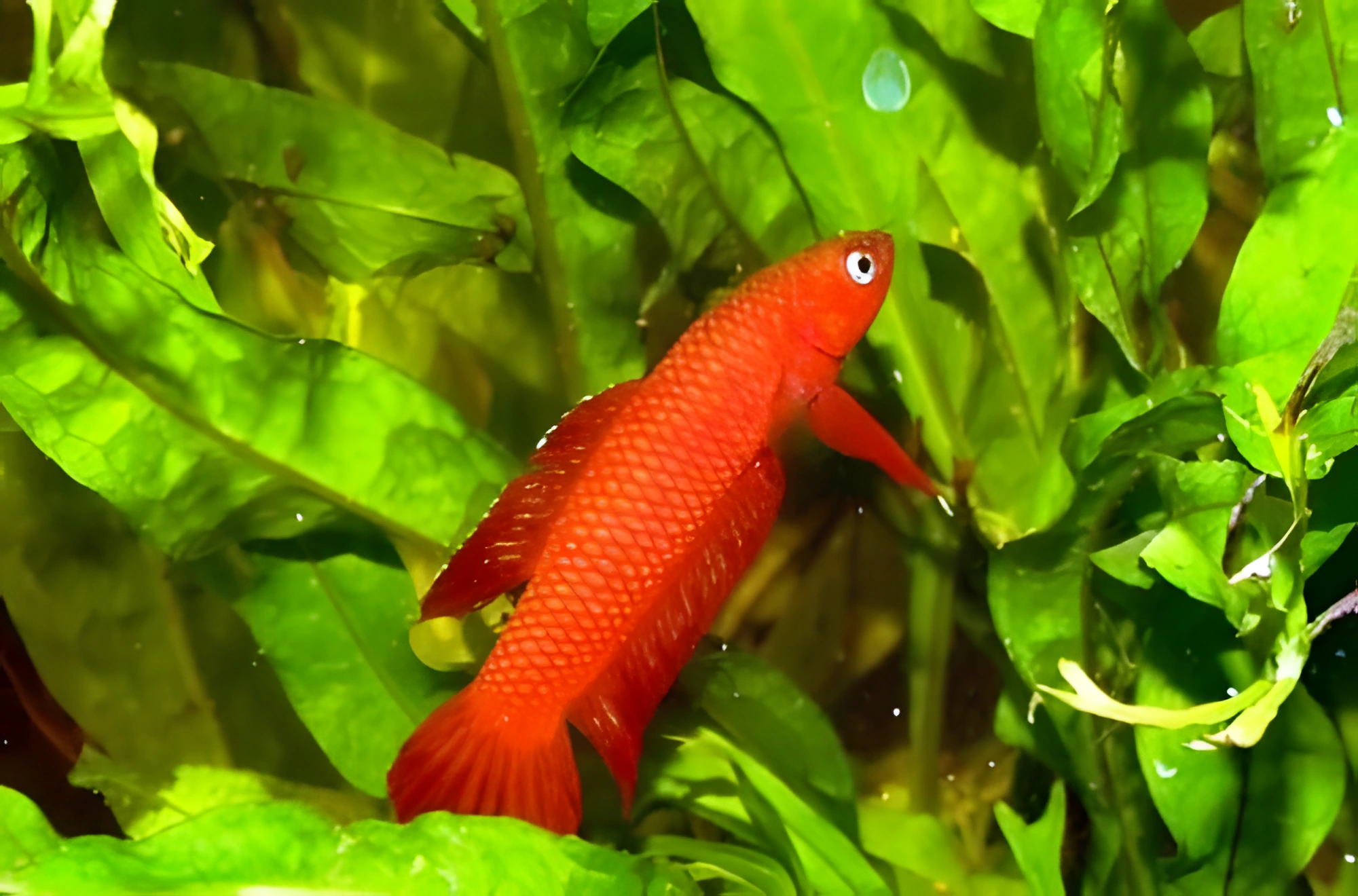
Adult Betta uberis grow up to 4 cm (1.6 inches) in length. Their body is elongated and slender, with a rounded caudal fin. The dorsal and anal fins are not tall but extend from the middle of the body to the caudal peduncle. Young individuals have a red coloration, which darkens with age, acquiring shades of burgundy. Bluish tones appear on the scales and fin rays. Males are distinguished by brighter coloration than females.
Habitat
The natural habitat of these fish is the island of Borneo (Kalimantan) in Southeast Asia. They prefer peat swamps and associated streams located in lowland tropical forests, where light on the water surface is subdued. The water in these bodies of water has a rich brown color due to the abundance of tannins formed by decomposing organic matter. Such waters are characterized by low mineral salt content and a pH that can drop to 4.0. The bottom is usually covered with fallen leaves and snags.
Behavior and Compatibility
In small aquariums, males may conflict with each other, engaging in skirmishes that typically do not result in serious injuries. Nevertheless, the losing, weaker individual will be forced to seek shelter and avoid encounters with the dominant male. It is recommended to keep these fish individually or in small groups with a predominance of females. They get along well with peaceful, non-aggressive species that can thrive in similar water conditions.
Care and Maintenance
An aquarium of at least 40 L (10 gallons) is required for a single Betta uberis. It is crucial to ensure a suitable aquatic environment in the aquarium with minimal pH and dGH values. Special attention should be paid to water preparation during regular aquarium maintenance. Typically, reverse osmosis units or similar equipment are used to obtain soft water. To maintain good water quality, an effective filtration system is necessary, combined with regular removal of organic waste such as excrement and leftover food. It is important to use gentle filtration to avoid creating a strong current, as fish originating from stagnant waters can experience stress from intense water flow. The aquarium decor can be varied, but the fish look most natural in subdued lighting, among driftwood and shade-loving plants. Dried leaves from certain trees are often used to impart the chemical composition characteristic of their natural habitat to the water. More detailed information can be found in the article “Which tree leaves can be used in an aquarium.”
Diet
Individuals raised in artificial conditions become omnivorous. They readily consume most popular commercial foods, whether dry, fresh, or frozen. For optimal nutrition, it is recommended to consider specialized products designed for Betta fish and produced by various manufacturers.
Breeding and Reproduction
Under favorable conditions, spawning occurs regularly. Like other Betta fish, male Betta uberis build bubble nests. For this, they choose the underside of broad-leaved plants or cave-like shelters. For example, a piece of PVC pipe or an overturned ceramic pot can serve as a spawning site. During nest construction, the male does not allow females near him, but after its completion, his behavior changes, and he begins to actively court the female. The female lays eggs one by one, and the male catches them, fertilizes them, and places them in the nest. The total number of eggs in a clutch usually ranges from 20 to 50. The female does not participate in caring for the offspring; all responsibility for the clutch falls on the male. The incubation period lasts from 24 to 48 hours, after which the fry remain in the nest for another 3–4 days, feeding on the yolk sac reserves. Only then do they begin to swim freely in search of food.
Diseases
Most health problems in fish often arise from unsuitable keeping conditions. Maintaining a stable and comfortable habitat is a key factor for successful keeping. If symptoms of illness appear, the first step is to check the water quality. If deviations are found, it is important to take immediate measures to eliminate them. If the symptoms do not disappear or worsen, medicinal treatment may be required. More detailed information on symptoms and treatment methods can be found in the "Diseases of Aquarium Fish" section.
How to choose
When choosing a Betta uberis, carefully inspect the fish for intact fins and the absence of white film, ulcers, or other damage on the body indicating bacterial infections. A healthy individual should be active, curious, and show no signs of emaciation or a bloated belly. Given the territorial nature of the species, it is important to ensure that the fish in the store are kept in suitable conditions, as overcrowding in retail aquariums often leads to stress and reduced immunity. It is recommended to purchase individuals that have already started accepting offered food, and to clarify their current keeping conditions in advance for a smooth adaptation to the new aquarium.
Frequently asked questions
The essentials: size, tank volume, water parameters and care
How big does Betta uberis get?
An adult reaches 4 cm in length. Plan the tank around the maximum size: the fish quickly outgrows a cramped setup.
What size aquarium does Betta uberis need?
The minimum recommended volume is 40 L. A smaller tank speeds up nitrate build-up and raises stress levels.
What water parameters does Betta uberis need?
Temperature 22–27 °C, pH 4–6, hardness 1–5 dGH. Stability matters more than exact values: sudden swings are harder on the fish than a small deviation from the ideal.
How long does Betta uberis live?
Around 3 years when kept properly. Lifespan depends directly on tank volume, water quality and a varied diet.
Is Betta uberis aggressive?
Temperament: semi-peaceful (including aggression during spawning / intraspecific conflicts). Keep this in mind when choosing tank mates.
How many Betta uberis should be kept together?
Recommended setup: pair (male/female). Ignoring this is a common cause of stress and disease.
What does Betta uberis eat?
Diet type: any (universal). Feed small portions that are finished within a couple of minutes — overfeeding does more harm than underfeeding.
What is the scientific name of Betta uberis?
The scientific name of the species is Betta uberis, family Osphronemidae.