Temperature25 – 30 °C
Natural range
- Sumatra area
- Jambi Province area
Labyrinth fishConservation status: Vulnerable VU
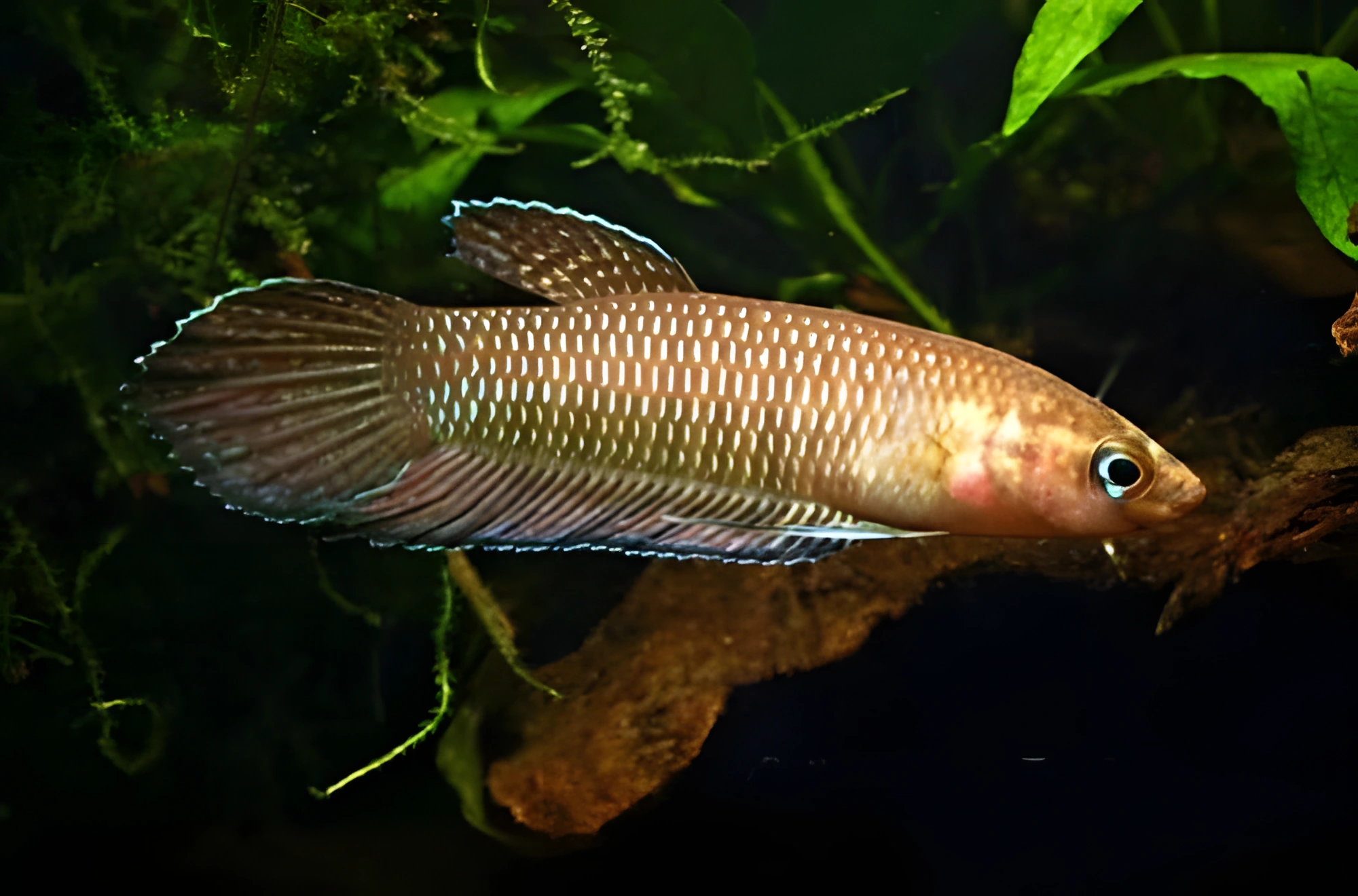
Betta simorum, or Sima's Betta, is the name of this fish, which belongs to the family Osphronemidae. The species is named after Thomas Sim, the owner of Sindo Aquarium Pte. Ltd. (Jambi, Indonesia) and the first exporter of these fish. A representative of the fighting fish group, it fully lives up to its name. Males can be quite temperamental towards each other, but they are not aggressive towards other species. These fish are relatively easy to keep and breed, so experienced aquarists usually do not encounter major difficulties.
- Required aquarium volume
- 70 L
- Size in aquarium
- 8 – 9 cm
- Temperature
- 25 – 30 °C
- Temperament
- Semi-peaceful (including aggression during spawning / intraspecific conflicts)
Parameters
Water pHAcidic (3) – Slightly acidic (6)
Water dHVery soft (0) – Medium hardness (10)
Water salinityno salt (freshwater)
Size in aquarium8 – 9 cm
Lifespan3 years
TemperamentSemi-peaceful (including aggression during spawning / intraspecific conflicts)
Toward small fishnot a predator
Required aquarium volume70 L
Lightingdimmed
Substrateany, but dark
Water flownone or stagnant (no flow)
FeedingAny (universal)
CareBoth solitary and in group (flexible)
Description
Adults grow to 8–9 cm in length. Males have a more slender body shape, and the tips of their fins and tail are elongated, with turquoise iridescence in their coloration. Females look more massive, their bodies are larger, and their coloration is most often gray.
Habitat
The natural range of this species covers the central part of Sumatra Island in Southeast Asia, including the Indonesian provinces of Jambi and Riau. Sima's Betta inhabits the swampy basin of the Indragiri River, which flows through dense tropical forests. Typical biotopes are bodies of water with dim lighting, where the water acquires a rich brown hue due to the high concentration of humic acids and other substances released during the decomposition of plant material. The bottom is usually covered with a layer of fallen leaves, branches, and permeated by numerous tree roots. The water level can significantly decrease depending on the season, turning water bodies into small puddles.
Behavior and Compatibility
Information about the behavior of Betta simorum in different sources is often contradictory. Some authors attribute excessive aggression towards conspecifics, especially males, to them. Others, on the contrary, note their peaceful nature. There is a grain of truth in both statements. If the aquarium volume is insufficient, males begin to compete for territory and the attention of females. However, their “quarrels” usually do not lead to serious injuries. In a small aquarium, it is recommended to keep only one male with a female. In a spacious tank, a group of appropriate size can be maintained. No aggression towards other fish is observed; Bettas get along well with species of comparable size that can exist in similar conditions.
Care and Maintenance
For one or two fish, an aquarium with a volume of at least 70 L will be optimal. The decor can be anything, but the fish look most harmonious in an environment that mimics their natural habitat. Natural driftwood can be placed on a dark substrate, shade-loving plants, mosses, or ferns can be planted, or artificial analogues can be used. Lighting should be subdued, and shading can be achieved with floating plants. Adding pre-soaked dry leaves of some trees to the bottom will not only enhance the decor but also serve as a source of humic acids, which will give the water the characteristic brown color typical of swampy water bodies. Details can be found in the article "Which tree leaves can be used in an aquarium." Long-term and successful keeping of Sima's Betta depends on maintaining stable water parameters within acceptable ranges of temperature and hydrochemical indicators. It should be noted that the pH should be low, and carbonate hardness should be negligible. For this reason, beginner aquarists may encounter difficulties in water preparation. Achieving the desired stability is ensured by the uninterrupted operation of the installed equipment and the regular performance of mandatory aquarium care procedures. These include weekly partial water changes and timely removal of organic waste, such as food residues and excrement.
Diet
In their natural environment, fish feed on small invertebrates, crustaceans, and zooplankton. There have been cases where Sima's Bettas jumped out of the water to catch insects from leaves and branches overhanging the surface. Individuals acclimated or living in an artificial environment for several generations have successfully adapted to dry foods (flakes, pellets). The diet can be enriched with live or frozen foods, such as artemia, daphnia, or bloodworms.
Breeding and Reproduction
During the breeding season, fish create foam nests on the water surface. For this, they choose places among thickets of floating plants, under large leaves, or in cave-like shelters. Such a shelter can be a suitable decorative element, a regular ceramic pot turned on its side, or even a piece of PVC pipe. During nest construction, the male does not allow the female or other fish near it. After preparing everything, he begins active courtship. Spawning is accompanied by peculiar "embraces" when the fish entwine around each other. At the climax, 5 to 20 eggs are released and fertilized at a time. After this, the eggs are carefully placed in the nest. The male remains nearby to protect the clutch, and he does not tolerate the presence of other conspecifics, including the female. In a small aquarium, it will be necessary to temporarily remove other fish. The incubation period lasts 3–4 days, and the hatched fry will feed on the yolk sac reserves for another couple of days. To preserve the fry, they should be transferred to a separate container with identical water conditions.
Diseases
Most health problems in fish often arise from unsuitable keeping conditions. Maintaining a stable and comfortable habitat is a key factor for successful keeping. If symptoms of illness appear, the first step is to check the water quality. If deviations are found, it is important to take immediate measures to eliminate them. If the symptoms do not disappear or worsen, medicinal treatment may be required. More detailed information on symptoms and treatment methods can be found in the "Diseases of Aquarium Fish" section.
How to choose
When choosing Betta simorum, preference should be given to individuals with clean fins without signs of damage, white film, or ulcers. A healthy fish should be active, react to external stimuli, and not have a sunken belly. Avoid buying fish that appear apathetic, constantly lie at the bottom or near the surface, or show signs of emaciation or an unnaturally bloated abdomen.
- Inspect the aquarium in the store for dead individuals, as this may indicate poor water quality or infection within the group.
- Ensure that the fish have their characteristic coloration with a pronounced green sheen, and do not look dull or stressed.
- Ask the seller what the fish are fed, as wild-caught individuals may be picky eaters and require adaptation to non-live food.
Frequently asked questions
The essentials: size, tank volume, water parameters and care
How big does Betta Sima get?
An adult reaches 8–9 cm in length. Plan the tank around the maximum size: the fish quickly outgrows a cramped setup.
What size aquarium does Betta Sima need?
The minimum recommended volume is 70 L. A smaller tank speeds up nitrate build-up and raises stress levels.
What water parameters does Betta Sima need?
Temperature 25–30 °C, pH 3–6, hardness 0–10 dGH. Stability matters more than exact values: sudden swings are harder on the fish than a small deviation from the ideal.
How long does Betta Sima live?
Around 3 years when kept properly. Lifespan depends directly on tank volume, water quality and a varied diet.
Is Betta Sima aggressive?
Temperament: semi-peaceful (including aggression during spawning / intraspecific conflicts). Keep this in mind when choosing tank mates.
How many Betta Sima should be kept together?
Recommended setup: both solitary and in group (flexible). Ignoring this is a common cause of stress and disease.
What does Betta Sima eat?
Diet type: any (universal). Feed small portions that are finished within a couple of minutes — overfeeding does more harm than underfeeding.
What is the scientific name of Betta Sima?
The scientific name of the species is Betta simorum, family Osphronemidae.