Temperature22 – 28 °C
Natural range
- Krabi Province area
- Thailand area
Labyrinth fish
Betta simplex, or the simple Betta, belongs to the family Osphronemidae. Interestingly, despite its name and classification, this species has more in common with gouramis than with the so-called fighting fish. Its habitat is quite specific compared to the conditions preferred by related species, which may require a careful approach to compatibility. Experienced aquarists generally do not encounter difficulties in keeping these fish, but beginners may face certain challenges.
- Required aquarium volume
- 50 L
- Size in aquarium
- 4 – 6 cm
- Temperature
- 22 – 28 °C
- Temperament
- Semi-peaceful (including aggression during spawning / intraspecific conflicts)
Parameters
Water pHNeutral (7) – Slightly alkaline (8)
Water dHSoft (5) – Hard (15)
Water salinityno salt (freshwater)
Size in aquarium4 – 6 cm
Lifespan3 years
TemperamentSemi-peaceful (including aggression during spawning / intraspecific conflicts)
Toward small fishnot a predator
Required aquarium volume50 L
Lightingdimmed
Substrateany (no restrictions)
Water flownone or stagnant (no flow)
FeedingSmall / appropriate size / pieces
CareMixed (solitary / pair / group)
Description
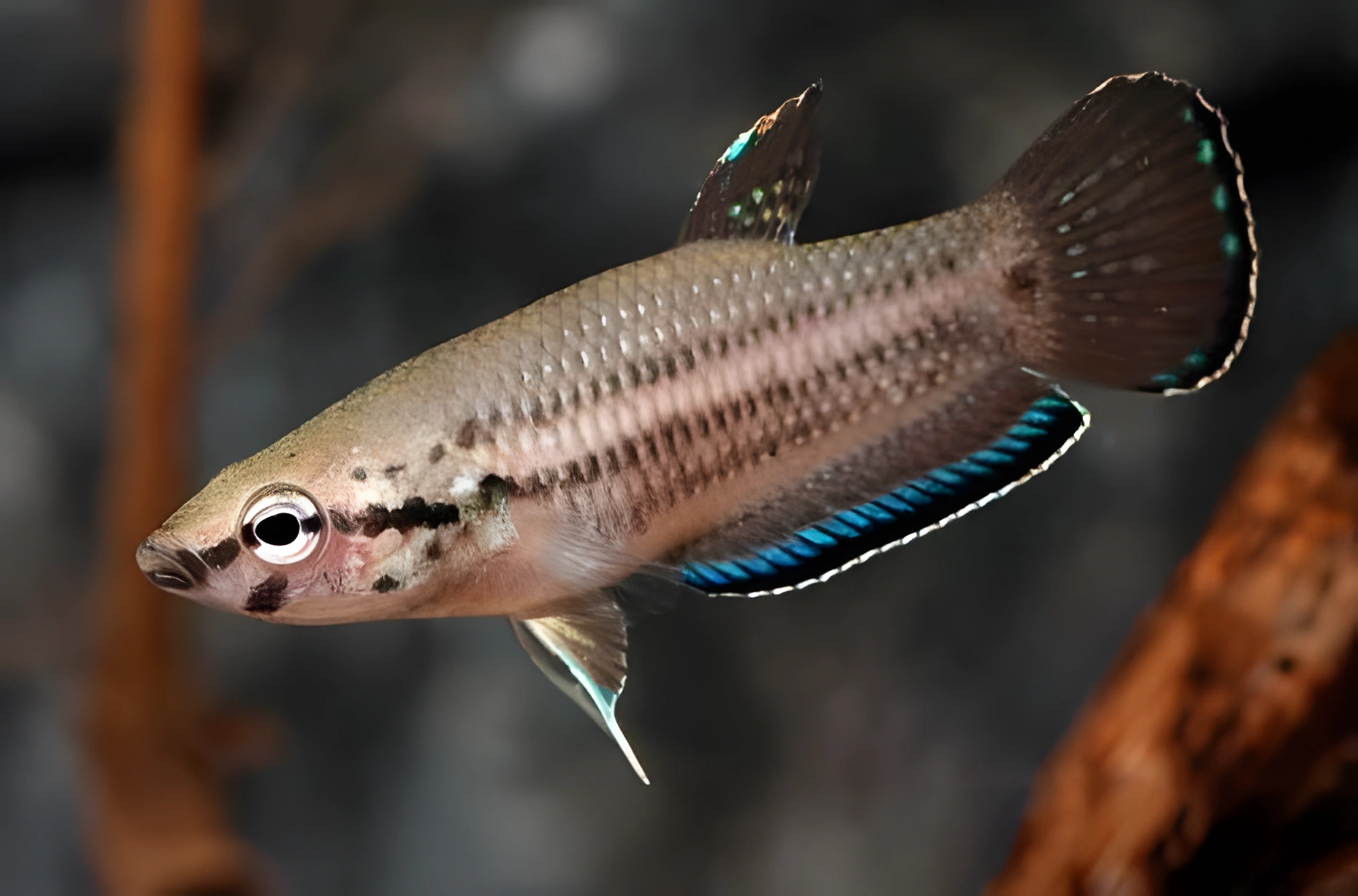
Adult specimens reach sizes of 4 to 6 cm in length. This species is a close relative of Betta javanica, sharing many common morphological features. The coloration is usually light, with a predominance of gray-pink tones, and the body is adorned with a series of dark horizontal stripes. The scales shimmer with a greenish-blue iridescent sheen. The fins and tail are strikingly framed with a black edge and a blue border. Males are generally larger and have more vibrant coloration compared to females.
Habitat
The natural habitat of this species is in Southeast Asia, specifically, it is endemic to a certain area in Krabi Province, Thailand. These fish prefer karst formations with slightly alkaline water, exhibiting a pH within 7.0–7.4. A typical biotope is characterized by deep limestone depressions forming terrestrial pools and streams connecting them, abundant with limestone rocks and gravel. The water here is exceptionally clear and has a characteristic blue-green tint due to the high content of dissolved calcium carbonate. Coastal zones are predominantly covered with aquatic vegetation.
Behavior and Compatibility
The keeping conditions for Betta simplex differ from the requirements of other labyrinth fish species, as they prefer higher pH and dGH values. This somewhat limits the choice of compatible, related species. Within this species, a hierarchy is observed where males dominate, and skirmishes over territory may periodically occur between them; however, with a sufficiently large aquarium, serious problems are unlikely. Peaceful, modestly sized fish that can comfortably exist in hard and slightly alkaline water conditions make good tank mates.
Care and Maintenance
For keeping a pair of these fish, an aquarium of at least 50 liters will be necessary. It is extremely important to recreate a habitat that closely approximates natural conditions. Selecting decor elements usually presents no difficulties. Dim lighting and several aquatic plants, including floating ones, will suffice. Other decorative elements can be chosen based on personal preferences. If breeding is planned, shelters should be provided, which can serve as future spawning sites. These can be decorative elements with grottoes and caves, ordinary ceramic pots laid on their side, or sections of PVC pipes. Special attention should be paid to maintaining stable water parameters within acceptable temperature and hydrochemical limits. This requires regular aquarium maintenance procedures, including cleaning and partial water changes, as well as the installation of appropriate equipment, primarily a high-quality filtration system.
Diet
In the wild, the diet of these fish consists of small invertebrates. In aquarium conditions, they readily accept most common foods, whether dry, frozen, or live. It is recommended to prioritize specialized foods developed for labyrinth fish and offered by many manufacturers. It is important to avoid overfeeding, as these fish are prone to obesity.
Breeding and Reproduction
Under optimal conditions, including suitable water parameters and a varied diet, the appearance of offspring is highly probable, especially if sexually mature individuals are present. This fish species is characterized by parental care, which is entirely undertaken by the male. During spawning, the fish perform a peculiar “embrace dance,” during which the female lays eggs one by one, and the male immediately fertilizes them and takes them into his mouth. After the “dance” is complete, the entire clutch is in the male's mouth, where it will remain for the next 9–16 days. During this time, the male tends to stay away from other inhabitants, sometimes hiding in shelters. If startled, he may prematurely release the eggs or even swallow them. The hatched fry are relatively safe near their parents, but the presence of other fish can pose a threat to them. Therefore, it is recommended to transfer the fry to a separate tank with identical water parameters.
Diseases
Most health problems in fish often arise from unsuitable keeping conditions. Maintaining a stable and comfortable habitat is a key factor for successful keeping. If symptoms of illness appear, the first step is to check the water quality. If deviations are found, it is important to take immediate measures to eliminate them. If the symptoms do not disappear or worsen, medicinal treatment may be required. More detailed information on symptoms and treatment methods can be found in the "Diseases of Aquarium Fish" section.
How to choose
When purchasing, choose active individuals with clean fins and no visible damage or film on their bodies. Healthy fish should have clear eyes and normal plumpness, without signs of emaciation. Since the species is quite rare in the pet trade, wild-caught specimens are often offered, which increases the risk of parasites or stress during adaptation. In the store, observe their behavior: fish should not show apathy or constantly hide, unless this is due to a lack of shelters in the display tank.
Frequently asked questions
The essentials: size, tank volume, water parameters and care
How big does Betta simplex get?
An adult reaches 4–6 cm in length. Plan the tank around the maximum size: the fish quickly outgrows a cramped setup.
What size aquarium does Betta simplex need?
The minimum recommended volume is 50 L. A smaller tank speeds up nitrate build-up and raises stress levels.
What water parameters does Betta simplex need?
Temperature 22–28 °C, pH 7–8, hardness 5–15 dGH. Stability matters more than exact values: sudden swings are harder on the fish than a small deviation from the ideal.
How long does Betta simplex live?
Around 3 years when kept properly. Lifespan depends directly on tank volume, water quality and a varied diet.
Is Betta simplex aggressive?
Temperament: semi-peaceful (including aggression during spawning / intraspecific conflicts). Keep this in mind when choosing tank mates.
How many Betta simplex should be kept together?
Recommended setup: mixed (solitary / pair / group). Ignoring this is a common cause of stress and disease.
What does Betta simplex eat?
Diet type: small / appropriate size / pieces. Feed small portions that are finished within a couple of minutes — overfeeding does more harm than underfeeding.
What is the scientific name of Betta simplex?
The scientific name of the species is Betta simple, family Osphronemidae.