Temperature22 – 28 °C
Natural range
- Southern Thailand area
- Kelantan area
Labyrinth fishConservation status: Endangered EN
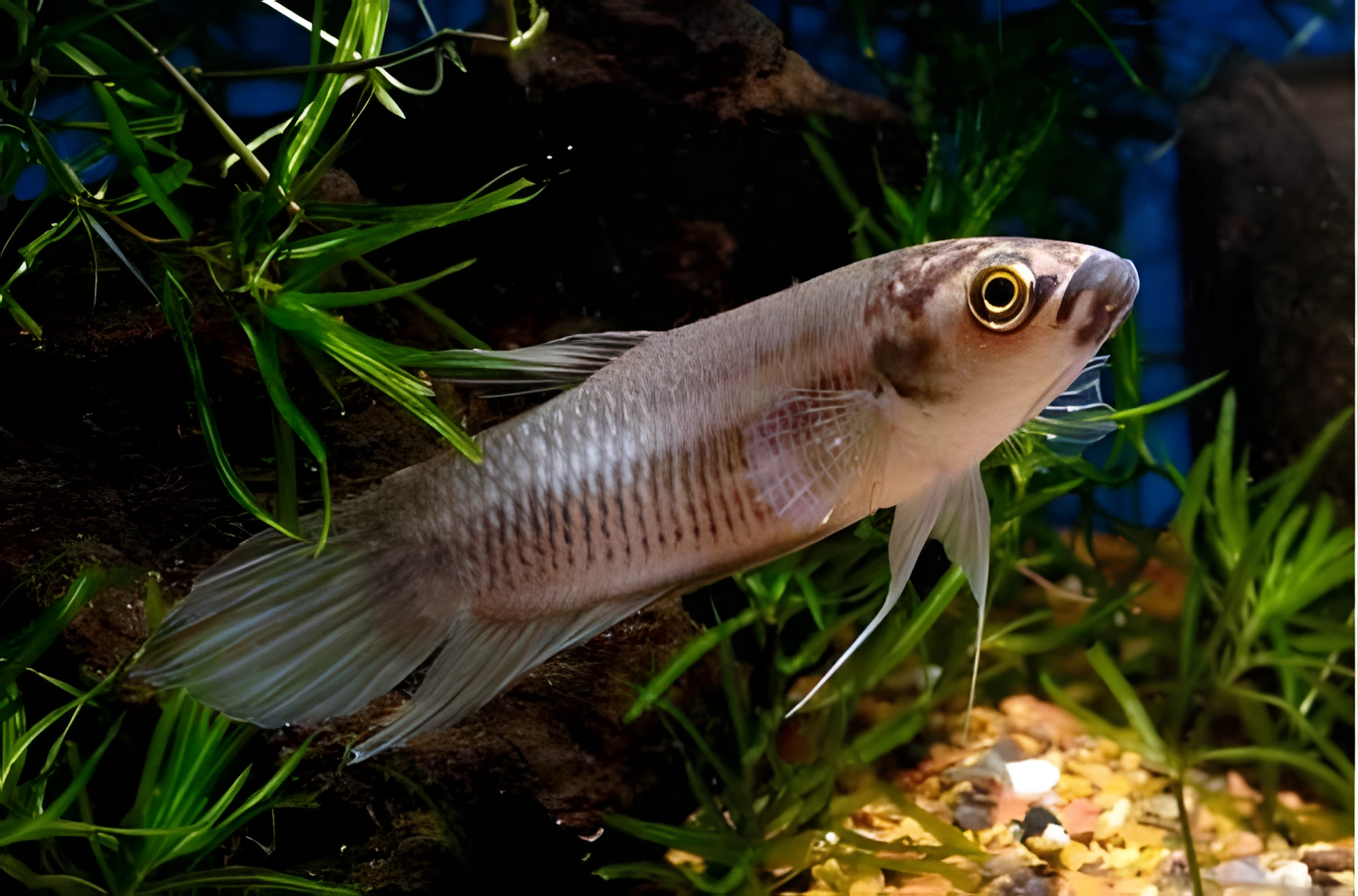
Betta pi, scientifically known as Betta pi, belongs to the family Osphronemidae. This species owes its unusual name to a pattern around its mouth that resembles the Greek letter π (Pi). This fish is considered quite unproblematic in terms of keeping and breeding, which can make it a good choice for beginner aquarists.
- Required aquarium volume
- 80 L
- Size in aquarium
- 8 – 9 cm
- Temperature
- 22 – 28 °C
- Temperament
- Peaceful (regular)
Parameters
Water pHAcidic (4) – Neutral (6.5)
Water dHVery soft (1) – Soft (5)
Water salinityno salt (freshwater)
Size in aquarium8 – 9 cm
Lifespan3 years
TemperamentPeaceful (regular)
Toward small fishnot a predator
Required aquarium volume80 L
Lightingdimmed
Substrateany, but dark
Water flownone or stagnant (no flow)
FeedingSmall / appropriate size / pieces
CareMixed (solitary / pair / group)
Description
Adults of this fish can reach 8–9 cm in length. A distinctive feature, which served as the basis for the species' name, is a dark marking on the head near the mouth, resembling the Greek letter π (pi). The main coloration is light, consisting of a pale gray background with barely discernible dark horizontal stripes. Males are usually larger than females, but no other pronounced sexual dimorphism is observed between them.
Habitat
Betta Pi inhabits Southeast Asia, found on the Malay Peninsula — in southern Thailand and the northeastern regions of Malaysia (Kelantan and Terengganu states). These fish inhabit peat swamps located among humid tropical forests. Their typical biotope is characterized by shallow bodies of water with a bottom covered by a thick layer of fallen leaves and snags. The water there has a rich brown hue, due to the high content of tannins released by decomposing plant organic matter. During dry periods, the swamps partially dry out, forcing the fish to seek refuge in small isolated puddles among the forest litter.
Behavior and Compatibility
These fish are considered quite peaceful and get along well with both their own kind and other non-aggressive fish of comparable size. Nevertheless, intraspecific relationships may not always be harmless. Males tend to exhibit territorial behavior, especially when space is limited. Therefore, in small aquariums, it is recommended to keep them individually, as a male/female pair, or in harem-type groups.
Care and Maintenance
For a pair of fish, the optimal tank volume is from 80 liters. Ideally, when keeping Betta Pi, conditions should be recreated that are as close as possible to their natural habitat. This applies to both the aquarium design and the chemical composition of the water. Key decorative elements will include dark substrate, snags of various sizes, as well as rooted and floating shade-loving aquatic plants. Lighting should be subdued. Adding leaves from certain trees will not only give the design a natural look but also contribute to the formation of the chemical composition of the water characteristic of natural bodies of water, coloring it brown. Maintaining stable water conditions within acceptable temperature ranges and hydrochemical parameters depends on the regularity of aquarium maintenance procedures, as well as the correct selection and uninterrupted operation of equipment. The minimum amount of work includes removing organic waste (e.g., food remnants and excrement), water conditioning, and weekly partial water changes with fresh water (15–20% of the total volume). It should be noted that over many generations, living in an artificial aquarium environment, these fish have adapted to some extent to slightly different conditions. Therefore, in pet stores, they can often be seen in semi-empty tanks where the water composition often deviates from acceptable values, so that several different species can be kept in one aquarium.
Diet
Being an omnivorous species, this fish readily accepts most common foods. Specialized foods for labyrinth fish are also suitable for their diet. Manufacturers claim that such foods include a special diet developed with all necessary vitamins and trace elements.
Breeding and Reproduction
Under favorable conditions, spawning is a frequent occurrence in these fish. They exhibit caring parental behavior. During the breeding season, the male and female perform a peculiar “embrace dance,” pressing tightly against each other, during which spawning occurs. The male immediately collects all fertilized eggs into his mouth, where they will remain until the fry emerge, which takes 10 to 28 days. Throughout this time, the male refrains from eating. Sometimes, young and inexperienced males swallow their offspring or release them prematurely.
Diseases
Most health problems in fish often arise from unsuitable keeping conditions. Maintaining a stable and comfortable habitat is a key factor for successful keeping. If symptoms of illness appear, the first step is to check the water quality. If deviations are found, it is important to take immediate measures to eliminate them. If the symptoms do not disappear or worsen, medicinal treatment may be required. More detailed information on symptoms and treatment methods can be found in the "Diseases of Aquarium Fish" section.
How to choose
When purchasing, choose active specimens with clean fins and no visible damage to the body. It is important to ensure that the fish shows interest in food and does not look emaciated. Avoid specimens with signs of apathy, sunken bellies, or unnaturally bloated abdomens, as this may indicate problems with internal organs or parasites. Since the species is sensitive to the chemical composition of the water, ask the seller about the keeping conditions in the store and, if possible, observe the fish's behavior in the main aquarium: healthy individuals should be curious and not show constant signs of stress. Also, pay attention to the characteristic black marking in the shape of the letter pi on the throat, which is an important species characteristic.
Frequently asked questions
The essentials: size, tank volume, water parameters and care
How big does Betta Pi get?
An adult reaches 8–9 cm in length. Plan the tank around the maximum size: the fish quickly outgrows a cramped setup.
What size aquarium does Betta Pi need?
The minimum recommended volume is 80 L. A smaller tank speeds up nitrate build-up and raises stress levels.
What water parameters does Betta Pi need?
Temperature 22–28 °C, pH 4–6.5, hardness 1–5 dGH. Stability matters more than exact values: sudden swings are harder on the fish than a small deviation from the ideal.
How long does Betta Pi live?
Around 3 years when kept properly. Lifespan depends directly on tank volume, water quality and a varied diet.
Is Betta Pi aggressive?
Temperament: peaceful (regular). Keep this in mind when choosing tank mates.
How many Betta Pi should be kept together?
Recommended setup: mixed (solitary / pair / group). Ignoring this is a common cause of stress and disease.
What does Betta Pi eat?
Diet type: small / appropriate size / pieces. Feed small portions that are finished within a couple of minutes — overfeeding does more harm than underfeeding.
What is the scientific name of Betta Pi?
The scientific name of the species is Betta pi, family Osphronemidae.