Temperature22 – 28 °C
Natural range
- Johor area
- Peninsular Malaysia area
Labyrinth fishConservation status: Endangered EN
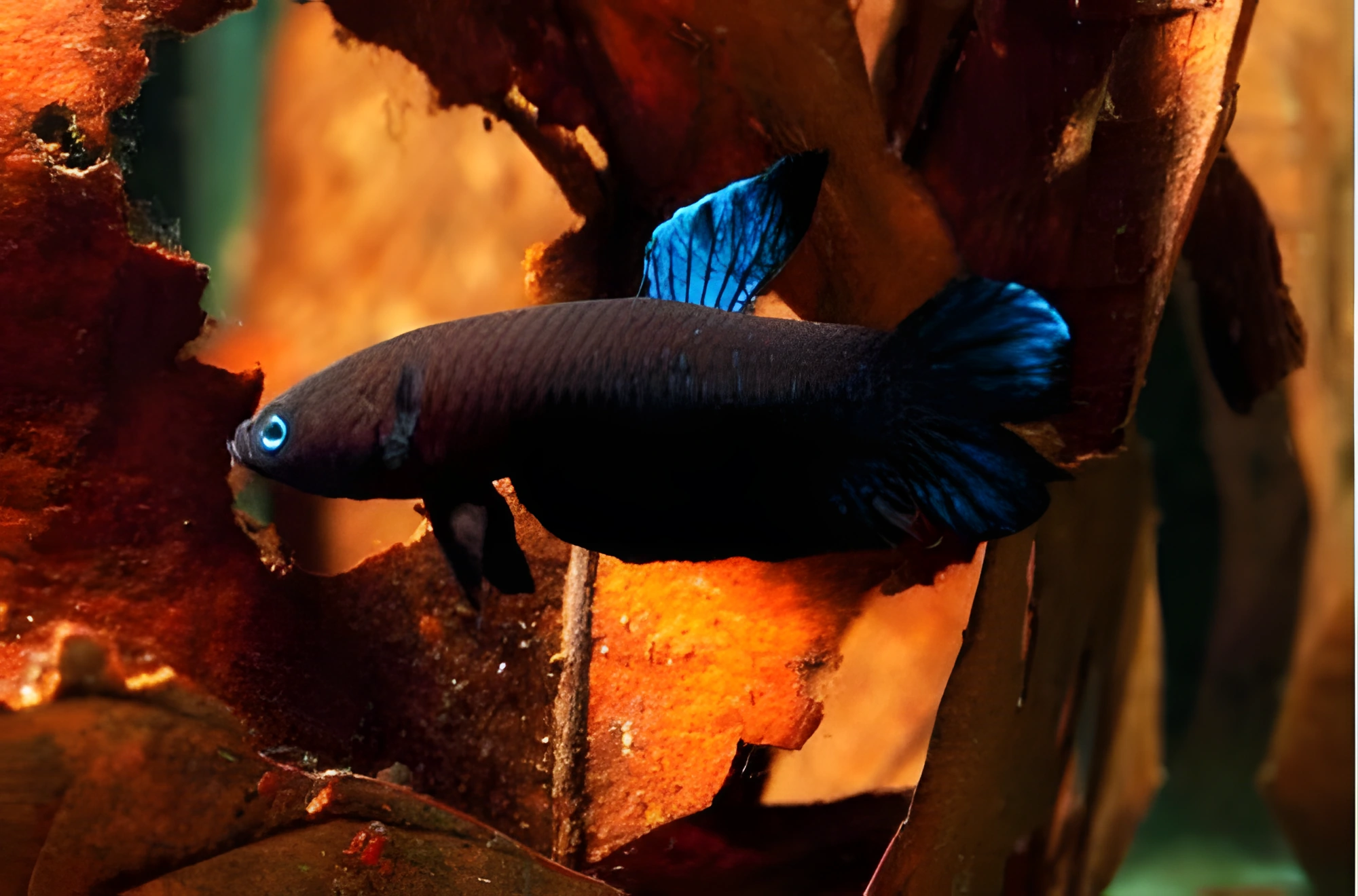
The fish Betta persephone, or Persephone Betta, belonging to the family Osphronemidae, received its scientific name Betta persephone in honor of the ancient Greek goddess Persephone, Queen of the Underworld, which figuratively reflects its dark coloration. Keeping this species requires maintaining extremely low hydrochemical parameters, which can be a challenge for inexperienced aquarists, so it is usually not recommended for beginners.
- Required aquarium volume
- 40 L
- Size in aquarium
- 2.5 – 4 cm
- Temperature
- 22 – 28 °C
- Temperament
- Peaceful (regular)
Parameters
Water pHAcidic (4) – Slightly acidic (6)
Water dHVery soft (1) – Soft (5)
Water salinityno salt (freshwater)
Size in aquarium2.5 – 4 cm
Lifespan3 years
TemperamentPeaceful (regular)
Toward small fishnot a predator
Required aquarium volume40 L
Lightingdimmed
Substrateany, but dark
Water flownone or stagnant (no flow)
FeedingSmall / appropriate size / pieces
CareMixed (solitary / pair / group)
Description
Adults of this species reach a length of approximately 3 centimeters. Their body has an elongated and flexible shape, and their coloration is a deep, almost black hue. The fins and caudal part of the fish are adorned with bright blue iridescence. During the breeding season, differences between the sexes become apparent: the male retains his rich coloration, while the female noticeably lightens, and dark stripes appear on her sides.
Habitat
The natural habitat of this species is in Southeast Asia, on the Malay Peninsula, in the southern province of Johor. Betta persephone prefers shallow peat swamps located in the dense humid tropical forests. These bodies of water are characterized by dim lighting, and their bottom is covered with a thick layer of organic matter, such as leaves and branches. The decomposition of this organic matter gives the water a rich brown hue.
Behavior and Compatibility
These fish are naturally prone to territorial behavior, especially males. However, with a sufficient number of hiding places, such as dense plant thickets, and an adequate aquarium volume, they can coexist peacefully with each other. In small tanks, it is best to keep them individually or in pairs. They are compatible with other peaceful fish species of comparable size.
Care and Maintenance
For one or two fish, an aquarium of 40 liters or more will be optimal. When keeping Betta persephone, it is extremely important to recreate conditions as close as possible to its natural habitat, which applies to both the decor and the chemical composition of the water. These two factors are largely interconnected. Dark substrate, driftwood, and shade-loving aquatic plants, including floating ones, are used as the main decorative elements. The addition of dried leaves from certain tree species is considered very beneficial; after becoming waterlogged, they sink to the bottom. During their decomposition, processes mimicking nature begin in the water: the leaves release tannins, which give the water its characteristic chemical composition and dark hue. More detailed information can be found in the article "Which tree leaves can be used in an aquarium". If breeding is planned, additional decorative elements such as caves, grottoes, or ordinary ceramic pots turned on their side, or sections of PVC pipes, can be installed. All these items can serve as potential spawning sites. The main goal of care is to maintain water parameters (temperature and hydrochemical indicators) within acceptable limits. This requires regular minimal procedures: removing organic waste (food remnants, excrement), and weekly replacing 15–20% of the water volume with fresh water. Special attention should be paid to preliminary water treatment before adding it to the aquarium, as the fish require very acidic and soft water. The correct placement of necessary equipment, primarily the filtration system, also plays an important role.
Diet
In their natural habitat, the diet of Betta persephone consists of small crustaceans and other invertebrates. In a home aquarium, these fish readily accept most common commercial foods. To maintain their health, it is recommended to use specialized foods for fighting fish, which are produced by many manufacturers and contain all the necessary vitamins and trace elements.
Breeding and Reproduction
Under favorable conditions, spawning occurs regularly. When the breeding season begins, the male starts building a bubble nest, using plant fragments and other debris, in a suitable location – this could be the aforementioned hiding places or the underside of a leaf. During construction, the male drives away anyone who might pose a threat to the nest, even the female. Upon completion of construction, courtship begins; by this point, the female usually changes her coloration, becoming less vibrant. Spawning occurs directly next to the nest and is accompanied by a "hugging dance," during which the fish intertwine closely. The female releases eggs one by one, and after fertilization, each egg is placed into the nest. In total, a clutch can contain from 20 to 50 eggs. After spawning is complete, the female swims away, and the male remains to guard the future offspring.
Diseases
Most health problems in fish often arise from unsuitable keeping conditions. Maintaining a stable and comfortable habitat is a key factor for successful keeping. If symptoms of illness appear, the first step is to check the water quality. If deviations are found, it is important to take immediate measures to eliminate them. If the symptoms do not disappear or worsen, medicinal treatment may be required. More detailed information on symptoms and treatment methods can be found in the "Diseases of Aquarium Fish" section.
How to choose
When purchasing Betta persephone, it is important to pay attention to the fish's overall activity and skin condition. A healthy specimen should be active, without visible damage, spots, film, or signs of emaciation. Avoid acquiring fish with clamped fins, rapid breathing, or apathetic behavior, as this may indicate stress or hidden diseases. Given the rarity of the species and specific water parameter requirements, it is recommended to ask the seller about the conditions of keeping in the store and the diet to which the fish are already adapted. Since the species is considered difficult to keep, it is preferable to choose captive-bred individuals, as they adapt more easily to aquarium conditions than wild specimens. During inspection, also ensure that the fish do not show signs of aggression towards each other in the general tank, which may indicate overcrowding or a lack of hiding places in the retail aquarium. Pay special attention to the coloration: in healthy fish, the colors should be vibrant, corresponding to the species characteristics, without paleness or unnatural shades.
Frequently asked questions
The essentials: size, tank volume, water parameters and care
How big does Betta persephone get?
An adult reaches 2.5–4 cm in length. Plan the tank around the maximum size: the fish quickly outgrows a cramped setup.
What size aquarium does Betta persephone need?
The minimum recommended volume is 40 L. A smaller tank speeds up nitrate build-up and raises stress levels.
What water parameters does Betta persephone need?
Temperature 22–28 °C, pH 4–6, hardness 1–5 dGH. Stability matters more than exact values: sudden swings are harder on the fish than a small deviation from the ideal.
How long does Betta persephone live?
Around 3 years when kept properly. Lifespan depends directly on tank volume, water quality and a varied diet.
Is Betta persephone aggressive?
Temperament: peaceful (regular). Keep this in mind when choosing tank mates.
How many Betta persephone should be kept together?
Recommended setup: mixed (solitary / pair / group). Ignoring this is a common cause of stress and disease.
What does Betta persephone eat?
Diet type: small / appropriate size / pieces. Feed small portions that are finished within a couple of minutes — overfeeding does more harm than underfeeding.
What is the scientific name of Betta persephone?
The scientific name of the species is Betta persephone, family Osphronemidae.