Temperature21 – 27 °C
Natural range
- East Kalimantan area
- Borneo area
Labyrinth fishConservation status: Endangered EN
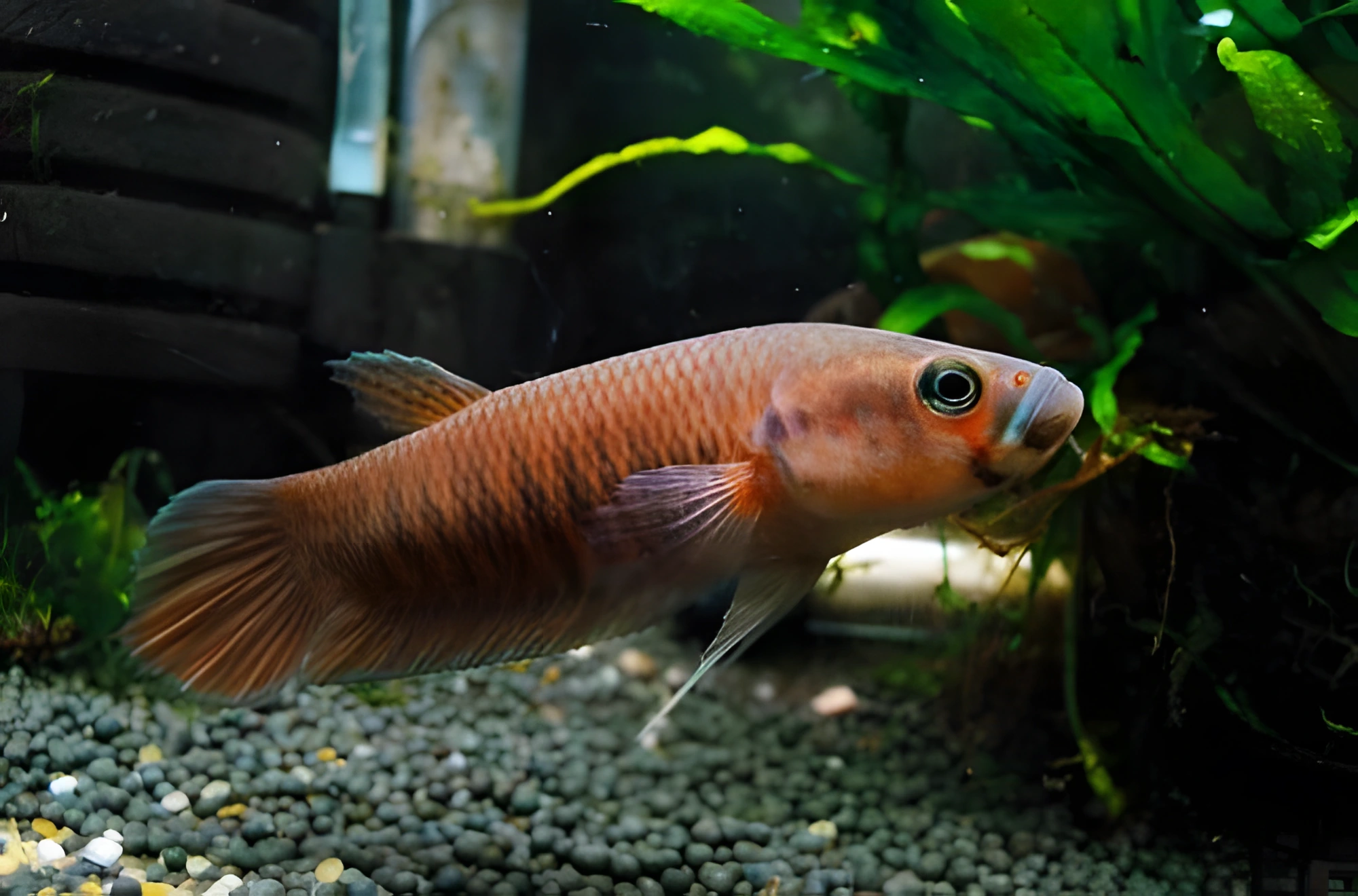
The scientific name Betta patoti is given to the Betta patoti fish, or Patoti Betta, which belongs to the family Osphronemidae. This fish is part of the fighting fish group, which explains its challenging temperament towards its conspecifics. Beginner aquarists should consider some water preparation peculiarities that can cause difficulties. Thus, the species is not recommended for novices.
- Required aquarium volume
- 70 L
- Size in aquarium
- 9 – 10 cm
- Temperature
- 21 – 27 °C
- Temperament
- Semi-peaceful (including aggression during spawning / intraspecific conflicts)
Parameters
Water pHAcidic (4) – Neutral (7)
Water dHVery soft (0) – Medium hardness (10)
Water salinityno salt (freshwater)
Size in aquarium9 – 10 cm
Lifespan4 years
TemperamentSemi-peaceful (including aggression during spawning / intraspecific conflicts)
Toward small fishnot a predator
Required aquarium volume70 L
Lightingdimmed
Substrateany, but dark
Water flownone or stagnant (no flow)
FeedingAny (universal)
CareHarem (1 male and several females)
Description
These fish reach a length of 9–10 cm when adult, possessing an elongated and muscular body. Their coloration can vary from rich black to dark red. Males are generally slightly larger than females and have more developed fins.
Habitat
Its natural habitat is in Southeast Asia, specifically on the Indonesian part of Borneo island, in the river systems of East Kalimantan province. A typical biotope for Betta patoti is a shallow forest stream or a small river. The bottom of such bodies of water is usually densely covered with fallen leaves, branches, and snags. The water acquires a brownish tint due to the high concentration of tannins released during the decomposition of organic vegetation.
Behavior and Compatibility
Intraspecific relationships are characterized by a hierarchy, with competition observed between strong and weaker individuals. Males actively compete with each other for dominant positions and the attention of females. In a small aquarium, this often leads to fierce clashes between them. Therefore, in modest-sized tanks, it is recommended to keep only one male with one or more females. Towards other species, Betta patoti are peaceful. They coexist perfectly with non-aggressive fish of comparable size, provided they can live in similar conditions.
Care and Maintenance
For keeping a pair of these fish, an aquarium of at least 70–80 liters is required. When decorating the aquarium, it is desirable to recreate the conditions characteristic of the natural biotope of this species as much as possible. This includes subdued or diffused lighting, dark substrate, areas with dense aquatic vegetation, and shelters made of submerged snags. Dried leaves from certain trees, pre-soaked and placed on the bottom, will be an excellent addition. They not only serve as natural decor but also help form the characteristic chemical composition of the water, releasing humic acids and tannins as they decompose. More detailed information can be found in the article "What tree leaves can be used in an aquarium." The long-term successful keeping of Patoti Betta directly depends on maintaining stable water parameters within the permissible range of temperatures and hydrochemical values (low pH and dGH). Biological balance in a closed aquarium ecosystem is ensured by regular maintenance procedures, such as partial water changes and waste removal, as well as the uninterrupted operation of installed equipment.
Diet
Betta patoti is a carnivorous species that naturally feeds on small insects and other zooplankton. In a home aquarium, they can be accustomed to various alternative food sources. The daily diet can consist of common aquarium dry, frozen, and live foods. Specialized Betta fish foods offered by many manufacturers will be a good choice.
Breeding and Reproduction
Betta patoti, like some other fighting fish, brood fertilized eggs in their mouths until the fry emerge. This breeding strategy serves as a reliable way to protect offspring during the most vulnerable stage of their development. Males are responsible for brooding: they collect the eggs in their oral cavity and retreat to a quiet place in the aquarium or a shelter. It is important that the male is not disturbed, for example, by the presence of other males or overly active tank mates, otherwise he may involuntarily release the eggs prematurely or accidentally swallow them. The incubation period is 12–17 days, after which fully formed fry hatch. It is worth noting that the male forms a temporary pair only with a female who has been in the same aquarium with him for a long time or grew up with him. If you simply introduce opposite-sex individuals acquired from different pet stores or various sellers, it is highly likely that a pair will not form. Moreover, in such a case, the male may treat his new companion quite hostilely. Thus, successful breeding is only possible within an established Betta group.
Diseases
Most health problems in fish often arise from unsuitable keeping conditions. Maintaining a stable and comfortable habitat is a key factor for successful keeping. If symptoms of illness appear, the first step is to check the water quality. If deviations are found, it is important to take immediate measures to eliminate them. If the symptoms do not disappear or worsen, medicinal treatment may be required. More detailed information on symptoms and treatment methods can be found in the "Diseases of Aquarium Fish" section.
How to choose
When purchasing Betta patoti, it is important to assess the fish's overall condition: it should be active, without visible damage, ulcers, or white film on the body and fins. Avoid individuals with sunken bellies or signs of emaciation, as this species is sensitive to stress during transportation and changes in conditions. In the store, fish are often timid and may hide, so it's worth observing them for a few minutes: healthy individuals show curiosity and react to movement.
Since the species is rare and expensive, it is recommended to:
- clarify with the seller the conditions of keeping and the diet to which the fish are accustomed;
- check for signs of stress, such as apathetic hovering near the surface or, conversely, chaotic movements;
- if possible, choose young individuals, as they adapt more easily to new water parameters in the aquarium.
Frequently asked questions
The essentials: size, tank volume, water parameters and care
How big does Betta patoti get?
An adult reaches 9–10 cm in length. Plan the tank around the maximum size: the fish quickly outgrows a cramped setup.
What size aquarium does Betta patoti need?
The minimum recommended volume is 70 L. A smaller tank speeds up nitrate build-up and raises stress levels.
What water parameters does Betta patoti need?
Temperature 21–27 °C, pH 4–7, hardness 0–10 dGH. Stability matters more than exact values: sudden swings are harder on the fish than a small deviation from the ideal.
How long does Betta patoti live?
Around 4 years when kept properly. Lifespan depends directly on tank volume, water quality and a varied diet.
Is Betta patoti aggressive?
Temperament: semi-peaceful (including aggression during spawning / intraspecific conflicts). Keep this in mind when choosing tank mates.
How many Betta patoti should be kept together?
Recommended setup: harem (1 male and several females). Ignoring this is a common cause of stress and disease.
What does Betta patoti eat?
Diet type: any (universal). Feed small portions that are finished within a couple of minutes — overfeeding does more harm than underfeeding.
What is the scientific name of Betta patoti?
The scientific name of the species is Betta patoti, family Osphronemidae.