Temperature21 – 25 °C
Natural range
- Sabah area
- East Kalimantan area
- Borneo area
- Malaysia area
Labyrinth fishConservation status: Least concern LC
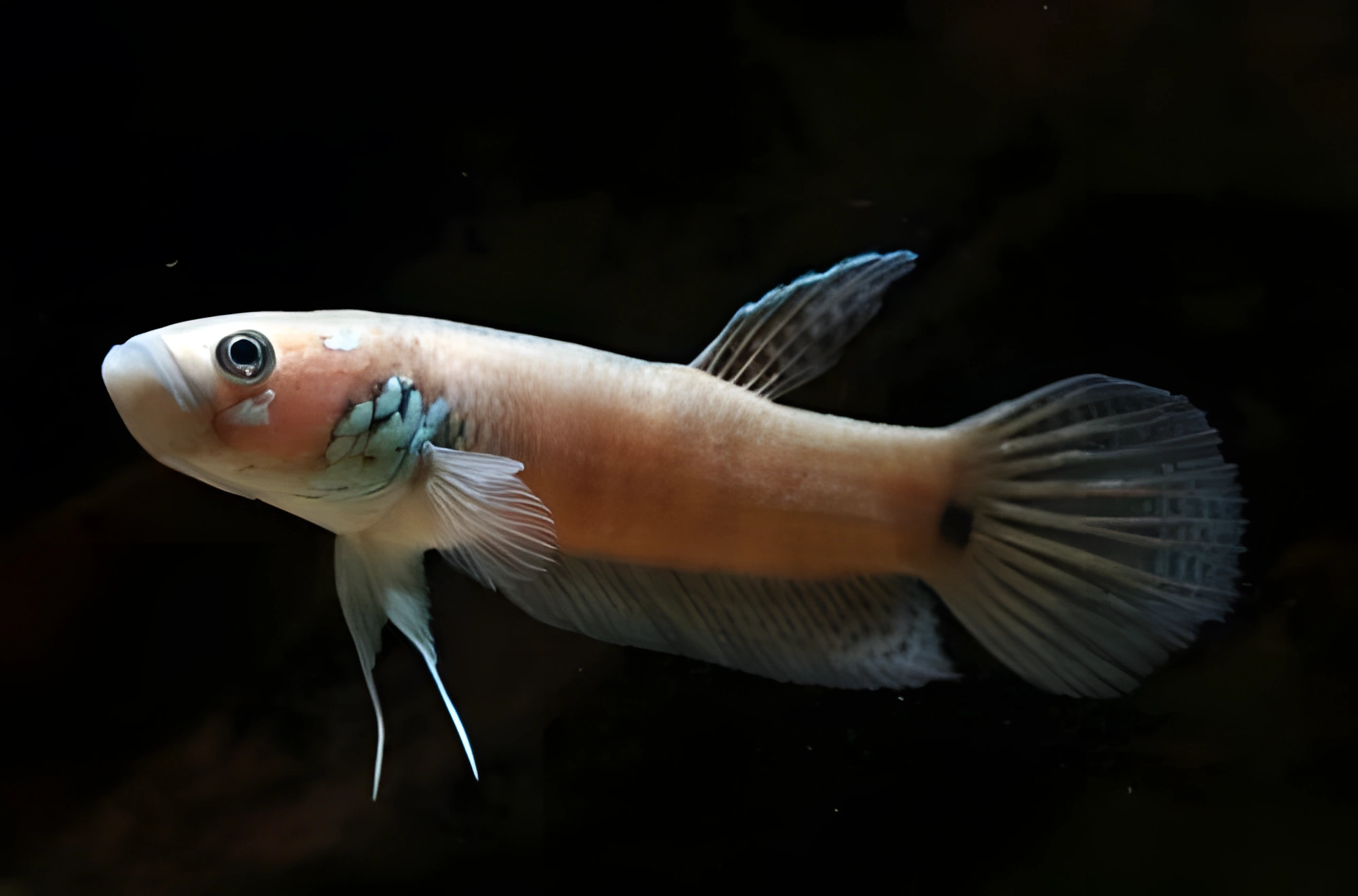
Betta ocellata, also known as the Ocellated Betta or Ocellata Betta, belongs to the family Osphronemidae. This fish has not gained widespread popularity among amateur aquarists because, despite its ease of keeping and breeding, it has dull coloration and complex intraspecific behavior.
- Required aquarium volume
- 70 L
- Size in aquarium
- 8 – 9 cm
- Temperature
- 21 – 25 °C
- Temperament
- Peaceful (regular)
Parameters
Water pHSlightly acidic (5.5) – Neutral (7.5)
Water dHVery soft (1) – Medium hardness (10)
Water salinityno salt (freshwater)
Size in aquarium8 – 9 cm
Lifespan3 years
TemperamentPeaceful (regular)
Toward small fishnot a predator
Required aquarium volume70 L
Lightingdimmed
Substrateany, but dark
Water flownone or stagnant (no flow)
FeedingAny (universal)
CarePair (male/female)
Description
Adults reach a length of 8 to 9 cm. There are differences between males and females: males have wider heads, more elongated fins, and more turquoise hues in their coloration. Overall, these fish are predominantly gray and are not particularly vibrant.
Habitat
The origin of this fish is associated with Southeast Asia, specifically the island of Borneo. Its natural range is limited to the territories of the Malaysian state of Sabah, as well as the northern part of East Kalimantan. The species is found in various biotopes, from fast-flowing streams descending from hills to swampy forest areas hidden in dense jungles.
Behavior and Compatibility
Males have a pronounced temperament and often conflict with each other, especially in a cramped aquarium. Clashes for dominant hierarchical positions are common. A weaker male, having lost a fight, may be subjected to constant attacks if he does not find shelter from the alpha male. A similar fate awaits females if they were acquired separately from a male or kept in isolation for a long time. In such cases, they may also be perceived as potential rivals. An ideal community includes a group of one male and several females that have grown up together from a young age, as well as other non-aggressive fish of comparable size.
Care and Maintenance
For a pair of these fish, an aquarium of 70–80 liters will be optimal. Caring for Betta ocellata is quite simple if several important conditions are met: maintaining suitable water chemistry, avoiding strong currents, providing a lid to preserve warm and humid air at the surface, organizing subdued lighting or using floating plants for shading, and creating hiding places. Both natural elements (driftwood, plants) and decorative items are suitable as shelters. The long-term well-being of aquarium inhabitants directly depends on the stable operation of equipment, especially the filtration system, as well as regular maintenance: weekly partial water changes and timely removal of organic waste, such as food remnants and excrement.
Diet
In natural conditions, the Ocellated Betta's diet consists of small insects, invertebrates, and zooplankton. In a home aquarium, the fish successfully adapt to various alternative products. Their daily menu can include widely used dry, frozen, and live foods common in aquaristics.
Breeding and Reproduction
The breeding process does not present major difficulties, provided that the fish are kept in a suitable aquatic environment where acceptable temperature and hydrochemical parameters are maintained. It is important that the Ocellated Bettas belong to the same group. It is not recommended to pair a male and female randomly selected, for example, from different pet stores. With the onset of the breeding season, mutual courtship begins, after which a pair forms. Spawning is accompanied by close “embraces” when the fish entwine around each other. After this, the male collects all fertilized eggs into his mouth and incubates them for the entire incubation period, which lasts from 12 to 17 days. The fry hatch fully formed and are immediately ready to accept specialized micro-food intended for juvenile aquarium fish.
Diseases
Most health problems in fish often arise from unsuitable keeping conditions. Maintaining a stable and comfortable habitat is a key factor for successful keeping. If symptoms of illness appear, the first step is to check the water quality. If deviations are found, it is important to take immediate measures to eliminate them. If the symptoms do not disappear or worsen, medicinal treatment may be required. More detailed information on symptoms and treatment methods can be found in the "Diseases of Aquarium Fish" section.
How to choose
When choosing an Ocellata, pay attention to the fish's overall activity: healthy individuals should show curiosity and not constantly hide in corners. Inspect the body for the absence of damage, sores, white film, or signs of emaciation, as fish can be stressed during transport. Avoid specimens with an unnaturally bloated belly or, conversely, sunken sides.
- Check the condition of the fins: they should be intact, without signs of splitting or erosion.
- Observe their behavior: aggressive clashes between individuals in the store often indicate overcrowding, which can lead to injuries.
- Ask the seller about their keeping conditions and diet to ensure a smooth transition for the fish to the new aquarium environment.
Frequently asked questions
The essentials: size, tank volume, water parameters and care
How big does Betta ocellata get?
An adult reaches 8–9 cm in length. Plan the tank around the maximum size: the fish quickly outgrows a cramped setup.
What size aquarium does Betta ocellata need?
The minimum recommended volume is 70 L. A smaller tank speeds up nitrate build-up and raises stress levels.
What water parameters does Betta ocellata need?
Temperature 21–25 °C, pH 5.5–7.5, hardness 1–10 dGH. Stability matters more than exact values: sudden swings are harder on the fish than a small deviation from the ideal.
How long does Betta ocellata live?
Around 3 years when kept properly. Lifespan depends directly on tank volume, water quality and a varied diet.
Is Betta ocellata aggressive?
Temperament: peaceful (regular). Keep this in mind when choosing tank mates.
How many Betta ocellata should be kept together?
Recommended setup: pair (male/female). Ignoring this is a common cause of stress and disease.
What does Betta ocellata eat?
Diet type: any (universal). Feed small portions that are finished within a couple of minutes — overfeeding does more harm than underfeeding.
What is the scientific name of Betta ocellata?
The scientific name of the species is Betta ocellata, family Osphronemidae.