Temperature22 – 28 °C
Natural range
- Borneo area
- West Kalimantan area
Labyrinth fishConservation status: Vulnerable VU
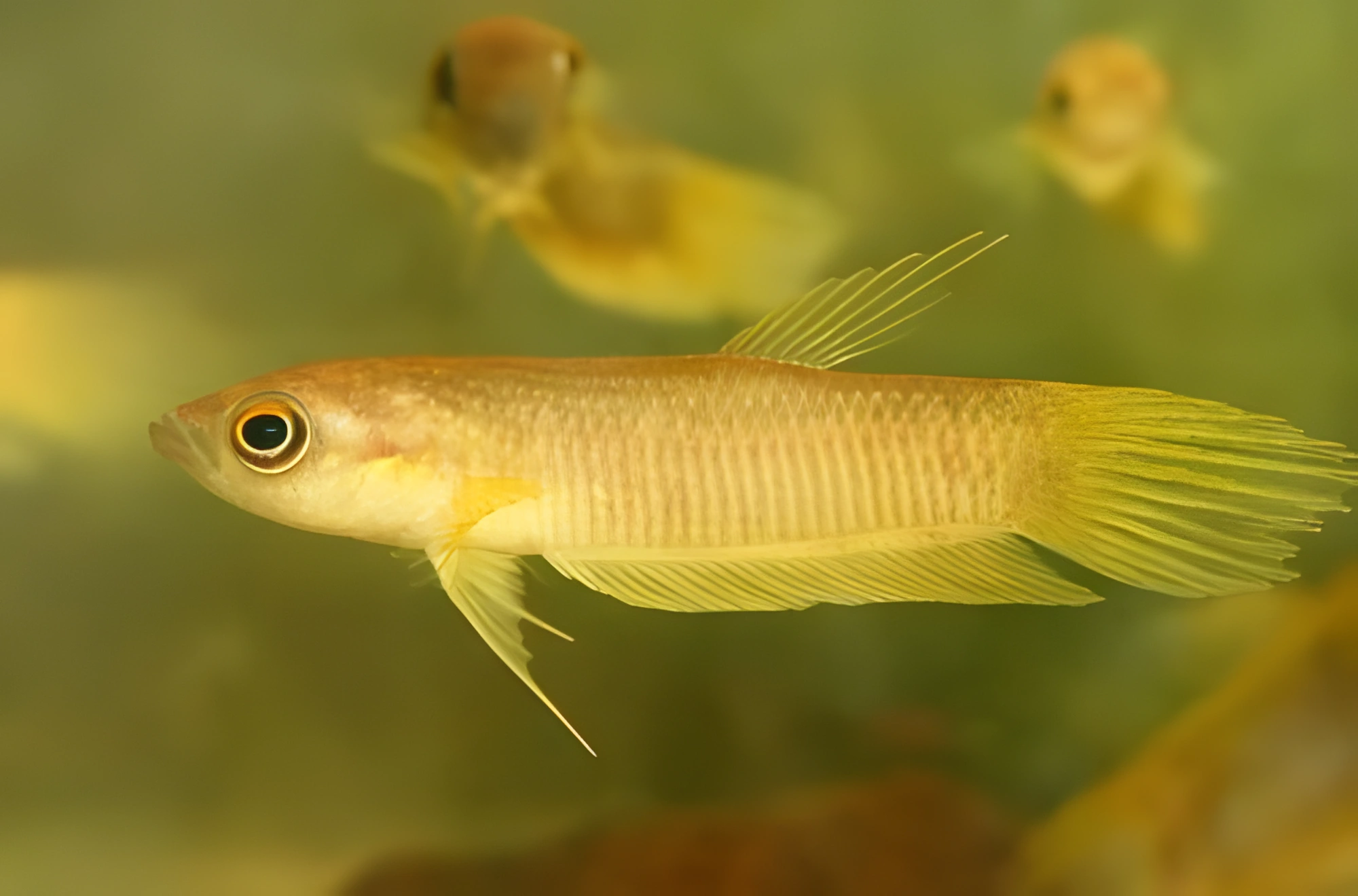
Betta Midas, or Midas Betta (scientific name Betta midas), belongs to the Osphronemidae family. This fish owes its name to its remarkable golden coloration, which refers to the myth of the ancient Greek king Midas, who could turn everything he touched into gold. Although there are certain requirements for keeping this species, experienced aquarists usually cope without much difficulty, which cannot be said for beginners. Belonging to the fighting fish group, Betta Midas demonstrates compatibility with many other species.
- Required aquarium volume
- 72 L
- Size in aquarium
- 6 – 6.6 cm
- Temperature
- 22 – 28 °C
- Temperament
- Territorial (often aggressive)
Parameters
Water pHAcidic (3.5) – Neutral (6.5)
Water dHVery soft (1) – Soft (5)
Water salinityno salt (freshwater)
Size in aquarium6 – 6.6 cm
Lifespan3 years
TemperamentTerritorial (often aggressive)
Toward small fishnot a predator
Required aquarium volume72 L
Lightingdimmed
Substrateany (no restrictions)
Water flowweak
FeedingSinking (meat / protein)
CarePair (male/female)
Description
Adults reach approximately 6 cm in length. As noted earlier, the fish are distinguished by their yellow or golden coloration. Males appear slimmer compared to females, have a larger head, and elongated fins.
Habitat
Its habitat covers the Indonesian part of Borneo Island, located in Southeast Asia. This species inhabits the lower Kapuas River basin, located in the province of West Kalimantan. The typical environment for these fish is peat swamps located among humid tropical forests. The water here acquires a rich brown hue due to the high concentration of tannins released during the decomposition of fallen plant materials.
Behavior and Compatibility
Despite the fact that Betta Midas belongs to the fighting fish, its temperament is quite peaceful, both towards its relatives and other species. There may be some competition between males for a place in the intraspecific hierarchy and for the attention of females, but this rivalry is usually limited to a "show of strength" and does not escalate into physical confrontations.
Care and Maintenance
For keeping a pair or a small group of these fish, the optimal aquarium volume starts from 70–80 liters. The ideal setup is considered to be one that maximally imitates natural habitat conditions, i.e., tropical swamps. Among an abundance of natural snags and fallen leaves from certain trees, against a dark substrate, Betta Midas will look most harmonious. Substances released from the plant material give the water a characteristic dark tint, and suspended particles may also form. Lighting should be subdued. However, it is worth noting that a biotope recreated in this way requires complex maintenance, and not all aquarium equipment will function effectively in such an environment. For example, filters can quickly become clogged. In addition, such an appearance of the aquarium may not appeal to all aquarists. Bettas can also live in a different environment, especially those that have been kept for several generations in aquariums with clean, clear water, provided that the appropriate hydrochemical composition is maintained and there are sufficient hiding places.
Diet
In their natural habitat, Betta midas primarily feed on small insects and other aquatic invertebrates. Acclimated fish quickly adapt to new foods once they recognize them as edible. Individuals raised in captivity are already accustomed to common aquarium dry, frozen, and live foods. Specialized products for Bettas, produced by many manufacturers, will be an optimal choice.
Breeding and Reproduction
Spawning in this species is not uncommon under favorable conditions and a balanced diet. With the onset of the breeding season, the dominant male and one of the females form a temporary pair. After prolonged courtship, which includes “embraces” where the fish press tightly against each other and entwine, spawning occurs. The male collects all fertilized eggs and holds them in his mouth throughout the incubation period, which lasts 15–20 days. This method of brooding, characteristic of many fish in the genus Betta, significantly increases the survival rate of fry during the early and most vulnerable stages of development. Once the fry begin to swim freely, the parents lose interest in them, but they may continue to stay together. Adult fish do not show a tendency towards cannibalism towards their young.
Diseases
Most health problems in fish often arise from unsuitable keeping conditions. Maintaining a stable and comfortable habitat is a key factor for successful keeping. If symptoms of illness appear, the first step is to check the water quality. If deviations are found, it is important to take immediate measures to eliminate them. If the symptoms do not disappear or worsen, medicinal treatment may be required. More detailed information on symptoms and treatment methods can be found in the "Diseases of Aquarium Fish" section.
How to choose
When choosing Betta midas, it is important to assess the fish's overall condition in the store. A healthy individual should be active, show interest in its surroundings, and have no visible injuries, ulcers, or white film on its body and fins. Avoid specimens that constantly lie on the bottom, breathe heavily, or have an unnaturally bloated abdomen, as this may indicate infectious diseases or problems with internal organs.
Since the species is rarely widely available and often confused with other members of the group, ensure correct identification by characteristic features: a golden sheen on the gill covers and scales, and a black stripe running through the eye. In the store, fish may appear pale due to stress, but they should quickly regain their coloration after adaptation. It is recommended to purchase individuals from trusted suppliers, as the species is sensitive to water parameters and requires quarantine before being placed in the main aquarium.
Frequently asked questions
The essentials: size, tank volume, water parameters and care
How big does Betta Midas get?
An adult reaches 6–6.6 cm in length. Plan the tank around the maximum size: the fish quickly outgrows a cramped setup.
What size aquarium does Betta Midas need?
The minimum recommended volume is 72 L. A smaller tank speeds up nitrate build-up and raises stress levels.
What water parameters does Betta Midas need?
Temperature 22–28 °C, pH 3.5–6.5, hardness 1–5 dGH. Stability matters more than exact values: sudden swings are harder on the fish than a small deviation from the ideal.
How long does Betta Midas live?
Around 3 years when kept properly. Lifespan depends directly on tank volume, water quality and a varied diet.
Is Betta Midas aggressive?
Temperament: territorial (often aggressive). Keep this in mind when choosing tank mates.
How many Betta Midas should be kept together?
Recommended setup: pair (male/female). Ignoring this is a common cause of stress and disease.
What does Betta Midas eat?
Diet type: sinking (meat / protein). Feed small portions that are finished within a couple of minutes — overfeeding does more harm than underfeeding.
What is the scientific name of Betta Midas?
The scientific name of the species is Betta midas, family Osphronemidae.