Temperature22 – 27 °C
Natural range
- West Kalimantan area
- Mandor area
Labyrinth fishConservation status: Endangered EN
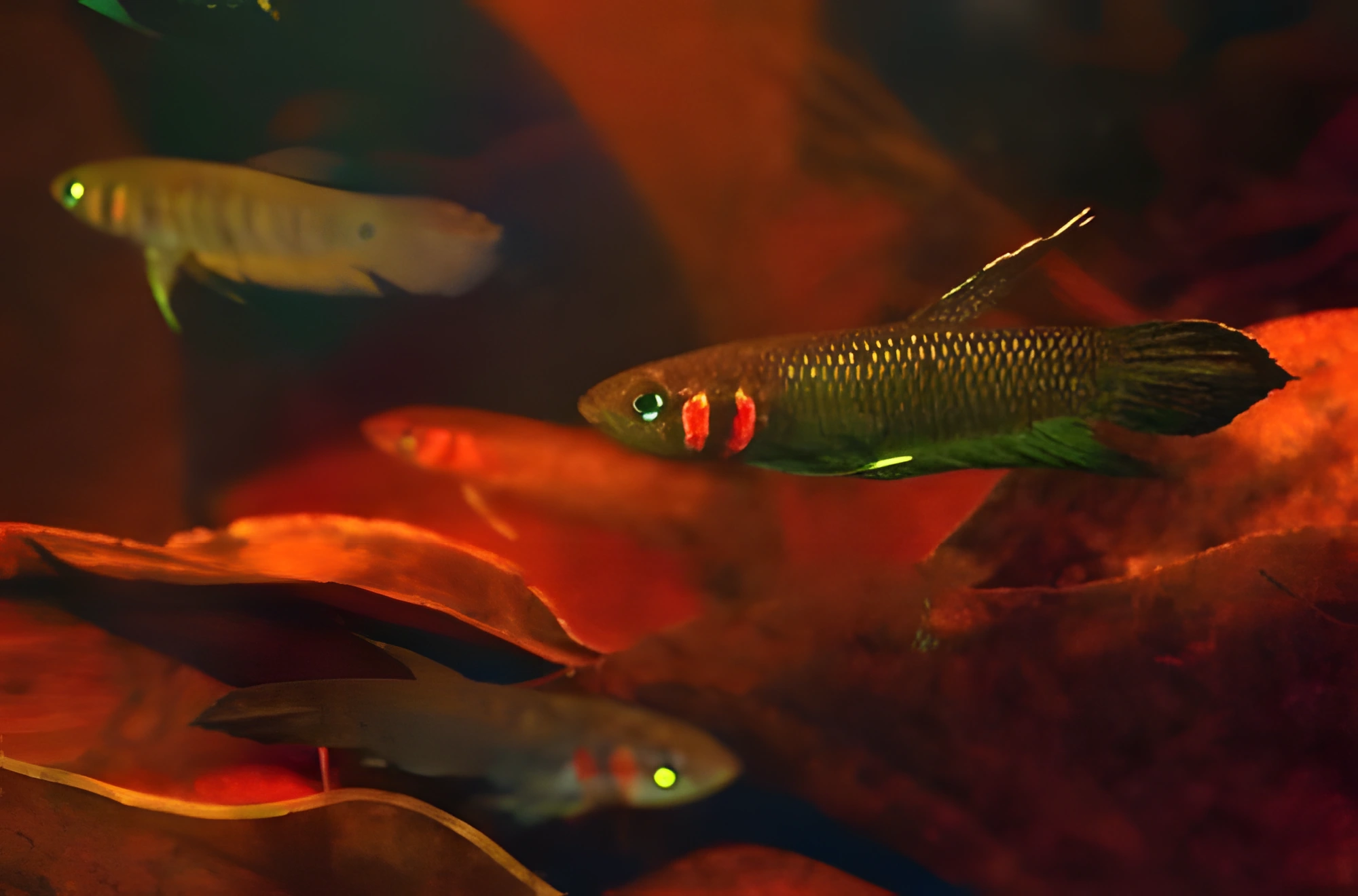
The Betta mandor fish, officially named Betta mandor by scientists, belongs to the family Osphronemidae. Before this species was scientifically described in 2006, it was nicknamed "Ninja Betta." This name was given due to its dark coloration and the presence of two bright stripes on its head, which resembled the eye slits on the traditional black attire of these Asian warriors. The similarity is not limited to appearance: these fish are known for their complex behavior. Males are known to actively compete for territory and the attention of females, and sometimes even attack other species with similar coloration.
- Required aquarium volume
- 50 L
- Size in aquarium
- 4 – 5 cm
- Temperature
- 22 – 27 °C
- Temperament
- Semi-peaceful (including aggression during spawning / intraspecific conflicts)
Parameters
Water pHAcidic (4) – Slightly acidic (6)
Water dHVery soft (1) – Soft (5)
Water salinityno salt (freshwater)
Size in aquarium4 – 5 cm
Lifespan5 years
TemperamentSemi-peaceful (including aggression during spawning / intraspecific conflicts)
Toward small fishnot a predator
Required aquarium volume50 L
Lightingdimmed
Substrateany, but dark
Water flownone or stagnant (no flow)
FeedingAny (universal)
CarePair (male/female)
Description
This species is a close relative of Betta foerschi, sharing many features in its body pattern. Adult specimens reach a length of 5 to 6 cm. The fish's body appears elongated and slender. Males are generally larger than females, their unpaired fins are more developed and have a rich dark coloration, and the characteristic orange stripes are located just behind the head. Females, on the other hand, appear lighter, with their coloration predominantly gray.
Habitat
The natural habitat of this species extends across Southeast Asia, specifically the Indonesian part of Borneo island, in the West Kalimantan province. The first specimens for scientific description were collected in 2006 in the Kapuas River basin, between two settlements – Mandor and Anjungan. Betta mandor prefers to inhabit shallow streams and small rivers that flow through dense tropical forests. The depth of such bodies of water is sometimes only a few centimeters, and the dim light penetrating through the tree canopy does not hinder the active growth of riparian and aquatic vegetation. The bottom of these bodies of water is often covered with fallen leaves, twigs, and grass. Their decomposition process leads to the release of humic acids and other organic substances, which give the water its characteristic brown tint.
Behavior and Compatibility
These fish belong to the fighting fish group, which immediately indicates their challenging temperament. However, information about the behavior of Betta mandor is quite contradictory. Some sources claim that males show extreme intolerance towards rivals and other related species with similar coloration. Moreover, an alpha male may even harass individual females. At the same time, other authors note that conflicts, though not uncommon, are mostly demonstrative and rarely lead to injuries. Based on this, it can be concluded that in a small aquarium, it is recommended to keep one male in the company of one or several females, as well as with non-aggressive fish species that do not resemble males. In more spacious aquariums, the restrictions are not as strict.
Care and Maintenance
For a pair of fish, the optimal aquarium volume starts from 40 liters. The decorative arrangement can be anything and depends entirely on the aquarist's taste and capabilities. However, if conditions mimicking the natural environment are created, Betta mandor will look most harmonious. It is recommended to use dim lighting, place driftwood and shade-loving plants against a dark substrate. The bottom can be covered with a layer of certain tree leaves. They serve not only as a decorative element but also release tannins, such as humic acids, which is characteristic of the natural habitat of these fish. More detailed information can be found in the article "What Tree Leaves Can Be Used in an Aquarium." The main condition for successful keeping is maintaining stable water parameters within acceptable temperature and hydrochemical limits. The fish prefer warm, slightly acidic, and very soft water, which should be changed weekly. For biological balance, the uninterrupted operation of the installed equipment and regular removal of organic waste, such as food remnants and excrement, are important. It is important to remember that Betta cannot tolerate strong or even moderate currents and needs a warm, humid layer of air at the water's surface. The first problem is solved by correctly choosing a filter that regulates water movement, and the second by installing a lid on the aquarium.
Diet
This species is omnivorous. They readily accept most common aquarium foods, whether dry, frozen, or live. The latter include Artemia, Daphnia, bloodworms, as well as Drosophila flies, mosquito larvae, and other small insects. The market offers many specialized products from various manufacturers, developed specifically for Betta fish; these can well form the basis of their diet.
Breeding and Reproduction
In natural conditions, these fish live in a rather challenging environment that is subject to seasonal changes, where some forest streams may dry up or turn into mud. Through evolution, they have developed a unique mechanism for protecting their offspring during the most vulnerable period – the egg stage. The male carries the fertilized eggs in his mouth; they enter there immediately after spawning. After 8–14 days, fully formed fry emerge. Successful breeding requires only sexually mature male and female, as well as a favorable environment and quality nutritious feeding. Instincts will take care of everything else.
Diseases
Most health problems in fish often arise from unsuitable keeping conditions. Maintaining a stable and comfortable habitat is a key factor for successful keeping. If symptoms of illness appear, the first step is to check the water quality. If deviations are found, it is important to take immediate measures to eliminate them. If the symptoms do not disappear or worsen, medicinal treatment may be required. More detailed information on symptoms and treatment methods can be found in the "Diseases of Aquarium Fish" section.
How to choose
When purchasing Betta mandor, it is important to choose active individuals with clean, undamaged fins. Avoid fish with signs of emaciation, sunken bellies, or film on their bodies, as this species is sensitive to transport and keeping conditions. It is recommended to acquire fish from reputable breeders specializing in wild species to guarantee genetic purity and the absence of parasites.
- pay attention to behavior: healthy fish should be curious, not sluggish or constantly hiding
- ask the seller what type of food the individual is accustomed to, as wild species can be selective eaters
- check the integrity of the scales and the absence of unnatural spots, which may indicate bacterial infections
Frequently asked questions
The essentials: size, tank volume, water parameters and care
How big does Betta mandor get?
An adult reaches 4–5 cm in length. Plan the tank around the maximum size: the fish quickly outgrows a cramped setup.
What size aquarium does Betta mandor need?
The minimum recommended volume is 50 L. A smaller tank speeds up nitrate build-up and raises stress levels.
What water parameters does Betta mandor need?
Temperature 22–27 °C, pH 4–6, hardness 1–5 dGH. Stability matters more than exact values: sudden swings are harder on the fish than a small deviation from the ideal.
How long does Betta mandor live?
Around 5 years when kept properly. Lifespan depends directly on tank volume, water quality and a varied diet.
Is Betta mandor aggressive?
Temperament: semi-peaceful (including aggression during spawning / intraspecific conflicts). Keep this in mind when choosing tank mates.
How many Betta mandor should be kept together?
Recommended setup: pair (male/female). Ignoring this is a common cause of stress and disease.
What does Betta mandor eat?
Diet type: any (universal). Feed small portions that are finished within a couple of minutes — overfeeding does more harm than underfeeding.
What is the scientific name of Betta mandor?
The scientific name of the species is Betta mandor, family Osphronemidae.