Temperature22 – 27 °C
Natural range
- West Kalimantan area
- Borneo area
Labyrinth fishConservation status: Vulnerable VU
The scientific name Betta lehi belongs to the family Osphronemidae, named in honor of zoologist Charles Leh from the Sarawak Museum in Borneo. This peaceful fish, also known as Leh's Betta, coexists well with other species of similar size. Experienced aquarists will find its keeping not too difficult, but beginners may need to pay special attention to maintaining stable water parameters.
- Required aquarium volume
- 50 L
- Size in aquarium
- 6 cm
- Temperature
- 22 – 27 °C
- Temperament
- Peaceful (regular)
Parameters
Water pHAcidic (4) – Neutral (7)
Water dHVery soft (1) – Soft (5)
Water salinityno salt (freshwater)
Size in aquarium6 cm
Lifespan3 years
TemperamentPeaceful (regular)
Toward small fishnot a predator
Required aquarium volume50 L
Lightingdimmed
Substrateany, but dark
Water flownone or stagnant (no flow)
FeedingAny (universal)
CareMixed (solitary / pair / group)
Description
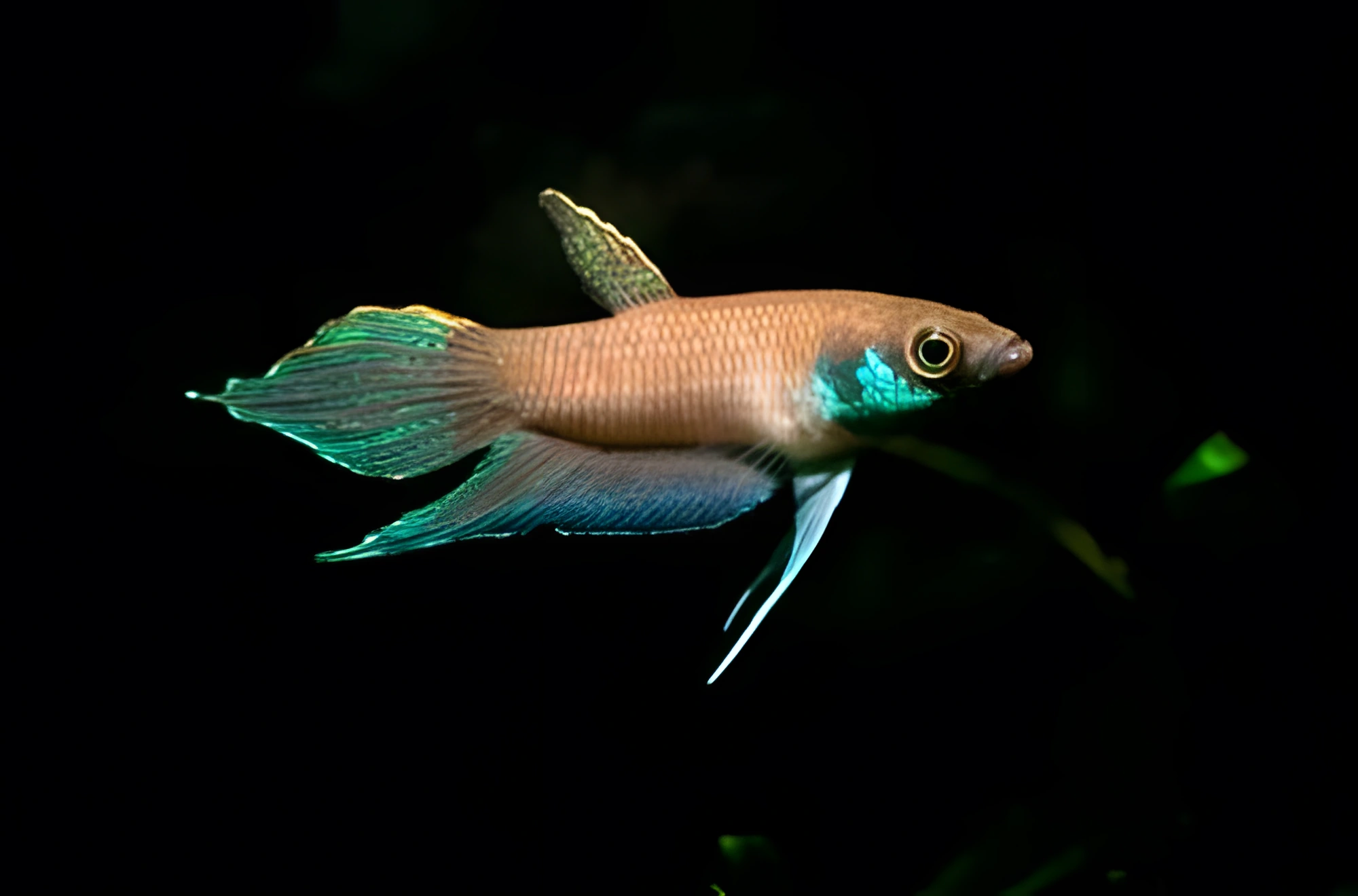
Adults of this fish reach a length of up to 6 cm. Males differ from females not only by being somewhat larger but also by a more pronounced turquoise pigment on the head area and fins. The main body coloration varies from beige to light gray tones.
Habitat
Its natural habitat is Southeast Asia, specifically the island of Borneo. Betta lehi is endemic to a specific area in the west of the Indonesian province of West Kalimantan, where it is found in the lower Kapuas River basin. It inhabits peat swamps, as well as associated streams and small rivers flowing through dense tropical forests. Such biotopes usually consist of shallow areas where sunlight barely penetrates. Shade-loving plants, mosses, and ferns grow along the banks of these waters. The bottom is covered with a thick layer of fallen leaves, branches, and other plant debris. The water acquires a rich brown hue due to the high concentration of humic acids and other products of organic decomposition.
Behavior and Compatibility
Although Leh's Bettas belong to the group of fighting fish, they possess a very peaceful disposition. Rivalry between males for the attention of females is more of a display and rarely leads to serious clashes. These fish are compatible with many other aquarium inhabitants that can live in similar conditions. However, it is advisable to avoid overly large or aggressive tank mates that might intimidate the Betta and displace it from its usual environment.
Care and Maintenance
For keeping a single pair of fish, the minimum aquarium volume is 50 liters. Although Betta lehi does not have strict requirements for decor, it is desirable to recreate the atmosphere of tropical swamps in its habitat, reminiscent of its natural environment. Various snags, dense plant thickets, and dark substrate are excellent choices. Dimmed lighting will help bring out the turquoise hues in the fish's coloration. Leaves from certain trees will not only decorate the aquarium but also help impart water composition characteristic of natural bodies of water, and serve as a valuable source of secondary nutrition, promoting the development of microorganism colonies, such as paramecia (more detailed information is available in the article "Which tree leaves can be used in an aquarium"). For successful long-term keeping, water quality plays a key role. This means maintaining a stable aquatic environment within acceptable temperature and hydrochemical parameters, with low levels of organic pollution (food remnants, excrement). Maintaining a healthy biological system is entirely dependent on regular aquarium maintenance procedures, including weekly partial water changes, waste removal, and the uninterrupted operation of all equipment, where filtration is paramount. When choosing a filter, preference should be given to models that do not create excessive water movement.
Diet
This species is omnivorous, and even recently caught specimens successfully adapt to a variety of foods. The daily diet can include dry foods such as flakes or pellets. Specialized Betta fish foods offered by many manufacturers will be an excellent choice. To enrich the diet, live or frozen daphnia, Artemia, bloodworms, Drosophila flies, mosquito larvae, and other small insects can be used.
Breeding and Reproduction
These fish belong to the few species that care for their offspring. During evolution, Leh's Bettas have developed a unique adaptation to changing environmental conditions: they mouthbrood their eggs instead of laying them on the bottom or among plants. During the breeding season, the male and female form a pair, and after prolonged courtship, spawning begins, accompanied by a peculiar "embrace dance." All fertilized eggs immediately go into the male's mouth, where they remain for 7 to 12 days, after which fully formed fry emerge. Unlike some other species, the parents do not pose a threat to their offspring. If spawning occurred in a community tank, the fry should be moved to a separate tank.
Diseases
Most health problems in fish often arise from unsuitable keeping conditions. Maintaining a stable and comfortable habitat is a key factor for successful keeping. If symptoms of illness appear, the first step is to check the water quality. If deviations are found, it is important to take immediate measures to eliminate them. If the symptoms do not disappear or worsen, medicinal treatment may be required. More detailed information on symptoms and treatment methods can be found in the "Diseases of Aquarium Fish" section.
How to choose
When selecting individuals, attention should be paid to the cleanliness of the skin and fins: the absence of white spots, ulcers, unnatural plaque, or signs of fin edge erosion is a mandatory condition. A healthy fish should be active, have clear eyes, and be of normal plumpness, without signs of emaciation or a bloated abdomen. Avoid purchasing fish that appear sluggish, constantly hide, or stay at the water's surface, frequently gasping for air.
Since the species is endemic and requires specific water parameters, it is recommended to inquire with the seller about the keeping conditions in the store's aquarium. It is important to ensure that the fish receive a varied diet and do not show signs of stress caused by recent capture or transportation. It is advisable to purchase individuals that have undergone quarantine, as adaptation to new conditions in a home aquarium can be sensitive to sharp changes in water chemistry.
Frequently asked questions
The essentials: size, tank volume, water parameters and care
How big does Betta lehi get?
An adult reaches 6 cm in length. Plan the tank around the maximum size: the fish quickly outgrows a cramped setup.
What size aquarium does Betta lehi need?
The minimum recommended volume is 50 L. A smaller tank speeds up nitrate build-up and raises stress levels.
What water parameters does Betta lehi need?
Temperature 22–27 °C, pH 4–7, hardness 1–5 dGH. Stability matters more than exact values: sudden swings are harder on the fish than a small deviation from the ideal.
How long does Betta lehi live?
Around 3 years when kept properly. Lifespan depends directly on tank volume, water quality and a varied diet.
Is Betta lehi aggressive?
Temperament: peaceful (regular). Keep this in mind when choosing tank mates.
How many Betta lehi should be kept together?
Recommended setup: mixed (solitary / pair / group). Ignoring this is a common cause of stress and disease.
What does Betta lehi eat?
Diet type: any (universal). Feed small portions that are finished within a couple of minutes — overfeeding does more harm than underfeeding.
What is the scientific name of Betta lehi?
The scientific name of the species is Betta lehi, family Osphronemidae.