Temperature21 – 25 °C
Natural range
- Southern Thailand area
- Northern Peninsular Malaysia area
- Thailand area
- Malaysia area
Labyrinth fishConservation status: Data deficient DD
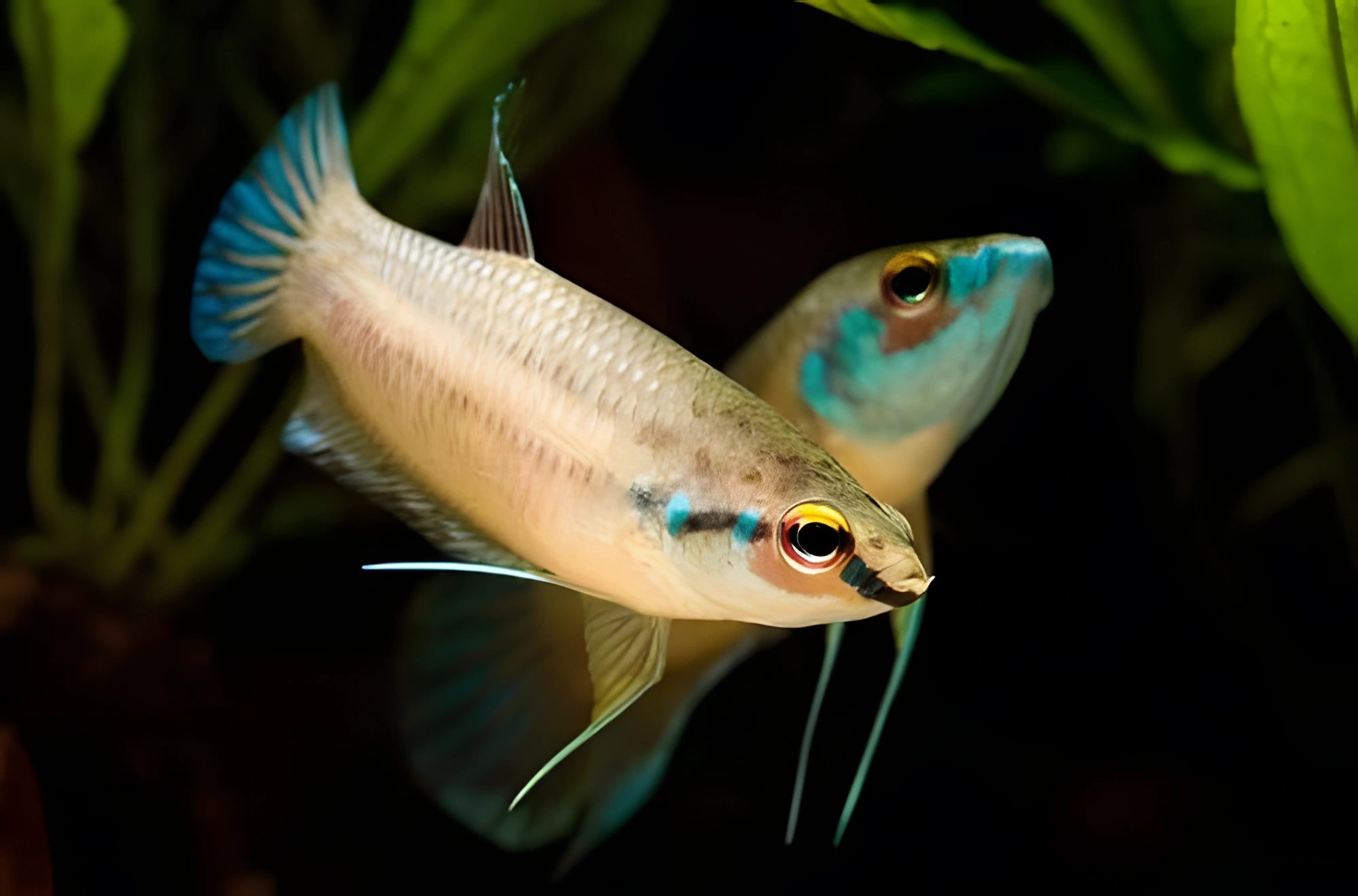
The scientific name Betta kuehnei, or Kuehne's Betta, belongs to the family Osphronemidae. This fish was named in honor of collector Jens Kuehne, whose efforts brought it widespread recognition among aquarists. It is undemanding in terms of care and breeding, and coexists easily with non-aggressive species of comparable size.
- Required aquarium volume
- 50 L
- Size in aquarium
- 5 – 6 cm
- Temperature
- 21 – 25 °C
- Temperament
- Peaceful (regular)
Parameters
Water pHSlightly acidic (6) – Neutral (7.5)
Water dHVery soft (1) – Soft (5)
Water salinityno salt (freshwater)
Size in aquarium5 – 6 cm
Lifespan3 years
TemperamentPeaceful (regular)
Toward small fishnot a predator
Required aquarium volume50 L
Lightingdimmed
Substrateany (no restrictions)
Water flownone or stagnant (no flow)
FeedingAny (universal)
CareMixed (solitary / pair / group)
Description
Adults of this fish grow to 5–6 cm in length. Males can be distinguished from females by their larger build and elongated fin tips. The coloration of males consists of a light gray base with blue horizontal stripes. A blue tint is also present on the underside of the head and along the edges of the fins. Iridescent pigmentation is more intense in males.
Habitat
This species originates from Southeast Asia. Its natural habitat includes southern Thailand and the northern provinces of Malaysia, located on the Malay Peninsula. These fish inhabit small streams and rivers flowing through dense tropical rainforests. A typical biotope is characterized by a weak water current, as well as exceptional purity and transparency with low hydrochemical parameters. The bottom in such places is usually covered with fallen leaves, twigs, and other plant debris, permeated by the roots of riparian trees.
Behavior and Compatibility
Despite belonging to the fighting fish group, it has a peaceful and calm temperament. It should only be kept with fish of similar size and behavior. Overly active tankmates can intimidate Betta kuehnei, pushing it into remote corners of the aquarium, which can lead to insufficient feeding. Intraspecific relationships are characterized by the dominance of an alpha male. In confined spaces, males may compete for the attention of females, so it is preferable to keep a pair (male/female) or a harem group.
Care and Maintenance
For comfortable living for one or two fish, an aquarium of 50 liters or more is optimal. The decor should include numerous shelters, which can be provided by dense thickets of aquatic plants, snags, decorative elements, or even ordinary ceramic pots lying on their side. The use of dried tree leaves, pre-soaked and placed on the bottom, will be a good addition. This helps release tannins into the water, making its composition closer to the fish's natural habitat; more about this can be read in the article "Which tree leaves can be used in an aquarium." It has been noted that excessively bright lighting can negatively affect the intensity of the fish's coloration, so it is recommended to either dim the light or use floating plants for shading. In this case, shade-loving root plants are best for planting. The key to successful Betta kuehnei keeping is maintaining stable water conditions within acceptable temperature and hydrochemical parameters. To do this, in addition to installing the necessary equipment, regular aquarium maintenance is required. Pay special attention to water preparation during partial water changes, aiming for low pH and dGH values.
Diet
This species is omnivorous. It readily accepts common dry foods such as flakes or pellets. For a complete diet, it is recommended to enrich their food with specialized high-protein diets, as well as offer live or frozen foods: Artemia, Daphnia, bloodworms, small flies, and mosquitoes.
Breeding and Reproduction
Successful breeding is achieved in a separate aquarium where parents and fry are safe, avoiding undue attention from other fish. At the beginning of the breeding period, the male and female perform ritual courtship, culminating in a peculiar "embrace dance": they press closely and wrap around each other. At this moment, spawning occurs. The male places the fertilized eggs in his mouth, where they remain throughout the incubation period, which lasts from 9 to 16 days. After hatching, the fry can stay with the parents, and with suitable food, they grow faster.
Diseases
Most health problems in fish often arise from unsuitable keeping conditions. Maintaining a stable and comfortable habitat is a key factor for successful keeping. If symptoms of illness appear, the first step is to check the water quality. If deviations are found, it is important to take immediate measures to eliminate them. If the symptoms do not disappear or worsen, medicinal treatment may be required. More detailed information on symptoms and treatment methods can be found in the "Diseases of Aquarium Fish" section.
How to choose
When selecting individuals in a store, pay attention to the fish's activity and the condition of their skin. Healthy specimens should show curiosity, have no visible damage, ulcers, white film, or signs of emaciation. Avoid purchasing fish with clamped fins, rapid breathing, or unnatural behavior, such as constantly staying at the water surface or trying to hide in a corner when a person approaches.
- Inspect the fins for integrity and absence of signs of fin rot.
- Ensure there are no parasitic lesions, appearing as white spots or patches on the body.
- Ask the seller about the keeping conditions, as the species is sensitive to sudden fluctuations in water hydrochemical parameters.
Frequently asked questions
The essentials: size, tank volume, water parameters and care
How big does Betta kuehnei get?
An adult reaches 5–6 cm in length. Plan the tank around the maximum size: the fish quickly outgrows a cramped setup.
What size aquarium does Betta kuehnei need?
The minimum recommended volume is 50 L. A smaller tank speeds up nitrate build-up and raises stress levels.
What water parameters does Betta kuehnei need?
Temperature 21–25 °C, pH 6–7.5, hardness 1–5 dGH. Stability matters more than exact values: sudden swings are harder on the fish than a small deviation from the ideal.
How long does Betta kuehnei live?
Around 3 years when kept properly. Lifespan depends directly on tank volume, water quality and a varied diet.
Is Betta kuehnei aggressive?
Temperament: peaceful (regular). Keep this in mind when choosing tank mates.
How many Betta kuehnei should be kept together?
Recommended setup: mixed (solitary / pair / group). Ignoring this is a common cause of stress and disease.
What does Betta kuehnei eat?
Diet type: any (universal). Feed small portions that are finished within a couple of minutes — overfeeding does more harm than underfeeding.
What is the scientific name of Betta kuehnei?
The scientific name of the species is Betta kuehnei, family Osphronemidae.