Temperature22 – 27 °C
Natural range
- Jambi Province area
- Sumatra area
Labyrinth fishConservation status: Least concern LC
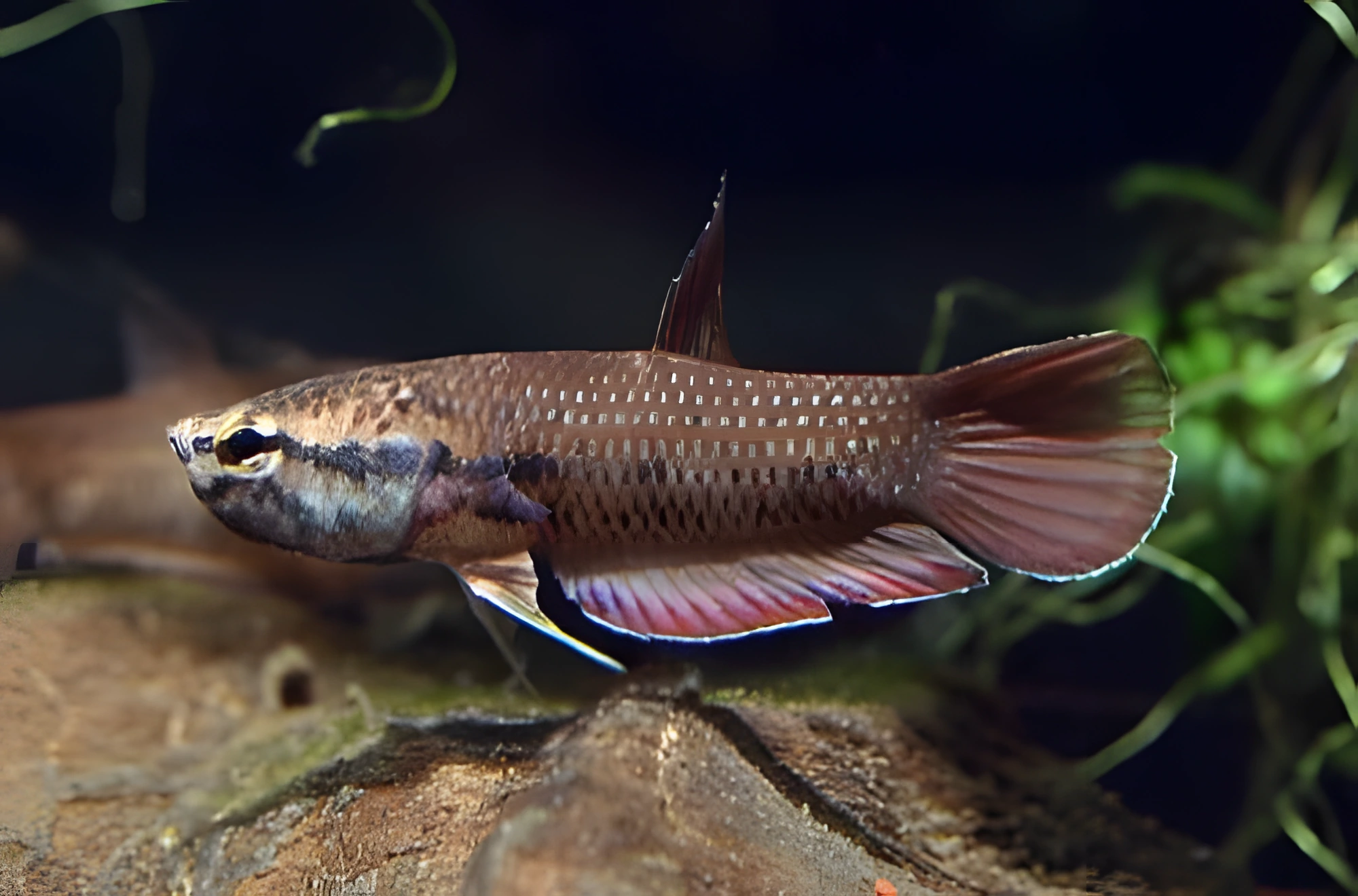
Betta falx, or Falx Betta, belongs to the family Osphronemidae. This fish, known by the scientific name Betta falx, is a representative of the fighting fish group, yet its calm disposition distinguishes it from its more aggressive relatives. Its behavior is remarkably peaceful. Keeping this species is not particularly difficult, and it coexists perfectly with various freshwater aquarium inhabitants.
- Required aquarium volume
- 50 L
- Size in aquarium
- 6 – 7 cm
- Temperature
- 22 – 27 °C
- Temperament
- Peaceful (regular)
Parameters
Water pHAcidic (4) – Neutral (7)
Water dHVery soft (0) – Medium hardness (10)
Water salinityno salt (freshwater)
Size in aquarium6 – 7 cm
Lifespan3 years
TemperamentPeaceful (regular)
Toward small fishnot a predator
Required aquarium volume50 L
Lightingdimmed
Substrateany, but dark
Water flownone or stagnant (no flow)
FeedingAny (universal)
CareMixed (solitary / pair / group)
Description
Adults typically reach 4–5 cm in length. Males are generally larger than females and have more elongated fin tips. Their bodies are adorned with iridescent pigments, shimmering with blue, red, and silver hues, especially noticeable on the lower edge of the anal fin and the caudal fin. Along the body, from head to tail, one can observe thin, barely discernible rows of irregular dark stripes over the basic grey coloration. There are minor differences between wild populations, determined by their specific place of origin. Many collectors and aquarists passionate about this species strive to maintain the purity of their pets' lines, and therefore never keep fish from different habitats together. Sometimes the species name is supplemented with prefixes such as Jambi or Utara, which precisely indicates the purebred nature of a particular variety of Betta falx.
Habitat
The natural habitat of this species is located in Southeast Asia, specifically in the central regions of the Indonesian island of Sumatra, in Jambi province. Here, they inhabit shallow areas: small streams, rivers, and peat swamps, situated under the dense canopy of tropical forest. Sunlight barely penetrates through the thick tree canopy, creating a dim atmosphere even on the brightest day. The low light does not promote lush growth of aquatic vegetation, which is mainly represented by semi-aquatic ferns and mosses. The bottom of these water bodies is covered with a thick layer of fallen leaves, twigs, and other plant debris, which, as they decompose, release humic acids and other organic substances. These are what stain the water a characteristic brown hue.
Behavior and Compatibility
Betta falx exhibits a peaceful disposition towards other species. It coexists well with non-aggressive fish of comparable size that can thrive in similar conditions. Intraspecific relationships are characterized by competition among males for the attention of females, especially during the breeding season. However, unlike some other fighting fish, this rivalry does not escalate into open conflict. Nevertheless, in a small aquarium, it is recommended to keep only one male with one or more females.
Care and Maintenance
For a pair of fish, an optimal aquarium volume is 50 liters or more. Caring for Betta falx will not pose serious difficulties for an experienced aquarist, but several important nuances should be considered. It is necessary to provide subdued lighting. Floating plants, which create shaded areas, can help with this. Water movement caused by the filtration system should also be minimized. When choosing a filter, opt for models that do not create a strong current. A tightly fitting aquarium lid is essential: it maintains warm, humid air, which is vital for all labyrinth fish. It should be noted that beginners may find it challenging to achieve the necessary water parameters, as these fish require an acidic environment (low pH) with low carbonate hardness (dGH). The aquarium decor can be arbitrary, but the fish look most harmonious in conditions that mimic their natural habitat: among submerged snags and shade-loving aquatic plants, against a dark substrate covered with a layer of dry leaves. Dried leaves from certain trees are not only a decorative element but also a beneficial addition, influencing water composition and making it similar to the fish's natural environment. More details on this can be found in the article “Which tree leaves can be used in an aquarium”.
Diet
These fish are omnivorous and readily accept most popular aquarium foods. The daily diet can consist of dry foods, such as flakes or granules. However, to maintain health and dietary diversity, it is recommended to supplement it with live or frozen foods: Artemia, Daphnia, bloodworms, and others.
Breeding and Reproduction
In artificial habitats, successful breeding of this species is not uncommon, provided suitable living conditions and a balanced diet are maintained. The best results are usually achieved in a species-specific aquarium, where there are no other fish besides the Bettas. With the onset of the breeding season, the male actively courts the female, usually choosing one partner and forming a pair with her. The spawning process is accompanied by a peculiar “embrace dance,” during which the fish intertwine with each other. It is at this moment that the eggs are fertilized. The eggs are not laid on the substrate and do not form a clutch. The male collects the eggs into his mouth, where they remain throughout the incubation period, which lasts 9–12 days. The fry emerge fully formed and are ready to accept food, such as Artemia nauplii or other specialized foods.
Diseases
Most health problems in fish often arise from unsuitable keeping conditions. Maintaining a stable and comfortable habitat is a key factor for successful keeping. If symptoms of illness appear, the first step is to check the water quality. If deviations are found, it is important to take immediate measures to eliminate them. If the symptoms do not disappear or worsen, medicinal treatment may be required. More detailed information on symptoms and treatment methods can be found in the "Diseases of Aquarium Fish" section.
How to choose
When purchasing, choose active individuals with clean, undamaged fins and clear eyes. Avoid fish with signs of emaciation, sunken bellies, or visible spots on the body, as these may indicate parasitic or bacterial infections. Since the species is often sourced from the wild, it is important to assess their behavior: healthy fish should show curiosity and not appear overly timid or apathetic. It is recommended to acquire specimens from reputable suppliers who can confirm the fish's origin, as Betta falx is often confused with other closely related species in the picta group.
Frequently asked questions
The essentials: size, tank volume, water parameters and care
How big does Betta falx get?
An adult reaches 6–7 cm in length. Plan the tank around the maximum size: the fish quickly outgrows a cramped setup.
What size aquarium does Betta falx need?
The minimum recommended volume is 50 L. A smaller tank speeds up nitrate build-up and raises stress levels.
What water parameters does Betta falx need?
Temperature 22–27 °C, pH 4–7, hardness 0–10 dGH. Stability matters more than exact values: sudden swings are harder on the fish than a small deviation from the ideal.
How long does Betta falx live?
Around 3 years when kept properly. Lifespan depends directly on tank volume, water quality and a varied diet.
Is Betta falx aggressive?
Temperament: peaceful (regular). Keep this in mind when choosing tank mates.
How many Betta falx should be kept together?
Recommended setup: mixed (solitary / pair / group). Ignoring this is a common cause of stress and disease.
What does Betta falx eat?
Diet type: any (universal). Feed small portions that are finished within a couple of minutes — overfeeding does more harm than underfeeding.
What is the scientific name of Betta falx?
The scientific name of the species is Betta falx, family Osphronemidae.