Temperature22 – 30 °C
Natural range
- Bangka Island area
- Belitung Island area
Labyrinth fishConservation status: Critically endangered CR
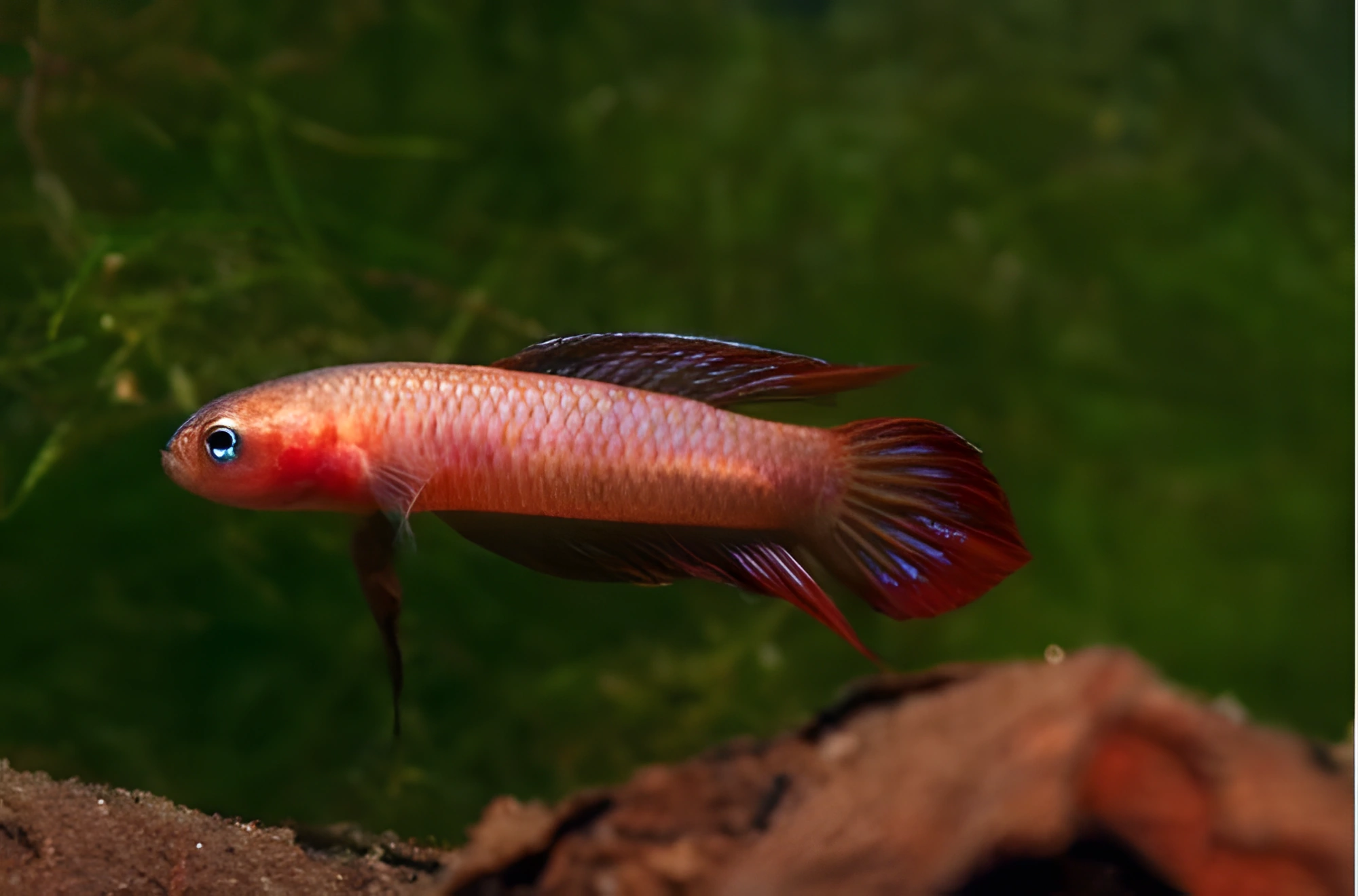
Betta burdigala, or Bordeaux Betta, belongs to the family Osphronemidae. A distinctive feature of this fish is its beautiful red coloration, which reminded French researchers of the noble color of the famous Bordeaux wines, after which the species was named. In its natural habitat, the Betta burdigala population is endangered, which severely limits its export for sale. As a result, this fish is extremely rare in amateur aquariums.
- Required aquarium volume
- 40 L
- Size in aquarium
- 3 cm
- Temperature
- 22 – 30 °C
- Temperament
- Semi-peaceful (including aggression during spawning / intraspecific conflicts)
Parameters
Water pHAcidic (4) – Slightly acidic (6)
Water dHVery soft (0) – Soft (5)
Water salinityno salt (freshwater)
Size in aquarium3 cm
Lifespan3 years
TemperamentSemi-peaceful (including aggression during spawning / intraspecific conflicts)
Toward small fishnot a predator
Required aquarium volume40 L
Lightingdimmed
Substrateany, but dark
Water flownone or stagnant (no flow)
FeedingAny (universal)
CareHarem (1 male and several females)
Description
Adults typically reach about 3 centimeters in length. The fish have an elongated and robust body. Their coloration is predominantly red or dark pink, and their fins have a burgundy hue. The scales shimmer with a turquoise sheen. Males are generally larger and brighter than females, and during the breeding season, their colors become even more saturated and vibrant.
Habitat
The homeland of this species is Southeast Asia, specifically the islands of Bangka and Belitung, located off the east coast of Sumatra. Here, Betta burdigala prefers peat swamps, as well as associated streams and small rivers flowing through dense tropical forests. Typical biotopes are shallow bodies of water with bottoms abundantly covered with plant debris — branches, leaves, and various snags. The water acquires a rich brown tint due to the high concentration of humic acids and other tannins. It is known that these bodies of water periodically dry out, and the fish are forced to remain viable by staying among moist leaf litter and mud for several weeks.
Behavior and Compatibility
As a member of the fighting fish group, Betta burdigala fully lives up to its reputation. Intraspecific relationships are characterized by competition among males for hierarchical status. In confined spaces, constant skirmishes can occur between them. Although serious physical injuries are usually rare, weaker individuals will be subjected to continuous attacks, which is an undesirable stress factor. In a small aquarium, it is recommended to keep a group of one male with one or more females. This species is compatible with other non-aggressive fish of comparable size. However, species with similar coloration should be avoided, as Betta males may mistakenly perceive them as rivals.
Care and Maintenance
For a pair or a small group of Betta Bordeaux fish, an aquarium of at least 40 liters is recommended. The aquarium setup should mimic their natural habitat as closely as possible: dark substrate, dense thickets of shade-loving plants (including floating species), and numerous snags are recommended. Dried leaves from certain trees can be an additional element, adding naturalness and providing the necessary water chemistry. Before adding them, they should be soaked to prevent them from floating. More detailed information can be found in the article "What tree leaves can be used in an aquarium." Maintaining high water quality is critically important for the long-term keeping of Betta Bordeaux. It is necessary to ensure suitable hydrochemical parameters (low pH and dGH values) and prevent the excessive accumulation of organic waste, such as food remnants and excrement. The stability of the aquatic environment directly depends on regular mandatory aquarium maintenance procedures, including cleaning and partial water changes, as well as the reliable operation of equipment, primarily the filtration system. Since Betta Bordeaux originate from stagnant swamps and do not tolerate strong currents well, when choosing a filter, it is advisable to opt for models that minimize or completely eliminate water flow. In some cases, a simple air-driven sponge filter works well. The aquarium must be equipped with a lid; this will maintain a warm and humid air layer beneath it, which is necessary for the normal functioning of the labyrinth organ in bettas.
Diet
The species is omnivorous. In home aquariums, Betta Bordeaux readily accept most popular foods designed for aquarium fish. Some manufacturers offer specialized products for Bettas, which are considered optimal due to their carefully selected nutritional composition. If possible, live or frozen foods such as Artemia, Daphnia, or small bloodworms should be included in their daily diet.
Breeding and Reproduction
These fish are known as attentive parents. During the breeding period, the male builds a nest for the future offspring and actively guards the fry until they begin to swim independently. After this point, the parents generally lose interest in them. As spawning approaches, turquoise hues appear in the males' coloration, and they begin to create a nest of air bubbles and plant debris on the water's surface. The spawning process itself involves the female and male "embracing," during which the eggs are fertilized. The eggs are carefully collected and transferred to the nest. The fry emerge after 24–48 hours; they attach to the bubbles and remain in the nest for another 3–4 days. Throughout this time, the male carefully guards his brood, picking up and returning any detached fry to the nest.
Diseases
Most health problems in fish often arise from unsuitable keeping conditions. Maintaining a stable and comfortable habitat is a key factor for successful keeping. If symptoms of illness appear, the first step is to check the water quality. If deviations are found, it is important to take immediate measures to eliminate them. If the symptoms do not disappear or worsen, medicinal treatment may be required. More detailed information on symptoms and treatment methods can be found in the "Diseases of Aquarium Fish" section.
How to choose
Acquiring this species is challenging, as Betta burdigala is extremely rare in trade and officially has the status of a vulnerable species. When purchasing, it is important to ensure that you are being offered this specific species, and not similar representatives of the coccina group, such as Betta uberis. A healthy fish should be active, have clean fins without signs of erosion, tightly pressed scales, and no white spots or film on its body. Avoid individuals with sunken bellies or signs of apathy, as this may indicate prolonged stress or internal parasites. Given the rarity of the species, it is recommended to purchase individuals only from reputable breeders specializing in labyrinth fish, as wild-caught fish may be severely debilitated by transport.
Frequently asked questions
The essentials: size, tank volume, water parameters and care
How big does Betta burdigala get?
An adult reaches 3 cm in length. Plan the tank around the maximum size: the fish quickly outgrows a cramped setup.
What size aquarium does Betta burdigala need?
The minimum recommended volume is 40 L. A smaller tank speeds up nitrate build-up and raises stress levels.
What water parameters does Betta burdigala need?
Temperature 22–30 °C, pH 4–6, hardness 0–5 dGH. Stability matters more than exact values: sudden swings are harder on the fish than a small deviation from the ideal.
How long does Betta burdigala live?
Around 3 years when kept properly. Lifespan depends directly on tank volume, water quality and a varied diet.
Is Betta burdigala aggressive?
Temperament: semi-peaceful (including aggression during spawning / intraspecific conflicts). Keep this in mind when choosing tank mates.
How many Betta burdigala should be kept together?
Recommended setup: harem (1 male and several females). Ignoring this is a common cause of stress and disease.
What does Betta burdigala eat?
Diet type: any (universal). Feed small portions that are finished within a couple of minutes — overfeeding does more harm than underfeeding.
What is the scientific name of Betta burdigala?
The scientific name of the species is Betta burdigala, family Osphronemidae.