Temperature22 – 27 °C
Natural range
- Central Kalimantan area
- Borneo area
Labyrinth fishConservation status: Data deficient DD
Betta pallifina, known as the Pale Betta, belongs to the family Osphronemidae. This fish gets its name from its subdued coloration, which differs from the more vibrant hues of its related species. It exhibits a rather active character, though this activity is usually confined to its own population and does not affect other aquarium inhabitants.
- Required aquarium volume
- 80 L
- Size in aquarium
- 6.6 – 9 cm
- Temperature
- 22 – 27 °C
- Temperament
- Territorial (often aggressive)
Parameters
Water pHNeutral (6.6) – Neutral (7.5)
Water dHVery soft (1) – Soft (5)
Water salinityno salt (freshwater)
Size in aquarium6.6 – 9 cm
Lifespan5 years
TemperamentTerritorial (often aggressive)
Toward small fishnot a predator
Required aquarium volume80 L
Lightingdimmed
Substratesoft silted
Water flowweak
FeedingMixed diet (meat + plant-based)
CarePair (male/female)
Description
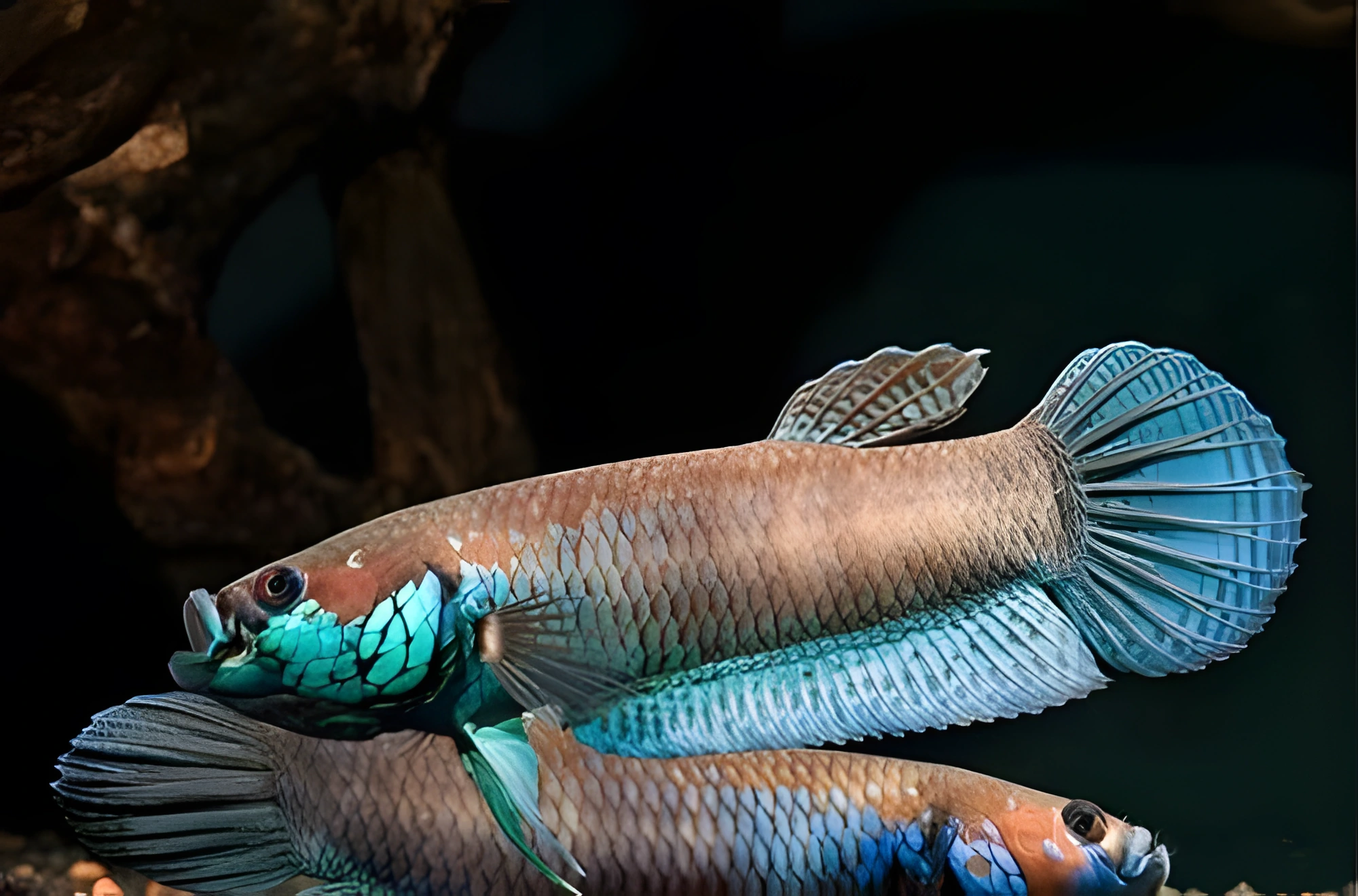
Adult specimens of this fish typically reach a length of 8 to 9 cm. Its body is elongated and robust, cylindrically shaped. The fins are short, except for the anal fin, which extends from head to tail. The coloration is predominantly grey with noticeable reddish tints. A distinguishing feature of males is a greenish or bluish hue on the scales in the head region, which becomes more intense during the spawning period. The fins are also adorned with pigment of the same color.
Habitat
This species originates from Southeast Asia, specifically the Indonesian part of Borneo Island, located in the province of Central Kalimantan. It can be found in the upper reaches of the Barito River. It inhabits sections of rivers that flow through hilly terrain surrounded by humid tropical forests. The water in these areas is clean and clear, and aquatic plants grow densely along the banks, forming extensive underwater thickets. The bottom of these water bodies is covered with a layer of sand and fine gravel, mixed with organic materials such as fallen leaves and tree twigs.
Behavior and Compatibility
These fish belong to the group of fighting fish. Males tend to engage in contests with each other, vying for a dominant position in the intraspecific hierarchy. Although such skirmishes rarely result in serious injuries, weaker individuals may be forced to hide along the edges of the aquarium and suffer from a lack of food. In small aquariums, it is recommended to keep fish individually or in male/female pairs. They are calm towards the presence of other species and get along well with many non-aggressive fish of comparable size.
Care and Maintenance
For keeping a single pair of fish, an aquarium of at least 70 liters will be optimal. In terms of decor, they are not very demanding. It is often observed that breeders and pet stores use almost empty tanks, with virtually nothing but the necessary equipment. While this is acceptable for temporary housing, long-term living for the fish will require different conditions. It is advisable to provide several shelters, which can be formed from natural tangled driftwood, dense plant thickets, or decorative elements. Dim lighting is preferred. Floating plants can also serve as an additional means of shading. Ultimately, the aquarium's decor is a matter of the owner's taste, possibilities, and imagination. However, the requirements for living conditions are much stricter. The Pale Betta needs warm, slightly acidic, soft water, rich in oxygen, and reacts extremely negatively to the accumulation of organic waste. Maintaining biological balance in the aquarium system directly depends on regular care – water changes, removal of excrement and food residues – as well as the reliable operation of equipment, particularly the filtration system.
Diet
In its natural habitat, the fish feeds on small insects, their larvae, and other invertebrates. However, acclimatized individuals, as well as those bred in aquarium conditions for several generations, have successfully adapted to alternative food sources. The daily diet can include popular dry foods such as flakes and pellets, supplemented with live or frozen foods: Artemia, Daphnia, bloodworms, and similar items.
Breeding and Reproduction
Many members of the Betta genus are characterized by mouthbrooding, which significantly increases the survival rate of offspring compared to fish that simply lay eggs on the substrate or among vegetation. With the onset of the breeding season, the male and female begin prolonged courtship. Spawning is accompanied by peculiar "embrace dances" as the fish intertwine their bodies. Fertilized eggs immediately end up in the male's mouth. The incubation period lasts from 10 to 17 days, during which the male completely abstains from food and seeks a secluded spot in the aquarium. The female actively "patrols" the territory during this time. Fry emerge fully formed and capable of accepting food, such as Artemia nauplii or specialized foods for aquarium fish fry.
Diseases
Most health problems in fish often arise from unsuitable keeping conditions. Maintaining a stable and comfortable habitat is a key factor for successful keeping. If symptoms of illness appear, the first step is to check the water quality. If deviations are found, it is important to take immediate measures to eliminate them. If the symptoms do not disappear or worsen, medicinal treatment may be required. More detailed information on symptoms and treatment methods can be found in the "Diseases of Aquarium Fish" section.
How to choose
When purchasing, choose active individuals with clean fins and no visible damage, sores, or white film on the body. It is important to ensure that the fish shows natural curiosity and does not appear emaciated or apathetic. Since the species is extremely rare in retail, careful verification of species identity is necessary to exclude substitution with other members of the Betta unimaculata group. It is best to acquire a formed pair or a group of young fish, as adult individuals may exhibit pronounced intraspecific aggression, which increases the risk of injury during transportation.
Frequently asked questions
The essentials: size, tank volume, water parameters and care
How big does Pale Betta get?
An adult reaches 6.6–9 cm in length. Plan the tank around the maximum size: the fish quickly outgrows a cramped setup.
What size aquarium does Pale Betta need?
The minimum recommended volume is 80 L. A smaller tank speeds up nitrate build-up and raises stress levels.
What water parameters does Pale Betta need?
Temperature 22–27 °C, pH 6.6–7.5, hardness 1–5 dGH. Stability matters more than exact values: sudden swings are harder on the fish than a small deviation from the ideal.
How long does Pale Betta live?
Around 5 years when kept properly. Lifespan depends directly on tank volume, water quality and a varied diet.
Is Pale Betta aggressive?
Temperament: territorial (often aggressive). Keep this in mind when choosing tank mates.
How many Pale Betta should be kept together?
Recommended setup: pair (male/female). Ignoring this is a common cause of stress and disease.
What does Pale Betta eat?
Diet type: mixed diet (meat + plant-based). Feed small portions that are finished within a couple of minutes — overfeeding does more harm than underfeeding.
What is the scientific name of Pale Betta?
The scientific name of the species is Betta pallifina, family Osphronemidae.